Hooker grain elevator tells story of Texas County wheat boom
A single 1926 elevator explains how Hooker farmers won rail access, moved 30 cars of wheat a day, and fought for better prices.

During harvest months, the Hooker Woodframe Grain Elevator shipped about 30 cars of wheat a day. Built in 1926 and listed in the National Register of Historic Places in 1983, it was a shipping machine and a pricing tool in the Oklahoma Panhandle, where rail access could decide whether farmers had leverage or were forced to take whatever bid they were offered.
The elevator as a map of the wheat economy

The building was constructed by Riffe & Gilmore Co. and operated by the Wheat Pool Elevator Company, which put it squarely inside the business of moving grain rather than simply holding it. In the National Register nomination, it carried agricultural and engineering significance as a commercial structure, placing the elevator where wheat, rail cars, and market power met.
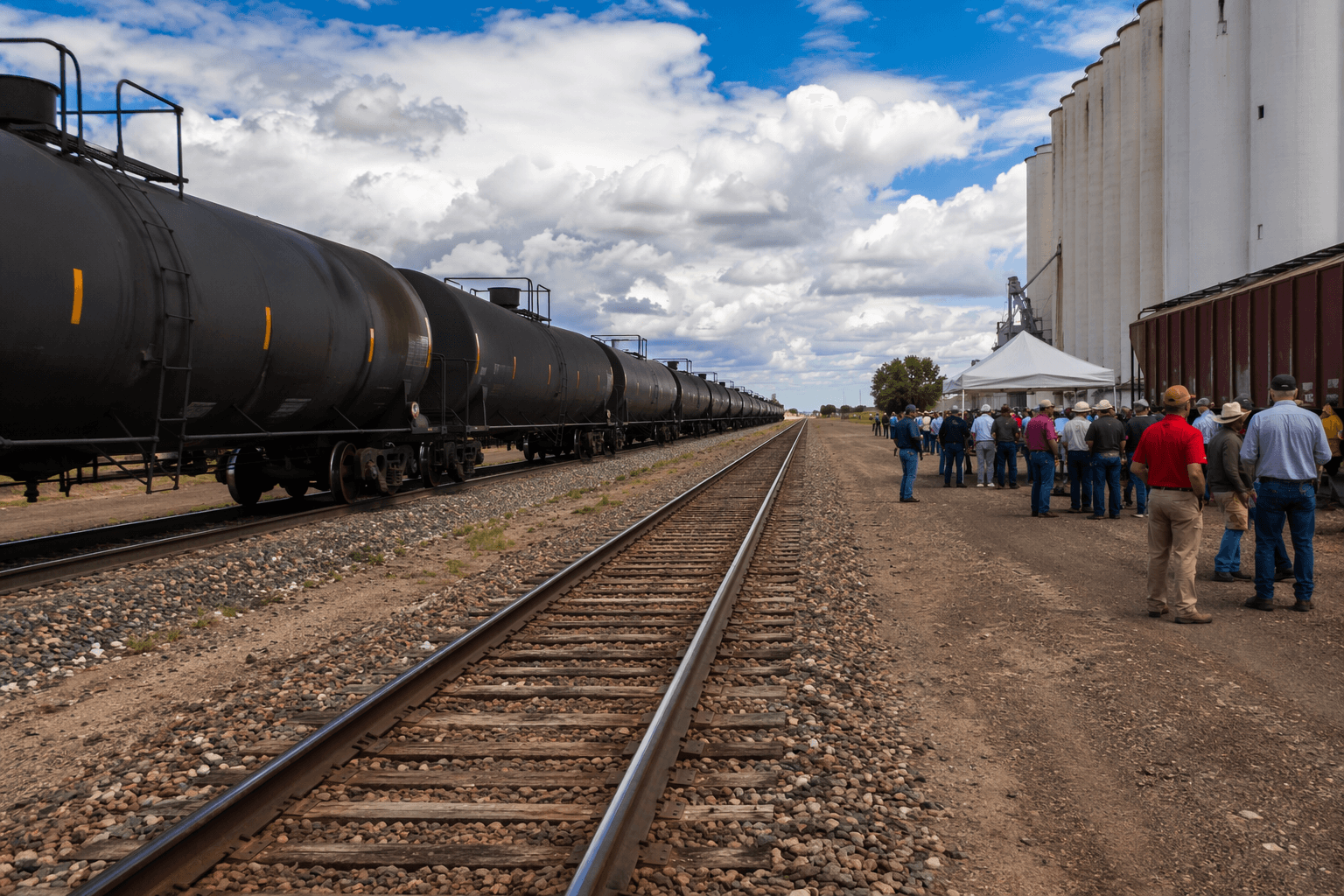
Its location beside the former Beaver, Meade & Englewood Railroad line north of the Hooker town limits is the key detail. The structure survives as a direct artifact of rail-based agriculture, not a decorative remnant from the edge of town. That proximity to track was the difference between a local elevator becoming a major shipping point and farmers having to haul wheat farther for weaker terms.
Why rail access changed prices
The Beaver, Meade & Englewood Railroad did not reach Hooker until 1926, the same year the elevator went up. That timing broke the older grain-movement pattern that had concentrated power elsewhere. BM&E elevators were built after protests over a Rock Island Railroad grain-movement monopoly, a sign of how much competition, or the lack of it, shaped local farm income.
Once the line reached Hooker, the Wheat Pool Elevator quickly became the major shipping point for local wheat. It also assumed a leading role in setting local wheat prices, which meant the elevator was not just responding to the market, it was helping define it.
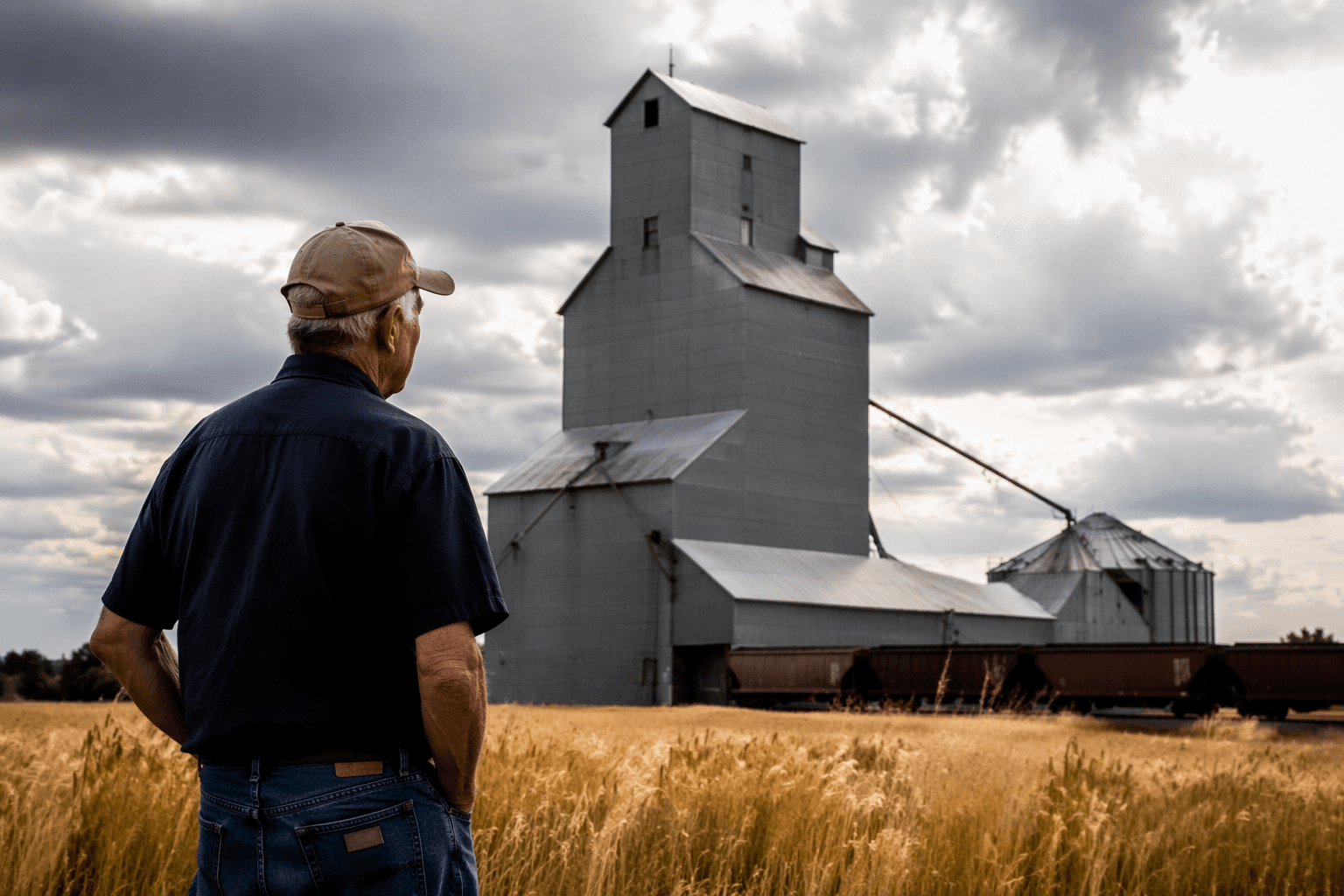
That market power held for a time. The elevator led Hooker’s grain market through the late 1920s and kept that position until larger elevators took more of the load in the 1940s.
Hooker’s townsite grew with the railroad
Hooker’s grain history sits inside a much older town-building pattern. Hooker was platted in 1904 by the Chicago Townsite Company and named for OX ranch foreman John “Hooker” Threlkeld, a naming tradition rooted in the ranching frontier that shaped the Panhandle. The town was organized and town lots were sold in 1904, then the population climbed quickly to 448 in 1907 and 525 in 1910.
The town expanded in the same era when rail-linked settlement and agriculture were turning empty space into a working market. Even after a fire destroyed three-fourths of the business district in 1908, Hooker kept growing.
Texas County gives the broader frame. It is Oklahoma’s second largest county, and its size has always made transportation more than a convenience. In a county that large, moving crops efficiently mattered as much as growing them.
The railroad line that made the elevator useful
The Beaver, Meade and Englewood Railroad was chartered in 1912 and began building west from Beaver County in 1915. It reached Hooker in 1926 to 1927 and later extended to Keyes in 1930 to 1931, opening up more of the western Panhandle while towns such as Hough, Baker, and Straight emerged along the way.
By 1972, the BM&E, then controlled by the Missouri, Kansas and Texas Railway, was abandoned. With the rails gone, elevators like Hooker’s no longer operated inside the same contest to load first, ship fastest, and set the local pace.
What survived after the rail era
The Hooker elevator also fits into a wider Panhandle landscape that has mostly vanished. Between 1900 and 1930, hundreds of local or county elevators were built in Beaver and Texas Counties to serve grain producers directly. Area contractors or railroad townsite companies built them to handle the wheat coming out of the region, and many were tied to small communities that depended on grain shipments to survive.
Oklahoma’s grain-elevator system itself had three basic forms: independent elevators, line elevators, and farmer-owned co-ops. Hooker’s Wheat Pool Elevator sat inside that larger world of competing ownership models, but its importance came from one practical advantage: the ability to move wheat fast enough to matter in the market.
This article was produced by Prism’s automated news system from verified source data, official records, and press releases, then run through automated quality and moderation checks before publishing. The system is built and supervised by the people who set the standards it runs under. Read our full AI policy.
Did this article answer your question?