Afghanistan Urges U.S. Allies Stuck in Qatar to Return Home
Afghanistan told wartime allies in Qatar to go home even as more than 1,000 wait for U.S. resettlement, deepening fears of a broken American promise.
Afghanistan’s Taliban government is telling Afghans who helped the U.S. war effort and are still stranded in Qatar that they can safely come home, even as Washington weighs sending more than 1,000 of them to a third country. The clash leaves translators, contractors and other wartime partners trapped in a transit limbo that has become a test of American credibility.
The people caught in the middle are living at Camp As Sayliyah, a former U.S. Army base in Qatar that has served as an immigrant visa processing site. #AfghanEvac says about 1,100 Afghan wartime allies and family members are there, including about 800 in the U.S. Refugee Admissions Program pipeline and about 300 pursuing U.S. consular immigration paths. The group includes a majority of women and children, and #AfghanEvac says they were brought to Qatar by the U.S. government after vetting and transport on U.S. flights, with the understanding that the camp was temporary before relocation to the United States.
The delay has hardened into a policy failure. Reuters, as reported by The Associated Press, said U.S. immigrant visa processing for Afghans slowed to a halt after Donald Trump took office in January 2025. Afghanistan was later placed on a list of 12 countries covered by a travel ban in June, with only a narrow exemption for Afghan Special Immigrant Visa cases. In November, the United States stopped immigrant visa processing for all Afghan nationals after the shooting of two U.S. National Guard members by an Afghan former CIA-backed paramilitary unit member. A federal judge ruled in February that the ban on Afghan SIV processing was illegal, but the system remains effectively at a standstill.
That bottleneck has made Qatar more than a temporary stop. It has become the place where American promises meet unfinished paperwork, and where every new delay raises the stakes for families who aided U.S. forces and now fear being pushed into danger. The pressure increased further after the U.S. State Department’s Qatar travel advisory was updated on March 2, 2026, ordering non-emergency U.S. government employees and their families out of the country because of the threat of armed conflict. The embassy in Doha suspended routine consular services as hostilities between the United States and Iran intensified, adding another layer of uncertainty for evacuees already stuck in transit.
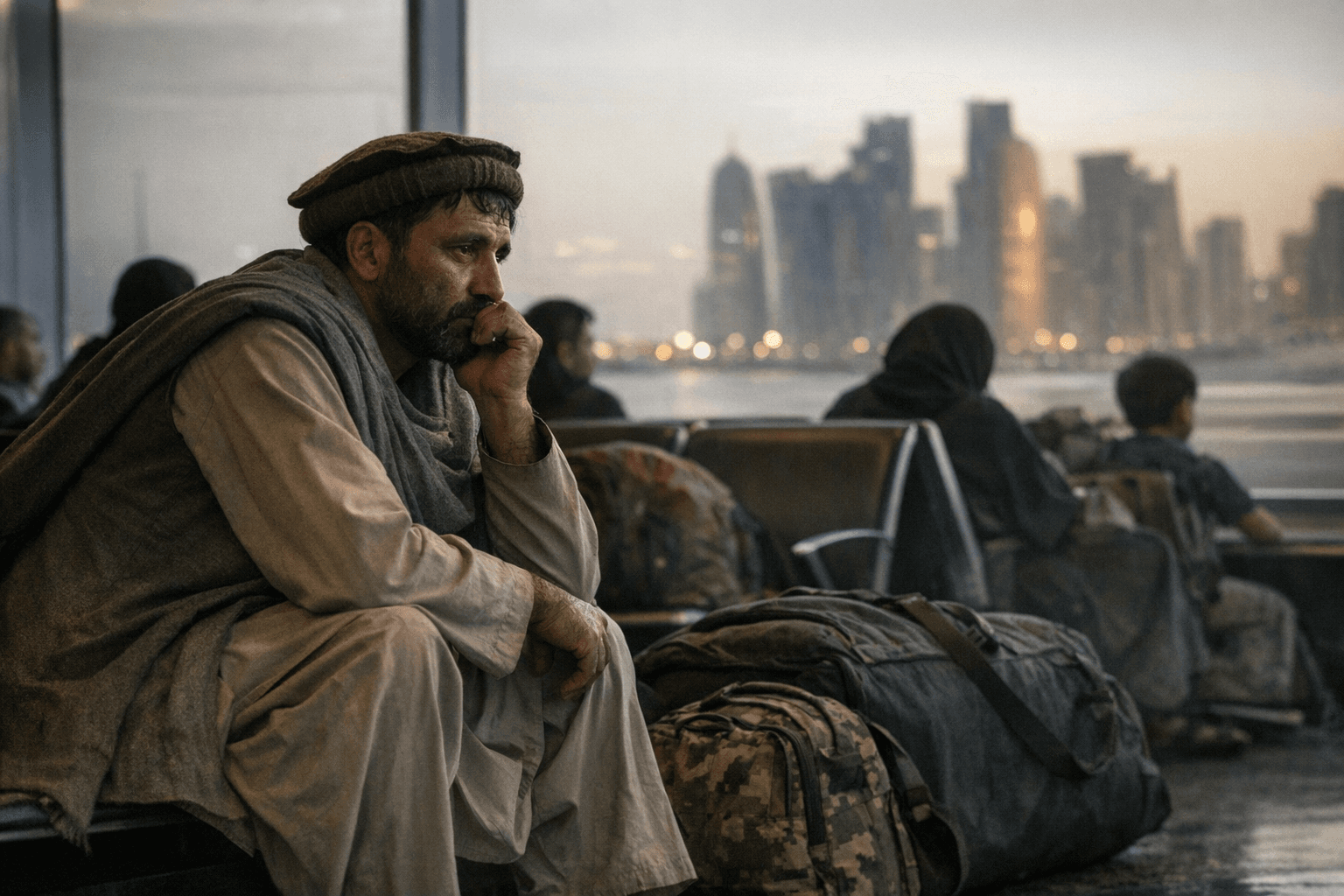
On April 25, 2026, Afghanistan’s foreign ministry said those in Qatar could return home “with full confidence,” calling Afghanistan the “shared homeland of all Afghans” and saying there were no security threats. It also said anyone who later wanted to travel elsewhere could do so through legal and dignified channels.
Advocates say that offer is not a safe substitute for resettlement. Shawn VanDiver of #AfghanEvac called a reported Congo option unacceptable because of insecurity there and warned it could become a pretext to send Afghans back to Afghanistan if they refuse. For the United States, the outcome will signal whether local partners who risked their lives in future conflicts can trust American protection when the war is over.
This article was produced by Prism’s automated news system from verified source data, official records, and press releases, then run through automated quality and moderation checks before publishing. The system is built and supervised by the people who set the standards it runs under. Read our full AI policy.
Did this article answer your question?