Airlines Raise Bag Fees and Surcharges as Iran War Fuels Cost Crisis
Delta raised its first checked bag fee to $45 on April 8 as Iran war jet fuel costs nearly doubled; analysts warn the hike will never be reversed.
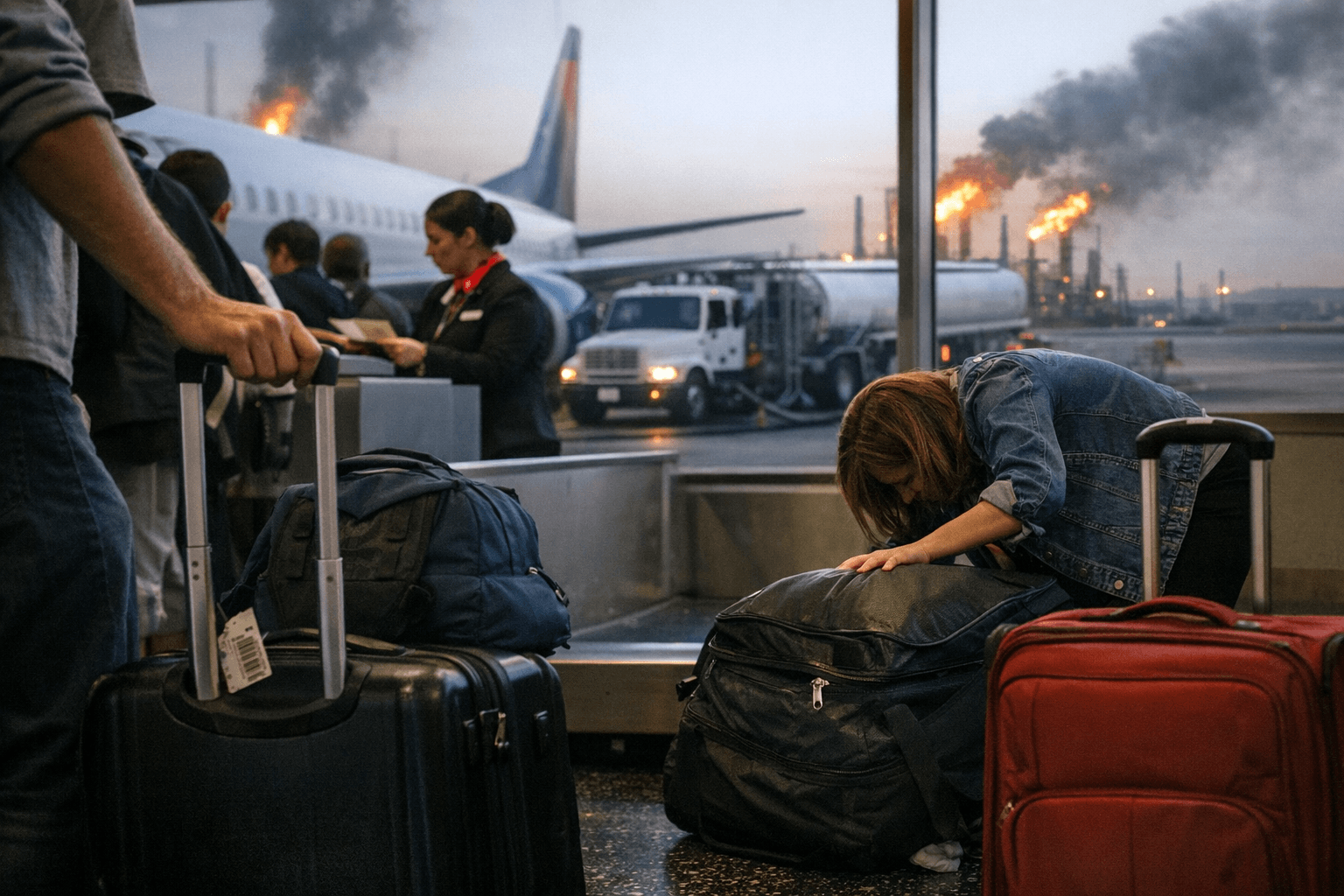
The math is straightforward and painful. Jet fuel that cost airlines roughly $2.50 a gallon in major U.S. markets the day before the United States and Israel attacked Iran in late February 2026 averaged $4.81 a gallon in Chicago, Houston, Los Angeles, and New York by April 7, according to Argus Media data. The effective closure of the Strait of Hormuz has choked off both crude oil and refined jet fuel supplies worldwide, and airlines have responded by stacking new fees on top of fares that were already rising.
Delta Air Lines announced April 7 that passengers booking on or after April 8 will pay $45 for their first checked bag on domestic and select short-haul international routes, up $10 from the previous rate. The second bag rises to $55, and the third jumps to $200, a $50 increase. United Airlines and JetBlue had already moved in the days prior: JetBlue's first bag now costs $39 during off-peak periods, up from $35, and $49 during peak travel seasons including holidays and the entire summer, up from $40. Southwest Airlines raised its first and second checked bag fees by $10. Ryanair and Frontier also increased fees.
In Canada, WestJet announced a $60 temporary fuel surcharge on all bookings made with a WestJet Rewards companion voucher, effective April 8. The WestJet Group extended surcharges to Sunwing and Vacances WestJet Québec bookings starting April 14 and is merging some flights to further reduce costs. Flair Airlines is adding surcharges as well. McKenzie McMillian, managing partner at The Travel Group, told CTV News he believes more airlines will follow with the same changes.
The word "sticky" cuts to the core of the consumer concern. Ancillary fees carry that label because airlines historically have not reversed them, even when fuel prices decline. American Airlines became the first major U.S. carrier to charge for checked bags in May 2008, setting a $15 fee while crude oil surged from roughly $27 a barrel in 2003 to $127 a barrel. Those fees were never reversed industry-wide; they were normalized and steadily raised over the following 18 years. A WestJet spokesperson framed the current surcharge as temporary, saying "Fuel is the largest contributor to airline operating costs, and a temporary surcharge helps" offset rising costs. Consumer advocates have heard that framing before.
United Airlines announced it will cut approximately 5% of its planned flights during off-peak periods, including red-eye and midweek routes, in the second and third quarters of 2026. Airlines across Asia have similarly scaled back capacity to their most profitable routes amid jet fuel costs that have more than doubled to $208 per barrel in Asia and Oceania.
Prepaying for checked bags online more than 24 hours before departure continues to offer the lowest available prices. Elite frequent flyer status and airline co-branded credit cards still waive first-bag fees on most domestic routes for qualifying cardholders, a benefit that has survived each round of fee increases. Airlines are not alone in passing fuel costs to consumers: Amazon and USPS are adding fuel surcharges in April 2026, and Cathay Pacific and Japan Airlines have raised international surcharges as the price shock spreads across the global economy.
This article was produced by Prism’s automated news system from verified source data, official records, and press releases, then run through automated quality and moderation checks before publishing. The system is built and supervised by the people who set the standards it runs under. Read our full AI policy.
Did this article answer your question?

