Amazon expands 30-minute delivery with new mini-warehouses across cities
Amazon is betting shoppers will pay for half-hour convenience, but the real test is whether tiny warehouses and drivers can make the math work.

Amazon is pushing its delivery network into a new speed bracket with Amazon Now, a 30-minute service that charges Prime members $3.99 to start and nonmembers $13.99, plus a small-order fee on baskets under $15. The company is rolling the service out across dozens of U.S. cities and says it aims to reach tens of millions more customers by year-end, turning ultrafast retail into a much broader experiment.
The model depends on mini-warehouses that are about the size of a CVS drugstore and stock roughly 3,500 items. Amazon says the sites are placed close to where customers live and work to shorten delivery routes and reduce pressure on workers, a sign that speed is not just a customer promise but an operational constraint. The first test covered parts of Seattle and Philadelphia; the new rollout is already widely available in Atlanta, Dallas-Fort Worth, Philadelphia and Seattle, with expansion underway in Austin, Houston, Minneapolis, Orlando, Phoenix, Denver and Oklahoma City.
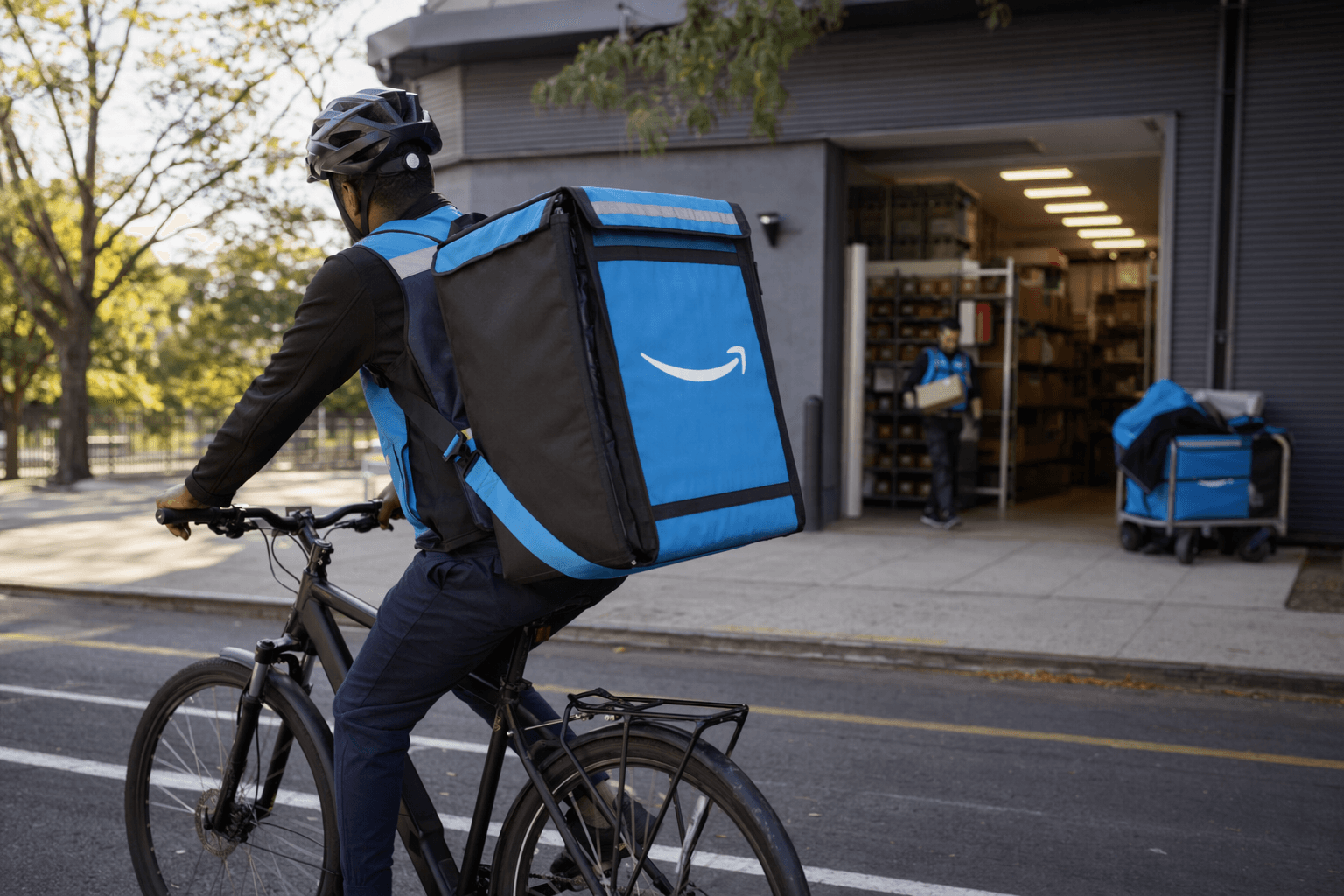
The assortment is built for immediacy. Amazon’s test program included milk, eggs, produce, toothpaste, cosmetics, pet treats, diapers, paper products, electronics, seasonal items and over-the-counter medicine. The company has also said customers have ordered fresh fruits and vegetables, dairy, meat, seafood, baked foods, frozen foods, pantry staples, snacks and household essentials through its faster delivery channels, showing how quickly the service has moved from convenience to necessity. Prime itself costs $14.99 a month or $139 a year, making the speed discount part of a broader membership play.
Amazon’s pitch is that speed drives demand. Beryl Tomay, Amazon’s head of transportation, said customers tend to buy more and keep Amazon top of mind when the company offers faster delivery speeds. That calculation matters because Amazon has been widening its fast-delivery menu in other ways too: its first-quarter 2026 materials said it introduced one-hour and three-hour options on more than 90,000 products, and said groceries and everyday essentials accounted for half of U.S. Prime members’ same-day or next-day deliveries in 2025.
The bigger question is whether the model scales beyond dense urban markets without pushing too much cost onto warehouse workers and delivery drivers. Amazon says the network is designed to preserve employee safety by cutting travel distance, but the broader last-mile labor debate is unresolved. A July 2025 National Employment Law Project brief criticized Amazon Flex for misclassification, digital surveillance, wage theft, inadequate benefits and mistreatment on the job. As Amazon expands from a handful of dense markets to more cities, Amazon Now is becoming a live test of how much speed consumers really want, and who ultimately pays for it.
This article was produced by Prism’s automated news system from verified source data, official records, and press releases, then run through automated quality and moderation checks before publishing. The system is built and supervised by the people who set the standards it runs under. Read our full AI policy.
Did this article answer your question?

