American Power Has Endured Overreach Before and Can Again
History shows that American power bends under the weight of its own excesses but never breaks; the republic has survived McCarthyism, Vietnam, and Watergate before.
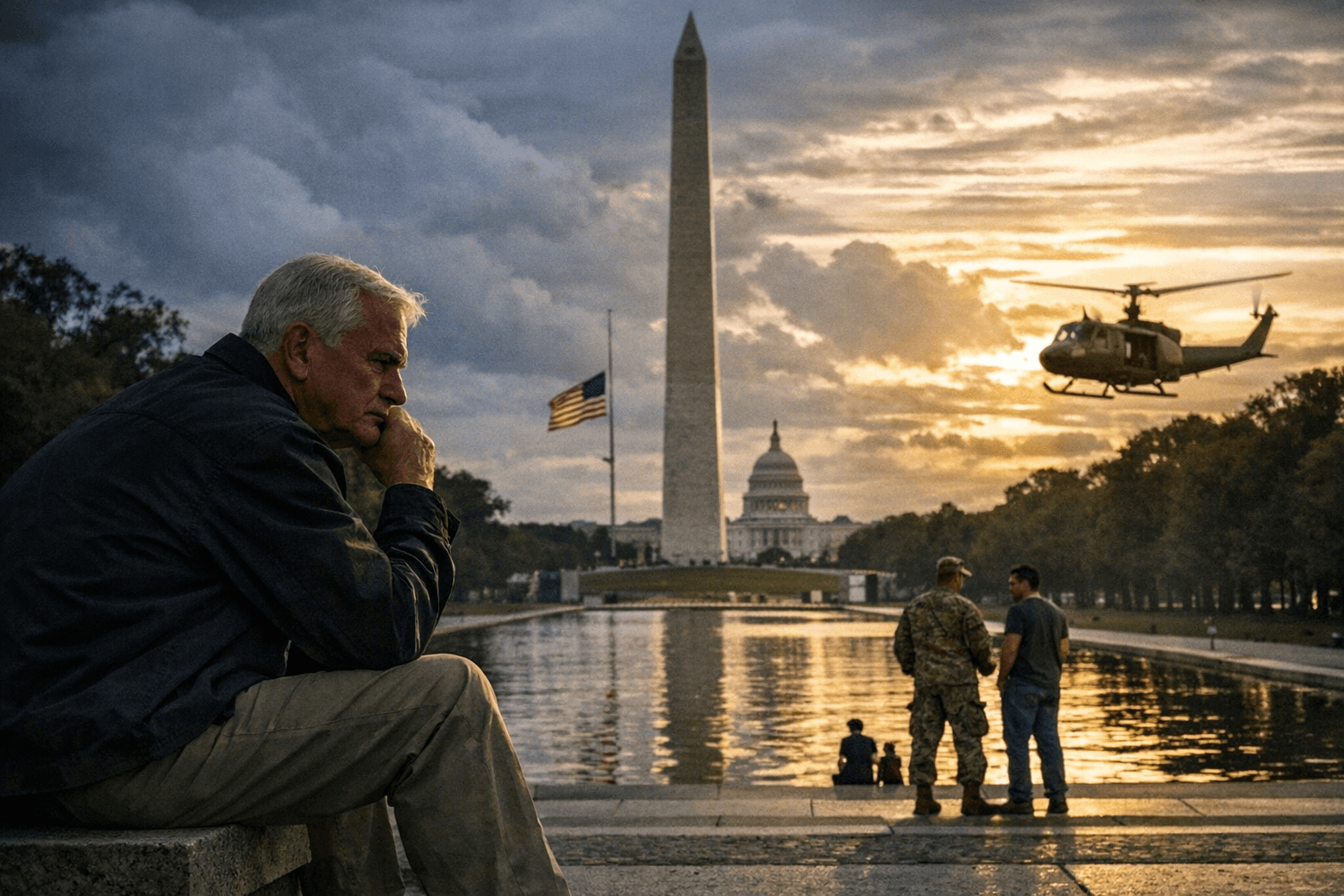
The question being asked in capitals from Brussels to Beijing today is whether the United States is capable of governing its own ambitions. It is a fair question. It has also been asked before, roughly every generation, and the answer has consistently been yes. Understanding why requires looking not at America's moments of triumph, but at its moments of wreckage, and at what followed.
A Recurring National Habit
Overreach is not a new American pathology. It is, in a bitter sense, a feature of the country's exercise of power. Deeply scarred by what it regards as failed wars, including those in Afghanistan, Iraq, Korea, and Vietnam, the restraint school argues that U.S. military interventions consistently weaken the nation. The common thread across these episodes is a mismatch between ambition and judgment: the belief that American power, applied with sufficient force, could reshape complex societies to Washington's liking. It rarely did.
The decline of American hegemony has been a gradual process, accelerated by major events but always rooted in deeper structural trends. What history demonstrates, however, is that the nation's capacity for self-correction is as durable as its capacity for hubris. The two forces have been in tension from the very beginning, and the corrective has, so far, always arrived.
The Watergate Lesson: Institutions Fight Back
The most instructive precedent for navigating the current moment may be the 1970s. Analysts with a sufficiently historical point of view tended to see in the Watergate affair and Nixon's 1974 resignation the culmination of a 30-year trend by which war and the Cold War had greatly expanded, and ultimately corrupted, executive power. Liberals who had once called for muscular presidential leadership were suddenly alarmed by what historians came to call "the imperial presidency."
What followed is worth remembering carefully. With what were widely understood to be the lessons of Vietnam fresh in the nation's mind, and a majority in Congress and the press hostile to the sitting president, the moment arrived for a legislative counterattack on executive overreach. The system bent dramatically under Nixon's pressure. It did not break. Congress reasserted itself. The courts held. A shattered institution, the presidency itself, was restored to legitimacy within a decade. The architecture designed by the founders, flawed and imperfect as it is, performed as intended.
The Military Rebuilt Itself
Institutional recovery was not limited to civilian government. The U.S. armed forces entered the 1970s in perhaps the worst shape in modern American history, demoralized by defeat in Vietnam and riven by internal fractures. Rather than focusing on the Army's problems, authors in the 1990s addressed the puzzle of the strength of this "formidable professional organization," attempting to trace the Army's effectiveness to its source. Books titled "Getting it Right" and "Prodigal Soldiers" chronicled how the generation of officers born of Vietnam revolutionized the American style of war.
By the Gulf War of 1991, that same institution that had struggled in the jungles of Southeast Asia was executing one of the most decisive military campaigns in modern history. The recovery was not accidental. It was the product of deliberate reform, hard institutional learning, and a generation of leaders determined not to repeat the failures of their predecessors. Overreach, in the military context, had produced precisely the pressure that led to reform.
The Current Stress Test
The present moment is severe. Since regaining the presidency in 2025, Donald Trump and his allies have launched a devastating attack on American democracy; the targets of this attack are the checks and balances, and the civil and political rights that have provided the foundations of the constitutional system for over two centuries. This is not rhetorical overstatement. The USA, a country long regarded as a leading advocate for democracy worldwide, has in 2025 significantly reduced both its diplomatic engagement and its financial support for international democracy assistance.
The National Intelligence Council projected that in 2025, "the U.S. will remain the preeminent power, but that American dominance will be much diminished." Meanwhile, more than three-quarters of respondents in polling feel the issues that divide the country pose a serious threat to the future of American democracy, a concern shared by a majority of all political parties.
The stress on institutions is real and documented. Political scientists have long assumed that the American constitutional system was a durable safeguard against authoritarian leadership. Checks and balances, separation of powers, and federalism were designed to prevent executive overreach. The concern among scholars today is that those mechanisms are being tested more severely than at almost any point since the Civil War.
Why Recovery Remains Possible
None of this means recovery is guaranteed. What it does mean is that the structural preconditions for recovery remain present. America's democratic institutions and federal system, while under serious pressure, are proving largely resilient to autocratic takeover, and U.S. democracy will survive the Trump era, contend many analysts.
The reasons for cautious optimism are grounded in institutional design rather than sentiment. Harvard political scientist Joseph Nye, writing on the future of American soft power, argued that "American democracy is likely to survive four years of Trump. The country has a resilient political culture and a federal constitution that encourages checks and balances." Federalism matters here in ways that are easy to underestimate: 50 state governments, thousands of local jurisdictions, independent courts from the district level to the Supreme Court, all represent friction in the system that slows executive consolidation.
The post-Cold War era demonstrated the flip side of this dynamic. Primacy was a strategic luxury that permitted the United States to adopt a transformative foreign policy agenda aimed at building a liberal world order with itself at the center. This approach achieved a great deal of good. The United States helped to stabilize the war-torn Balkans in the 1990s and increased the chances that democracy would take root in Central and Eastern Europe. Hundreds of millions of people around the world were lifted out of poverty. When the ambitions of that era overextended into Iraq and Afghanistan, the costs were catastrophic. Yet the foundational architecture of American power, its alliances, its institutions, its economic dynamism, survived.
The Pattern That Holds
What the historical record establishes is a consistent, uncomfortable pattern: American power accumulates, overreaches, absorbs the consequences, and recalibrates. McCarthyism gave way to civil liberties reforms. Vietnam discredited the national security consensus of the postwar era and ultimately produced a more skeptical, more rigorous military and foreign policy apparatus. Watergate generated the most significant legislative constraints on presidential power since the New Deal. The wars in Iraq and Afghanistan, catastrophically expensive in blood and treasure, ultimately reinvigorated the debate about when and how America uses force.
The current period of executive overreach is producing its own counterforces: state attorneys general challenging federal actions in court, federal judges issuing injunctions, civil society organizations mobilizing at a scale unseen in decades, and an opposition party sharpening its arguments. These are not guarantees of outcome. History does not operate on autopilot. But they are precisely the mechanisms through which the republic has corrected itself before, and they are functioning now. American power has proven durable not because Americans are uniquely virtuous, but because the system they built for arguing, checking, and correcting one another has proved, time and again, more resilient than the individuals who abuse it.
This article was produced by Prism’s automated news system from verified source data, official records, and press releases, then run through automated quality and moderation checks before publishing. The system is built and supervised by the people who set the standards it runs under. Read our full AI policy.
Did this article answer your question?