Israeli Strikes on Lebanon Kill Scores, Threatening U.S.-Iran Ceasefire Talks
Israeli strikes on Beirut and southern Lebanon killed scores as Iran demanded a halt to attacks before proceeding with U.S.-brokered ceasefire talks in Pakistan.
Intense Israeli air strikes across Beirut, Sidon, and towns throughout southern Lebanon on April 9 and 10 killed scores of people and left Lebanon's health ministry and civil defense teams overwhelmed, triggering urgent alarm over the survival of a fragile U.S.-Iran diplomatic framework that had only just taken shape.
Lebanon's health ministry reported hundreds killed and many more wounded within a compressed stretch of hours. Rescue workers searched through rubble at residential buildings, religious sites, and damaged infrastructure while witnesses described civilians fleeing in large numbers. Officials acknowledged that casualty tallies were likely to climb as bodies were recovered and as some struck areas remained inaccessible.
The timing magnified the strategic consequences. U.S. and Iranian delegations had been preparing to meet in Pakistan, which was serving as the third-party host for negotiations aimed at cementing a broader ceasefire. A temporary two-week truce framework between Washington and Tehran had already been established, but the Lebanese strikes threatened to collapse it before talks could resume. Iran's delegation had made clear its precondition: a halt to attacks on Lebanon before negotiations could move forward.
U.S. officials leading the American delegation, along with members of Congress, warned publicly that continued Israeli military operations in Lebanon risked unraveling the diplomatic progress. Regional analysts and government comments cited in reporting reflected a deepening uncertainty over whether the Lebanese theater could be decoupled from the ceasefire structure or whether it would become central to the negotiation's failure.
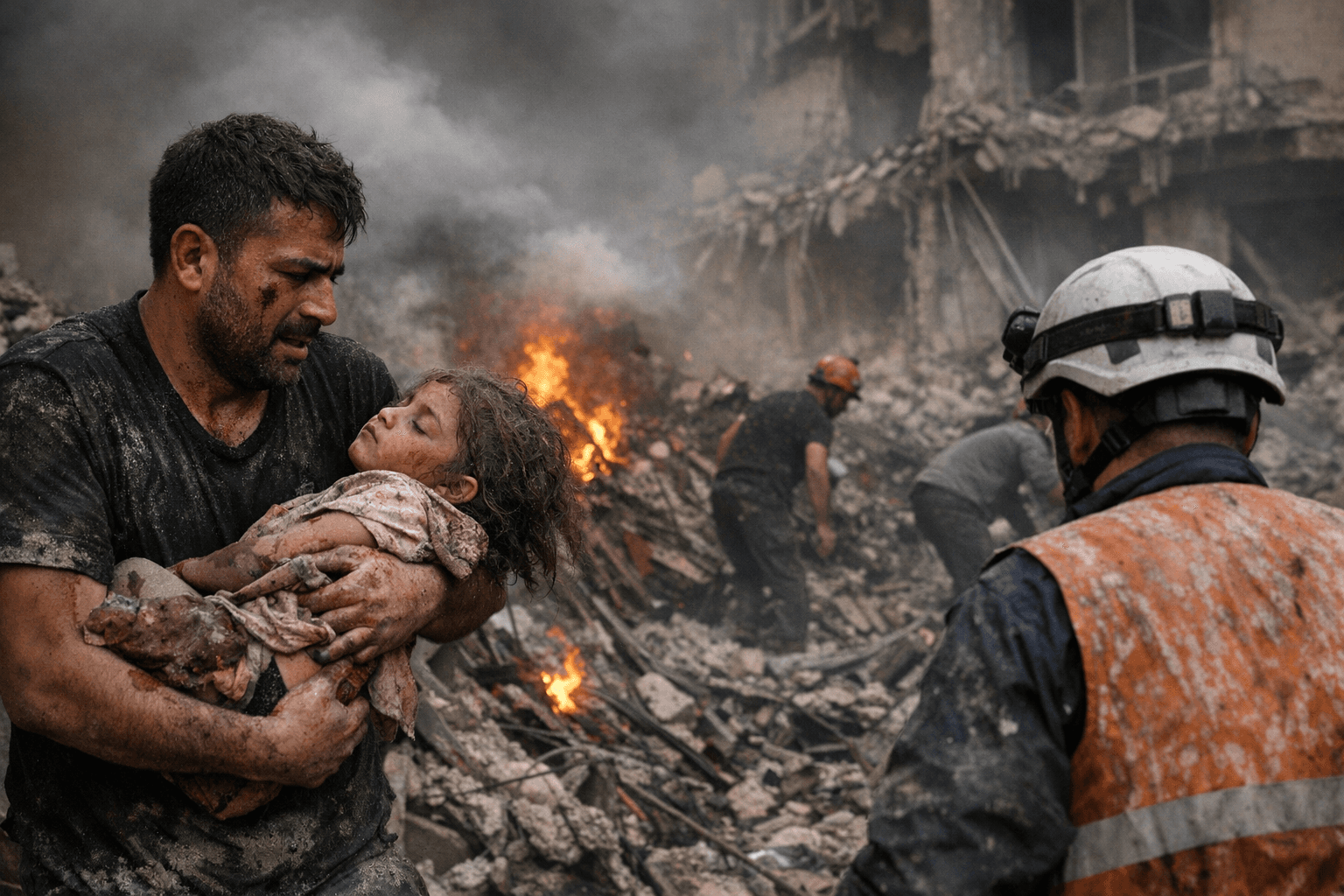
The humanitarian burden inside Lebanon deepened rapidly. Hospitals reported being strained beyond capacity, relief agencies faced mounting pressure, and the displacement of civilians from struck areas added to a refugee burden that had been building across successive rounds of conflict. The damage extended to infrastructure and religious sites in populated zones, complicating both immediate emergency response and longer-term recovery.
For Washington and its mediation partners, the strikes introduced a fundamental tension: pressing Israel on its operations in Lebanon while maintaining the credibility of a ceasefire architecture designed to prevent broader regional escalation. If diplomatic channels fail to hold, the risk of localized fighting between Israeli forces and Hezbollah-linked factions expanding into a wider regional conflict grows considerably more acute.
Pakistan's role as host gave the talks a degree of geographic insulation from the fighting, but Iran's preconditions placed the question of Lebanon squarely at the center of whether any agreement could be reached or sustained.
This article was produced by Prism’s automated news system from verified source data, official records, and press releases, then run through automated quality and moderation checks before publishing. The system is built and supervised by the people who set the standards it runs under. Read our full AI policy.
Did this article answer your question?


