U.S. and Iran Hold Direct Talks in Islamabad to Extend Ceasefire
Vance, Witkoff, and Kushner sat across from Iranian officials in Islamabad as U.S. destroyers entered the Strait of Hormuz for the first time since the war began.
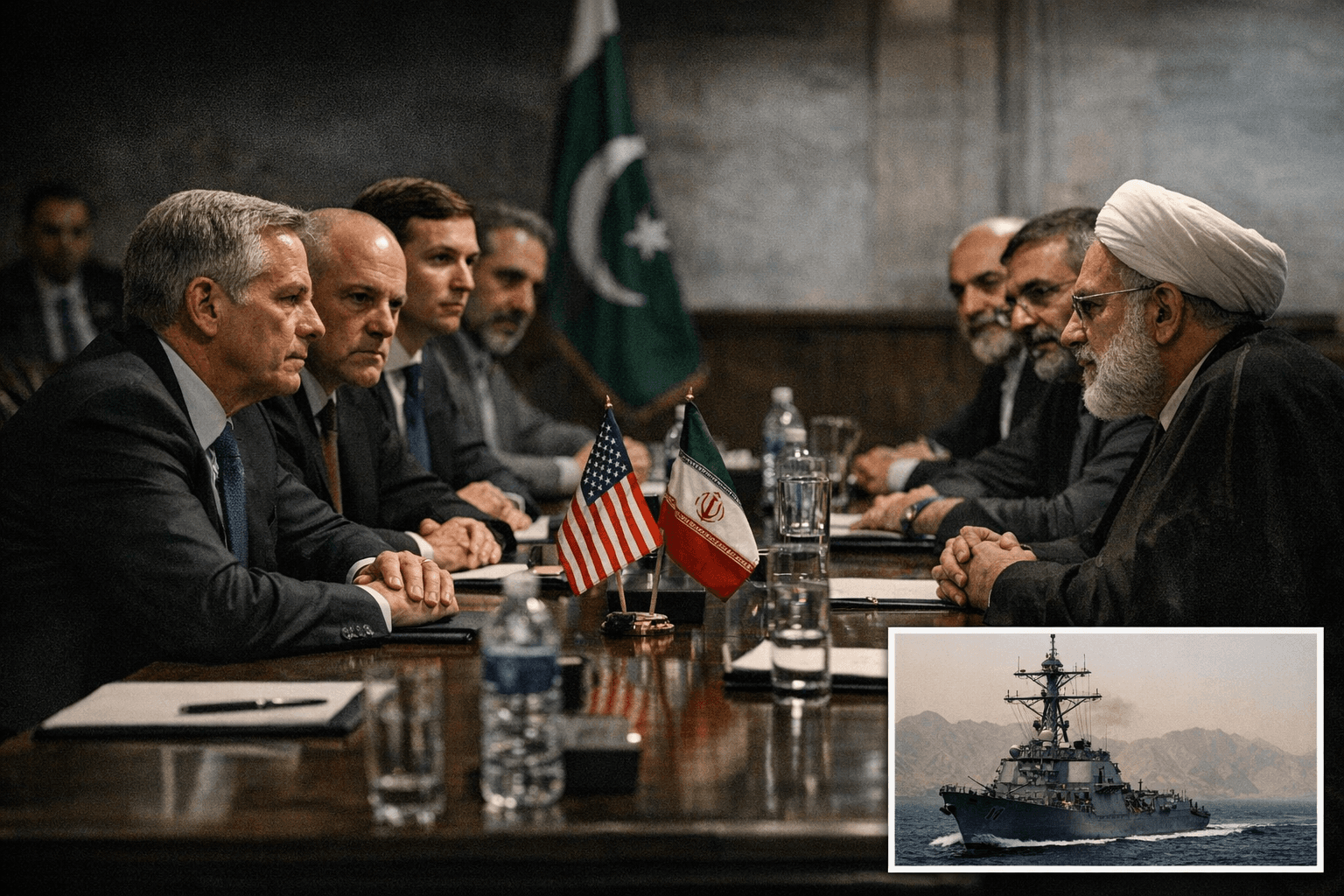
Vice President J.D. Vance sat down with Iranian negotiators in Islamabad on Sunday in the first direct, face-to-face U.S.-Iran diplomacy since the two countries went to war on February 28. The talks stretched past midnight with no agreement announced, but represented the clearest path so far to converting a fragile two-week ceasefire into something durable enough to fully reopen the Strait of Hormuz and pull oil prices back from above $100 a barrel.
Vance was joined by Trump special envoy Steve Witkoff and Jared Kushner, with Pakistani officials mediating at the Jinnah Convention Center. Islamabad declared a public holiday, ringed the venue with multiple security cordons and police checkpoints, and deployed Pakistan Air Force JF-17 and F-16 fighters to escort the Iranian delegation over the Persian Gulf into Pakistani airspace. The logistical scale of that security operation reflected how combustible the region remained even during a nominal truce.
Islamabad's selection as venue was deliberate. With no formal alliance to either Washington or Tehran, Pakistan offered neutral ground that Gulf capitals with direct economic exposure could not. Saudi Finance Minister Mohammed al-Jadaan arrived Saturday in what a source familiar with the matter described as a show of economic support, signaling that oil-producing economies were watching closely for any sign of when shipping lanes might reopen.
The ceasefire reached on April 8 was already fraying before talks began. Iranian Foreign Minister Abbas Araghchi accused Washington of allowing Israel to continue strikes in Lebanon, warning the U.S. had to choose between a truce or "continued war." President Trump fired back that Iran was doing "a very poor job, dishonorable some would say, of allowing Oil to go through the Strait of Hormuz." ADNOC chief Sultan Ahmed Al Jaber put it plainly: "The Strait of Hormuz is not open." Gasoline prices in the United States had already surged 48 cents per gallon in the first week of the conflict, and analysts warned energy markets could stay on a structurally higher floor even after shipping eventually resumes.
On Saturday, U.S. Central Command took a concrete step toward changing that calculus. Guided-missile destroyers USS Frank E. Peterson and USS Michael Murphy transited the strait for the first time since the war began, beginning a mine-clearing operation targeting naval mines previously laid by Iran's Islamic Revolutionary Guard Corps. CENTCOM said additional forces, including underwater drones, would join in coming days. Trump said American forces had started "clearing" the strait.
Both delegations in Islamabad arrived with positions that left little obvious middle ground. Iranian state television reported Tehran's red lines included war reparations and a firm ceasefire in Lebanon before any permanent deal. U.S. officials pushed for concrete security steps, including verified reopening of the strait, and denied agreeing to release frozen Iranian assets held abroad as part of any Hormuz arrangement. Iranian national security adviser Mahdi Mohammadi had made Tehran's terms plain before talks began: "Without fully restraining America's rabid dog in Lebanon, there will be no ceasefire or negotiations."
That Lebanon impasse captures the deepest structural obstacle to any durable deal. Iran treats continued Israeli strikes on Lebanon as U.S.-sanctioned actions that void ceasefire commitments. Israel, meanwhile, has stated the ceasefire does not include Lebanon. Any monitoring or verification regime would need to address not just the bilateral U.S.-Iran dynamic but also the behavior of partners neither side fully controls. Pakistani officials said the schedule remained flexible and would extend as long as necessary. As of midnight Islamabad time, the two sides were still at the table.
This article was produced by Prism’s automated news system from verified source data, official records, and press releases, then run through automated quality and moderation checks before publishing. The system is built and supervised by the people who set the standards it runs under. Read our full AI policy.
Did this article answer your question?