Peru Deploys 100,000 Security Forces to Safeguard Sunday's General Election
Peru mobilized 106,000 security forces on Saturday as 35 presidential candidates and no clear frontrunner set the country on course for a historic reckoning.
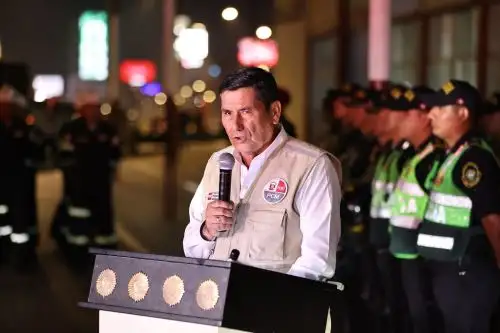
The deployment of more than 100,000 security forces across Peru on Saturday set the stage for a Sunday election that could determine whether the country's decade-long cycle of presidential crises finally breaks, or deepens.
Peru's prime minister presented the government's operations plan describing a mobilization of over 61,000 police agents and roughly 45,000 armed forces members tasked with protecting polling stations, electoral materials and transit routes reaching remote Andean and Amazonian communities. Simultaneously, dozens of convoys loaded with ballot boxes, ballots and electoral kits left central distribution centers in Lima bound for thousands of voting sites. The electoral authority, ONPE, deployed GPS and RFID tracking on materials in transit to enforce chain-of-custody protocols.
With 35 candidates in the race, Peru is set to elect its ninth president in less than a decade. Keiko Fujimori of Fuerza Popular leads in valid-vote polling at roughly 18.5%, followed by Rafael López Aliaga of Renovación Popular at approximately 13.3%, with comedian-turned-candidate Carlos Álvarez surging in recent surveys. A polling blackout has been in effect since April 7, leaving final standings uncertain. A June 7 runoff is near-certain, since no candidate is expected to clear the 50% threshold required under Peruvian law.
The government framed the deployment as a preventive measure against electoral sabotage and violence, particularly in zones where organized crime and political instability have intersected in recent years. But local civil society organizations and opposition leaders urged proportionality, warning that heavy militarization risks chilling voter turnout if not carefully managed. Electoral authorities emphasized that security forces would remain separate from vote counting, underscoring ONPE's institutional independence. Human Rights Watch and other international watchdog groups urged vigilance to protect democratic norms.

The stakes extend well beyond Lima. Peru produces 11.8% of the world's copper, and the election's outcome carries direct implications for foreign investment and trade alignment. Peru's insecurity and political environment represent an opportunity for competing outside influence, as Chinese investment in port infrastructure and energy projects has intensified geopolitical competition in the Western Hemisphere. The winner will also inherit a political landscape defined, in the words of one widely cited analysis, by high-level corruption that has cleared the way for organized crime to gain ground across regions.
Regional neighbors and migration monitors are tracking the outcome with equal attention. Peru's sustained instability has contributed to emigration flows that strain neighboring countries; a credible, peaceful transfer of power could begin stabilizing those patterns, while a contested result risks renewed unrest and deepened institutional erosion.
With security forces positioned nationwide and ballots moving toward their destinations, Peru's voters were set to render a verdict Sunday that its institutions, strained by years of turnover and scandal, would then have to carry forward.
This article was produced by Prism’s automated news system from verified source data, official records, and press releases, then run through automated quality and moderation checks before publishing. The system is built and supervised by the people who set the standards it runs under. Read our full AI policy.
Did this article answer your question?


