AP races to cover powerful Philippines earthquake, tsunami fears
A 7.8-magnitude quake off Sarangani triggered tsunami alerts across Asia and pushed AP’s Manila bureau into a rapid text, photo and video scramble.
The first challenge was not just reporting a major quake, but keeping pace with a disaster that was changing by the minute. When a 7.8-magnitude earthquake, one of the strongest to hit the Philippines in decades, struck off Sarangani, AP’s Manila bureau moved immediately to stitch together text, photos and video while editors tracked tsunami warnings, local officials’ statements and signs of damage.
The quake hit at 7:37 a.m. Philippine Standard Time on June 8, 2026. PHIVOLCS placed the epicenter about 32 kilometers west of Maasim in Sarangani Province, offshore southern Mindanao, at a depth of 33 kilometers along the Cotabato Trench. The U.S. Geological Survey said the event was caused by thrust faulting tied to westward subduction of the Philippine plate beneath the Sunda plate, making clear that this was a tectonic rupture, not a volcanic event.
PHIVOLCS issued a tsunami warning soon after the shaking, and authorities across the Philippines and beyond moved fast enough to turn a local emergency into a regional one. Tsunami advisories were also issued in Indonesia, Japan, Malaysia and Palau, underscoring the reach of the threat across the Asia-Pacific. Nearby coasts later saw tsunami waves of about 1 meter, or 3 feet, before the initial warning was lifted.
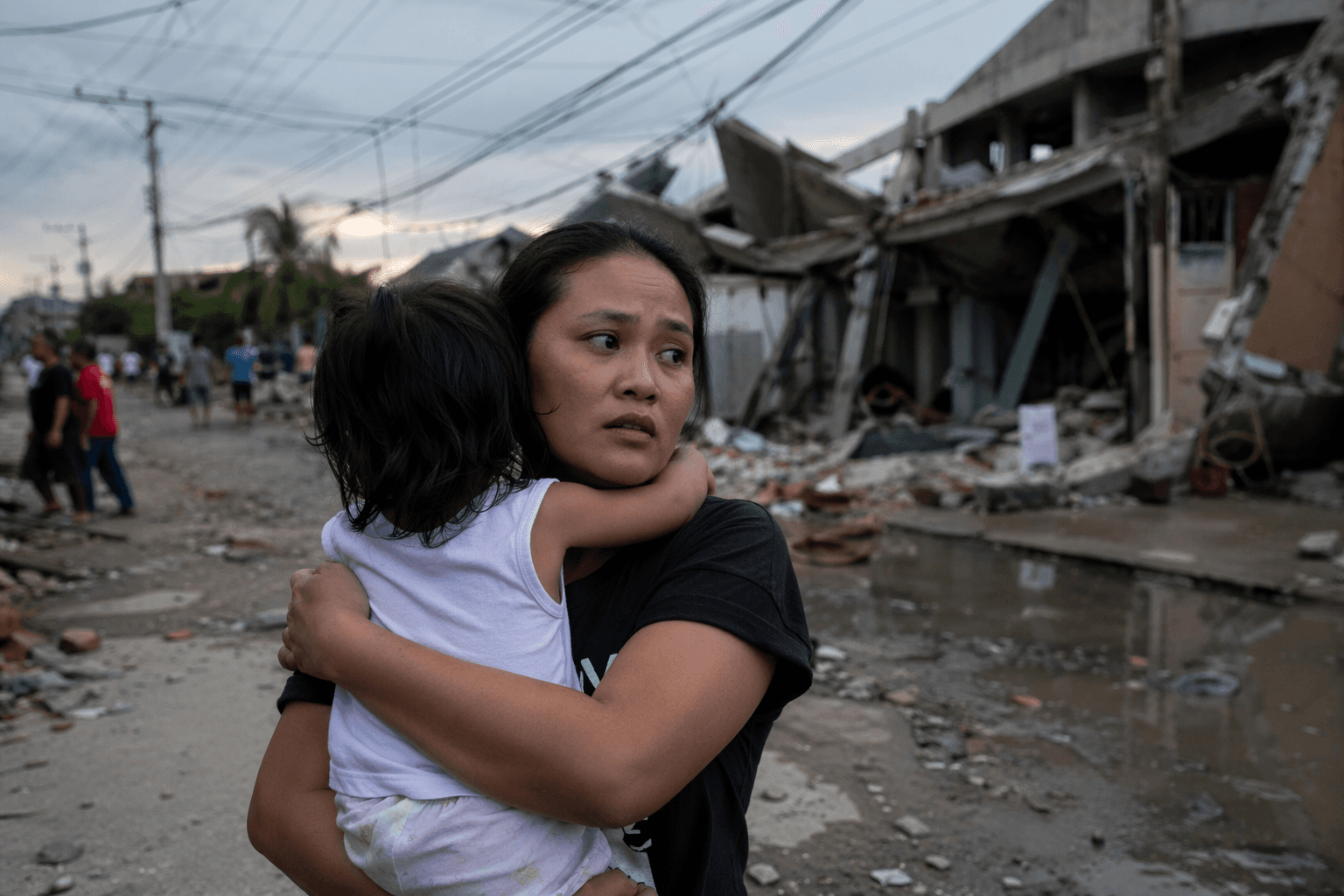
The reporting challenge was amplified by the scale of the aftershock sequence and the changing casualty counts. PHIVOLCS reported 138 aftershocks by 11:00 a.m. on June 8, and the Office for the Coordination of Humanitarian Affairs said more than 2,000 had been recorded by June 10, with more expected. OCHA said government figures had reached 45 dead, 487 injured and 17 missing, with about 197,750 people affected across Regions IX, XI, XII and BARMM. Later, the Philippine News Agency said the toll had climbed to 47 dead, 688 injured and 31 missing.
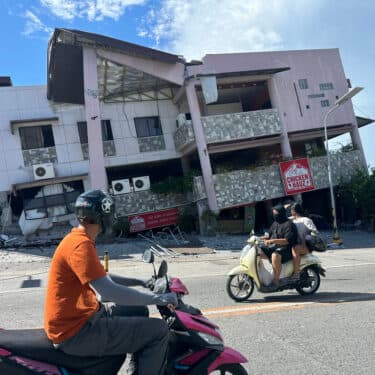
AP’s wire coverage said several mostly low-rise buildings in General Santos collapsed or were heavily damaged, a reminder that the biggest risks came not only from the quake itself but from what followed: structural failure, communications strain, evacuation pressure and the need for verified information before rumor could fill the void. Early Reuters and AP reports put the death toll at 32 to 35 and injuries above 200, showing how quickly the story evolved as officials tallied damage and rescue teams pushed into affected areas.
For AP, the earthquake became a test of its breaking-news machine. The bureau’s response was not a single dispatch but a coordinated flow of text, visuals and updates, built for readers who needed accuracy as much as speed while the emergency was still unfolding.
This article was produced by Prism’s automated news system from verified source data, official records, and press releases, then run through automated quality and moderation checks before publishing. The system is built and supervised by the people who set the standards it runs under. Read our full AI policy.
Know something we missed? Have a correction or additional information?
Submit a Tip