Apple MacBook Air Hits Record Low Prices With Discounts Up to $200 Off
Amazon's new all-time low prices on the M5 MacBook Air, released just weeks ago in March 2026, cut up to $200 off select 15-inch models, raising a timely question: when is a discount a deal, and when is it a warning sign?
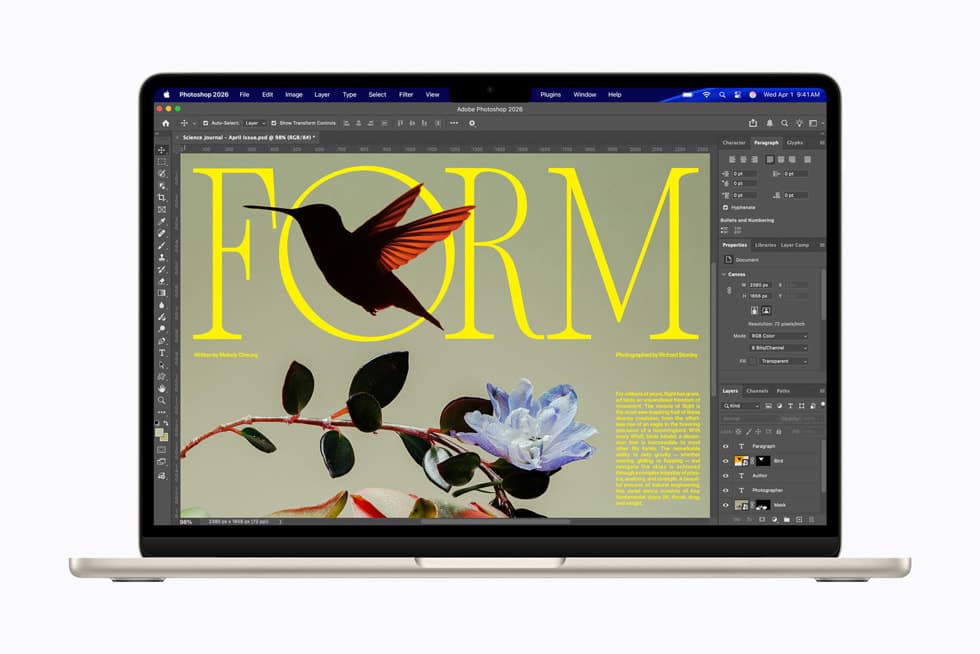
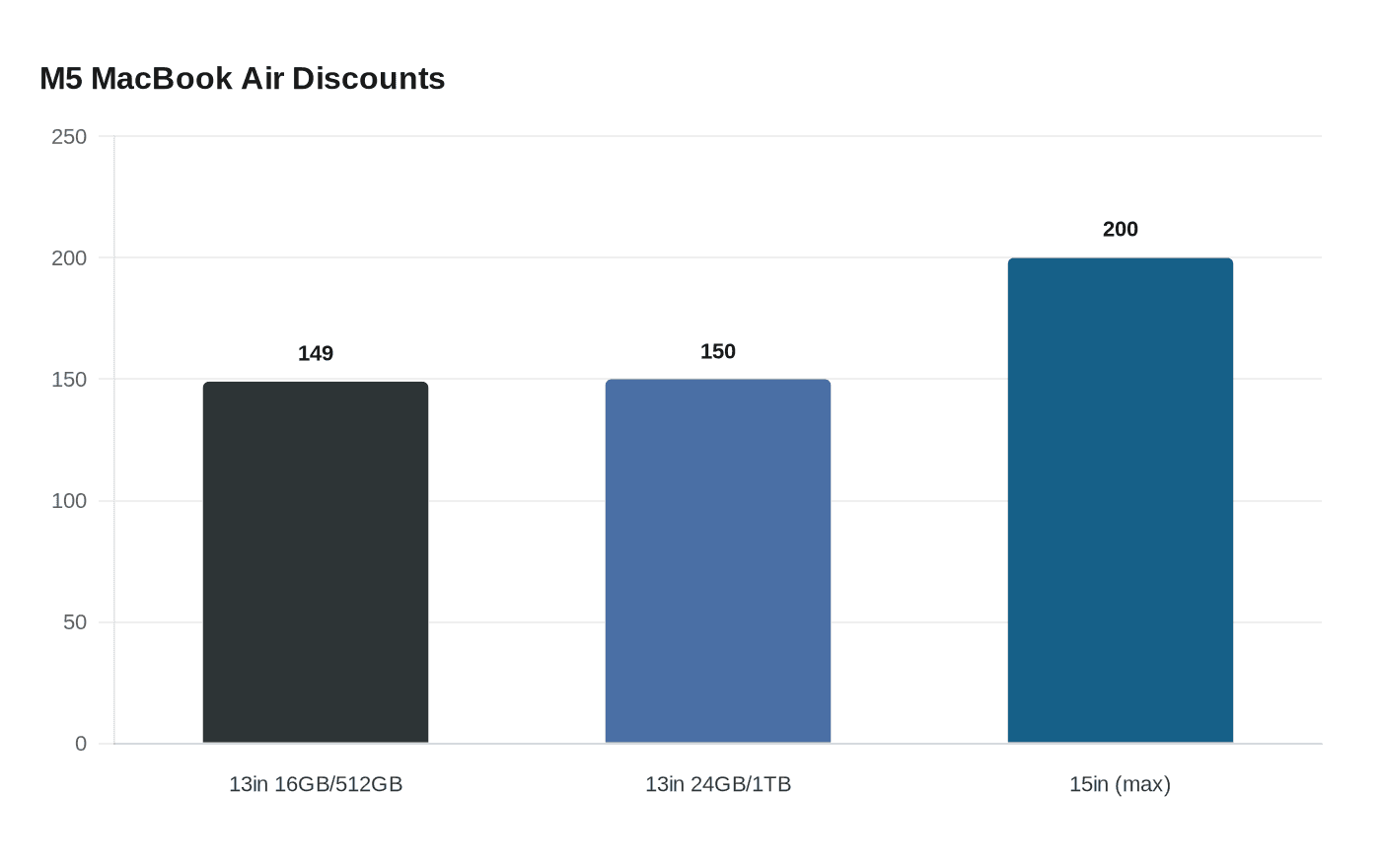
Amazon slashed prices on Apple's just-released M5 MacBook Air this past weekend, marking the first significant discounts since the machine launched in March 2026. The 13-inch model with 16GB of RAM and 512GB of storage dropped $149 to $949.99 on both the Sky Blue and Starlight configurations, while 15-inch models saw cuts of up to $200 off list price. On the 24GB/1TB 13-inch configuration, Amazon trimmed $150 from the $1,499 retail price, bringing it to $1,349.99. All represent the lowest prices recorded for the M5 generation.
The timing matters. The M5 MacBook Air, which arrived in stores only weeks ago, is already no longer Apple's entry-level laptop, a positioning shift that leaves room for retailers to compete aggressively on price without cannibalizing Apple's higher-margin lineup. Amazon is an authorized Apple reseller, meaning these units carry full manufacturer warranties and standard return protections. That distinction is critical, because the phrase "$200 off MacBook Air" covers a wide spectrum of transactions with very different risk profiles.
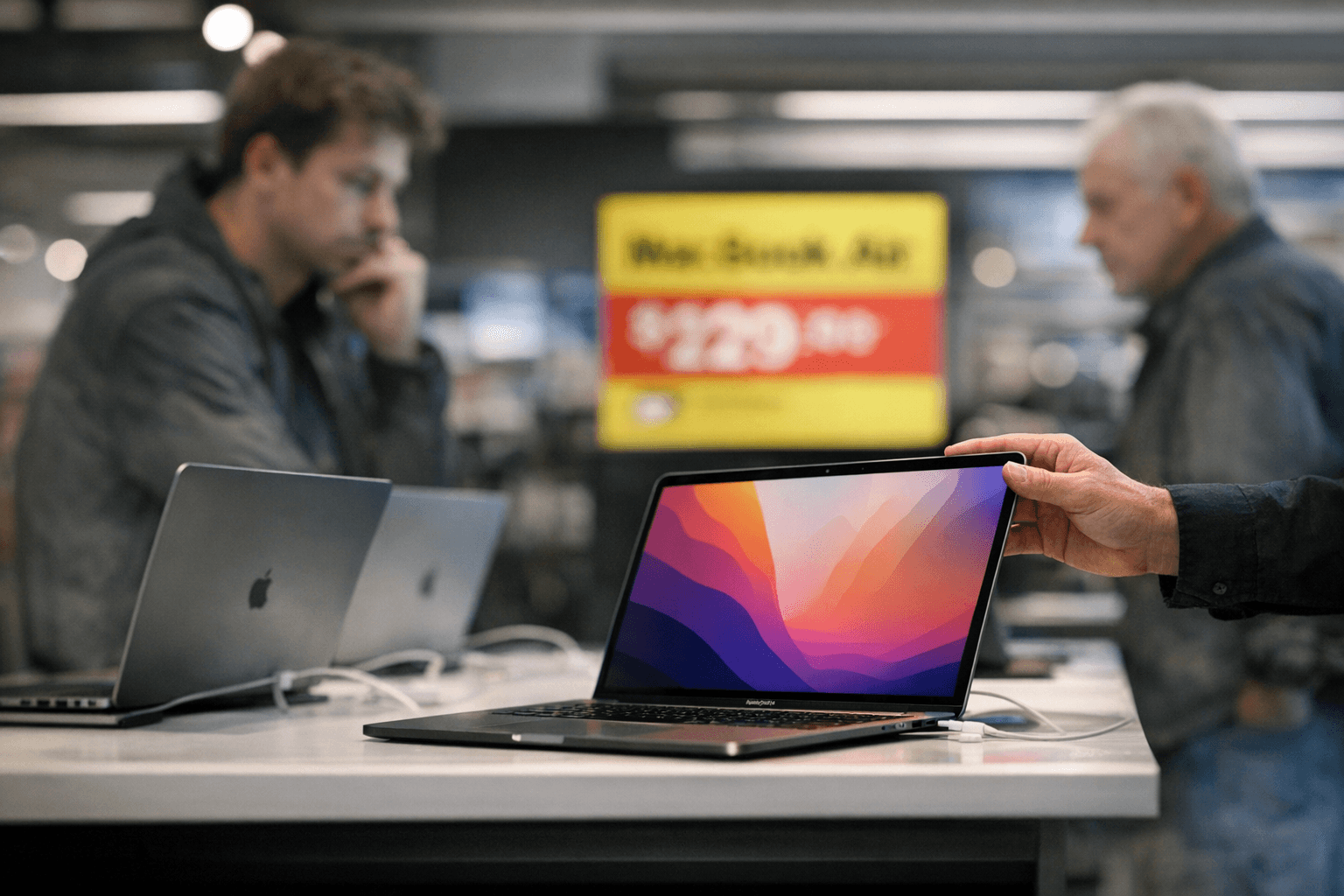
At one end sits an authorized retailer discount on a factory-sealed, warranty-intact product. At the other sits the kind of deal that surfaces on social media or third-party classifieds: a MacBook Air priced well below $800, sometimes described as "open box," "liquidation stock," or simply "lightly used." Those categories are not inherently fraudulent, but they do require verification steps that a straightforward Amazon purchase does not.
The most reliable first check is Apple's own coverage tool at checkcoverage.apple.com, which cross-references a serial number against Apple's database to confirm whether the device is still under warranty, whether AppleCare has been purchased, and whether the machine has been flagged as stolen or activated lock-enabled. Mobile Device Management lock is a particular hazard with units sourced from corporate liquidations: a company can remotely wipe or disable the machine at any time, and there is no reliable way for a buyer to verify MDM status before purchase unless the seller can demonstrate clean enrollment status. Buying from a stranger who cannot provide proof of original purchase receipt adds another layer of exposure.
Payment method also affects recoverability. Credit card purchases through established platforms carry chargeback rights that cash, wire transfer, or peer-to-peer payment apps do not. Sellers who insist on Zelle, Venmo, or cryptocurrency should be treated as a hard stop.
The total-cost math on any MacBook Air deal also deserves scrutiny beyond the sticker price. An M5 Air discounted to $949 still runs macOS Sequoia with expected software support through roughly 2031, based on Apple's historical seven-year support window. A heavily discounted M1 model at $600 is three chip generations back and, depending on its 2020 or 2021 manufacture date, may fall outside that support envelope within two to three years. Add the cost of a USB-C hub for legacy peripheral compatibility, a protective case, and potentially an AppleCare+ plan at $99 for two years of accidental damage coverage, and the gap between the discounted price and the total ownership cost narrows considerably.
Amazon's current M5 pricing still leaves the MacBook Air as a premium product, even at its record low. The value of this week's discounts is real and verifiable. The broader lesson for any extreme tech discount is simpler: the legitimacy of the seller, not the size of the markdown, is the variable that actually determines whether a deal is worth taking.
This article was produced by Prism’s automated news system from verified source data, official records, and press releases, then run through automated quality and moderation checks before publishing. The system is built and supervised by the people who set the standards it runs under. Read our full AI policy.
Did this article answer your question?