Apple Posts Record Revenue as Cook Prepares to Exit, Ternus Takes Over
Apple’s revenue hit a record $111.2 billion as Tim Cook mapped his exit and John Ternus took the stage, while iPhone 17 demand surged and China rebounded.

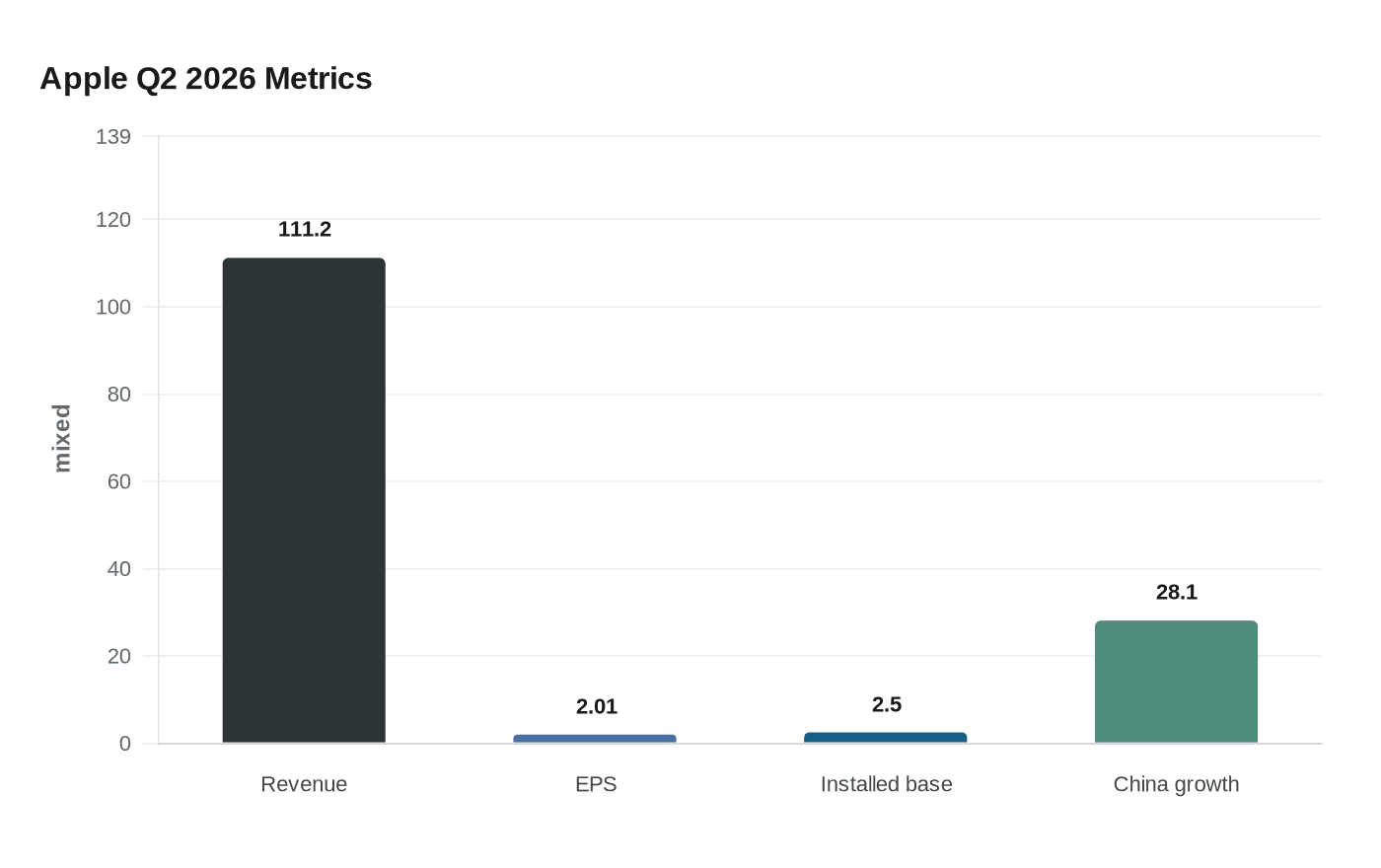
Apple paired a blockbuster quarter with a historic handoff, reporting record revenue of $111.2 billion and naming John Ternus as its next chief executive as Tim Cook prepares to move into the role of executive chairman on September 1, 2026. The numbers underscored both the strength of Apple’s current business and the stakes of its post-Cook era, with investors now asking whether the latest surge reflects durable demand or a rush of purchases ahead of tougher conditions.
For the fiscal second quarter ended March 28, 2026, Apple said revenue rose 17% from a year earlier and diluted earnings per share climbed 22% to $2.01. iPhone revenue set a March-quarter record, and Cook said demand for the iPhone 17 lineup was “extraordinary” and “off the charts.” Chief financial officer Kevan Parekh went further, calling the iPhone 17 family Apple’s most popular model family ever. Ternus, who joined Cook on the earnings call, said Apple has an “incredible roadmap ahead,” a line that doubled as an early signal of continuity for a company about to change CEOs.

The strength of the quarter went beyond the iPhone. Apple said Services also reached another all-time record, and its active installed base passed 2.5 billion devices earlier in 2026, giving the company a vast base of users to sell into across hardware, software and subscriptions. That installed base has become one of Apple’s most important strategic assets, especially as the company tries to keep customers inside its ecosystem for longer upgrade cycles and more recurring revenue.
Geography also helped. Apple said revenue grew in every major region, with Greater China up 28.1%, a notable rebound in a market that has been closely watched by investors for signs of weakness. The recovery mattered because China has been one of the toughest pressure points for Apple’s growth story, and a sharper-than-expected improvement there eased some concerns about consumer demand heading into the next phase of the product cycle.
Still, Cook flagged a constraint that complicates the reading of the quarter. He said supply limitations kept Apple from selling even more iPhones, adding that there was less flexibility in the supply chain to get additional parts. That leaves open a central question for investors: whether the iPhone 17 boom is a clean signal of product momentum, or partly the result of customers moving early before possible tariff turbulence or other economic disruptions. Apple’s shares rose in after-hours trading after the company beat expectations and issued a stronger-than-expected revenue forecast, but the bigger market test may come after the handoff from Cook to Ternus becomes real.
This article was produced by Prism’s automated news system from verified source data, official records, and press releases, then run through automated quality and moderation checks before publishing. The system is built and supervised by the people who set the standards it runs under. Read our full AI policy.
Did this article answer your question?