Aramco chief warns oil market faces long recovery after supply shock
Amin Nasser said the market has effectively lost 1 billion barrels in two months, leaving prices and inventories under strain even if flows restart.

Saudi Aramco chief executive Amin Nasser said the oil market faces a slow recovery because about 1 billion barrels have effectively been lost over the past two months, leaving a backlog that cannot be erased just by reopening supply routes. His message was blunt: restarting flows is not the same as restoring stability.
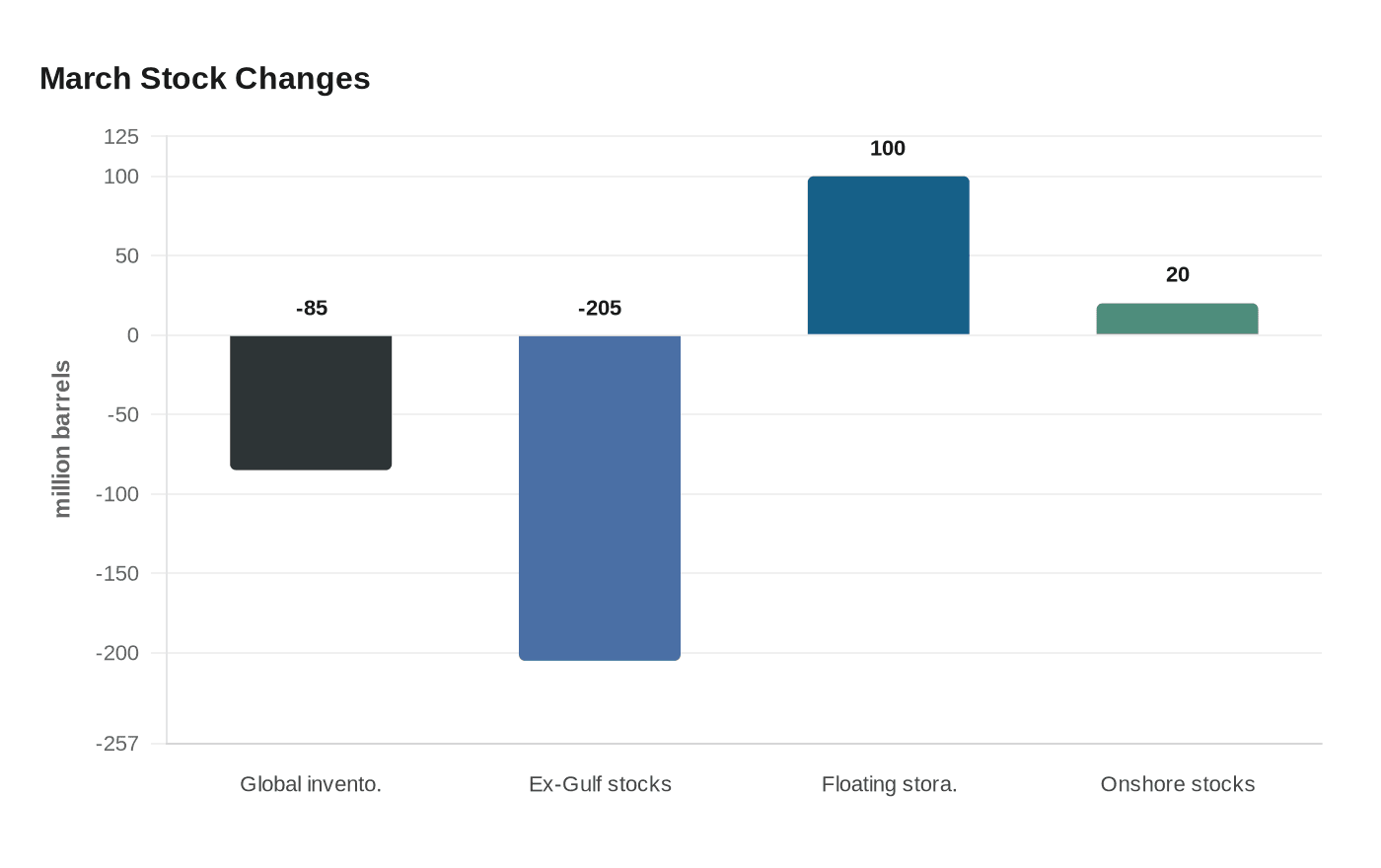
Nasser said the company’s priority is to keep energy moving even when the system is under pressure, but he warned that years of underinvestment have made global inventories more fragile. The strain is already visible in the numbers. The International Energy Agency said global observed oil inventories fell by 85 million barrels in March, stocks outside the Middle East Gulf dropped by 205 million barrels, and global supply plunged by 10.1 million barrels per day to 97 million barrels per day as attacks on energy infrastructure and restrictions through the Strait of Hormuz disrupted trade.
Aramco has been forced to respond by leaning harder on infrastructure that can bypass the chokepoint. Nasser described the East-West Pipeline as a "critical lifeline" because it moves crude to the Red Sea instead of through Hormuz. The line reached its maximum capacity of 7.0 million barrels per day in the first quarter, helping Saudi Arabia sustain exports from its west coast and cushion the shock to global supply.
At the same time, Aramco is still generating large profits from the volatile market it is helping stabilize. The company reported first-quarter adjusted net income of $33.6 billion, up from $26.6 billion a year earlier, and declared a base dividend of $21.9 billion, up 3.5 percent from last year. Capital spending totaled $12.1 billion. Free cash flow came in at $18.6 billion, down from $19.2 billion a year earlier, after a $15.8 billion working-capital build.
The broader market picture suggests the disruption is seeping into the system rather than fading. The IEA said floating storage of crude and oil products in the Middle East rose by 100 million barrels in March, while onshore crude stocks in the region increased by 20 million barrels. That kind of buildup signals rerouted cargoes, delayed deliveries and a market trying to absorb shocks rather than move smoothly.
Even if fighting eases, the backlog left behind can keep prices elevated and recovery uneven. Oil rose $3 a barrel on May 11 after the United States and Iran failed to agree on a peace proposal, while a Qatari LNG tanker crossed the Strait of Hormuz on May 10 for the first time since the Iran war began, a reminder that shipping remains constrained and fragile. Nasser also said Asia remains a key priority, underscoring that the center of demand is unchanged even as the route map of global energy is being redrawn.
This article was produced by Prism’s automated news system from verified source data, official records, and press releases, then run through automated quality and moderation checks before publishing. The system is built and supervised by the people who set the standards it runs under. Read our full AI policy.
Did this article answer your question?

