Artemis II Commander Snaps First Crew Photos of Earth From Orion
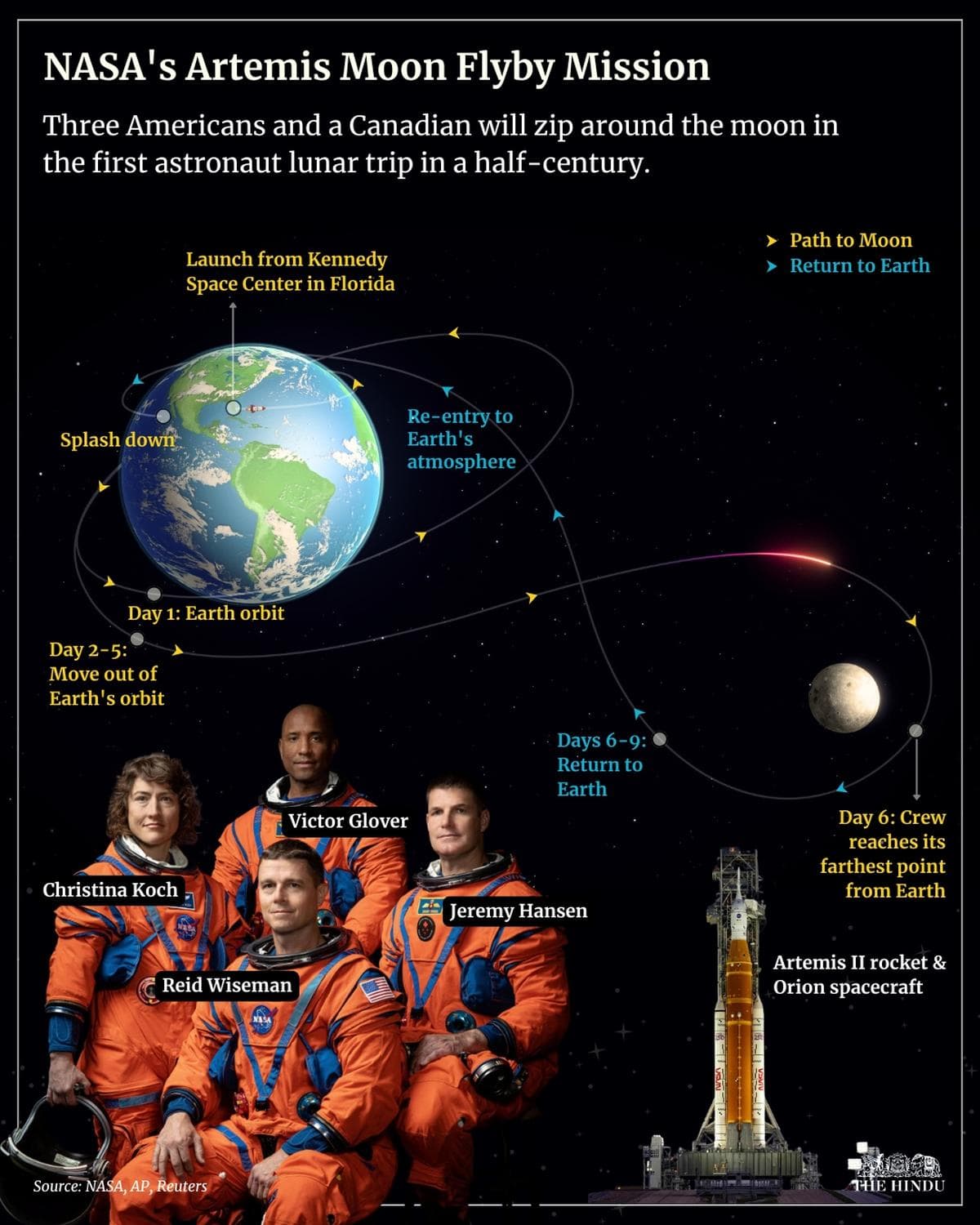
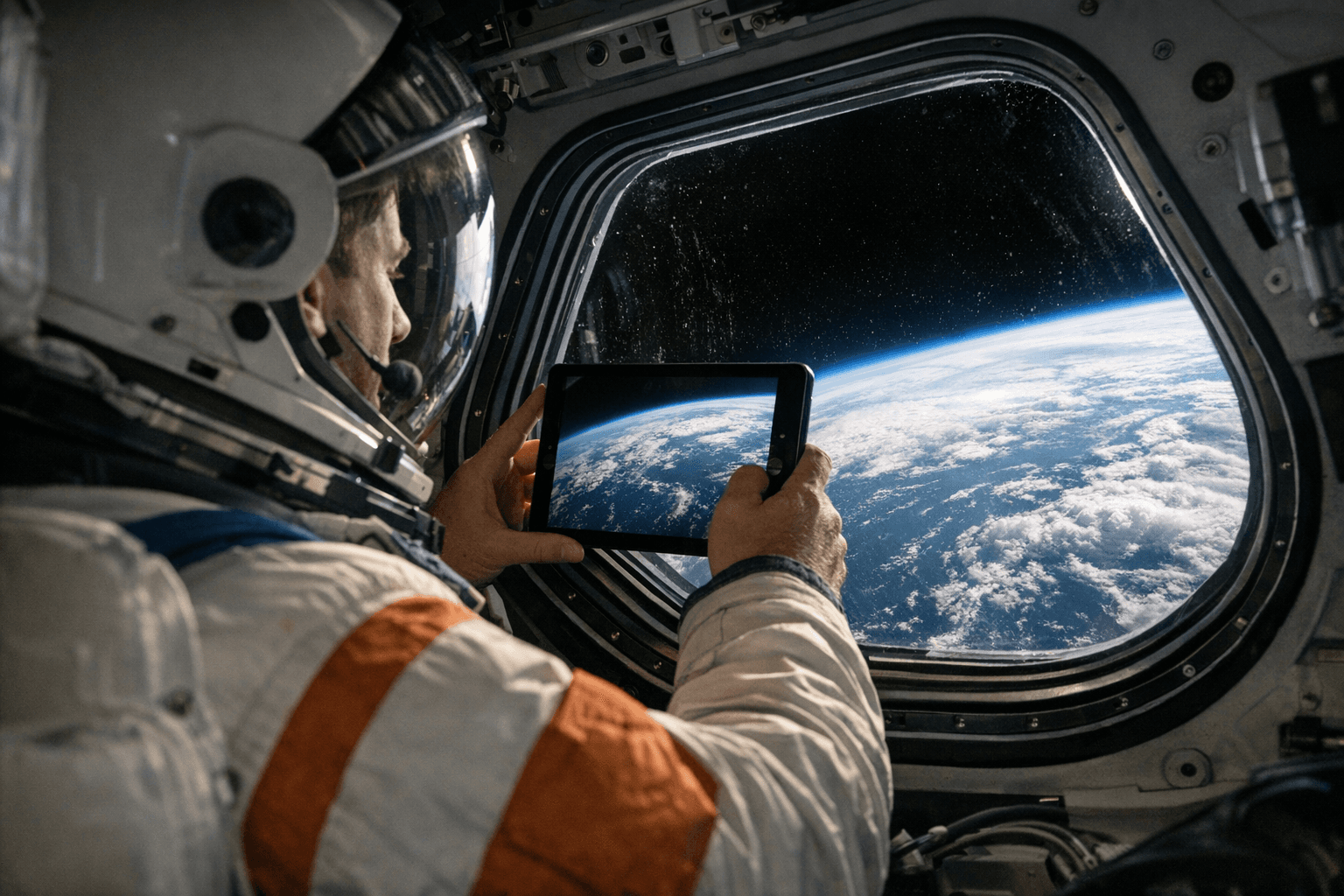
Reid Wiseman photographed Earth from Orion's window using a tablet, one day after a six-minute burn sent the crew beyond Earth's orbit for the first time since 1972.

With a tablet and a window seat 50 years in the making, Reid Wiseman pointed his camera at Earth and pressed the shutter. The images NASA released April 3 under the title "Hello, World" show the planet first as a partial arc through Orion's window, then as a full globe blazing in blues and browns, with two auroras glowing at opposite corners and zodiacal light shimmering in the bottom right, sunlight bouncing off interplanetary dust scattered across the solar system.
Wiseman, commander of NASA's Artemis II mission, captured the photographs on April 2, 2026, using his Personal Computing Device, a standard tablet equipped with a camera, from one of the Orion capsule's four main windows. The timing was precise: the shots came after the crew completed the translunar injection burn, a roughly six-minute firing of Orion's service module engine that broke the spacecraft free of Earth's orbit and set it on a path toward the Moon. Mission Control shifted Orion's orientation so the second image could capture the full globe. It was the first such burn executed by a crewed spacecraft since Apollo 17 in December 1972.
Mission Specialist Christina Koch described the images as "a preview of what's to come," adding that knowing similar views of the Moon were approaching "is definitely getting us excited." Canadian astronaut Jeremy Hansen, experiencing his first spaceflight, was more immediate: "I just kept saying to them yesterday, like I really like it up here... The views are extraordinary." After the burn, Hansen radioed Mission Control: "We just wanted to communicate to everyone around the planet who's worked to make Artemis possible that we firmly felt the power of your perseverance during every second of that burn."
Artemis II lifted off April 1, 2026, at 6:35 p.m. EDT from Launch Complex 39B at Kennedy Space Center in Florida, atop a Space Launch System rocket, launching four astronauts toward the Moon for the first time in more than 50 years. The crew carries a remarkable concentration of historic firsts. Victor Glover is the first person of color to travel to the Moon's vicinity. Koch is the first woman to travel beyond low Earth orbit. Jeremy Hansen, representing the Canadian Space Agency, is the first non-U.S. citizen to do so. And Wiseman, the mission's commander, is the oldest.
The 10-day mission will not attempt a lunar landing. Like Apollo 8 in 1968, the closest historical analog, Artemis II is a pathfinder flight designed to validate the Space Launch System rocket and Orion capsule for future crewed landings. The crew will fly a free-return trajectory, passing within 4,000 to 6,000 miles of the lunar surface before heading home, with the flyby scheduled for approximately Monday, April 6.
That pass is expected to set a new record for the farthest distance any humans have traveled from Earth: 252,799 miles, surpassing the 248,655-mile mark set by the Apollo 13 crew in 1970. Artemis III, the next mission in the program, is expected to use a lander developed by SpaceX, Blue Origin, or both to finally put astronauts back on the surface. These photographs, taken through a capsule window two days into the journey, represent the opening frame of that larger ambition.
Know something we missed? Have a correction or additional information?
Submit a Tip