At 101, Auschwitz survivor Ginette Kolinka fights antisemitism in France
At 101, Ginette Kolinka still walks into classrooms to confront antisemitism, carrying Auschwitz testimony from private survival into public memory.
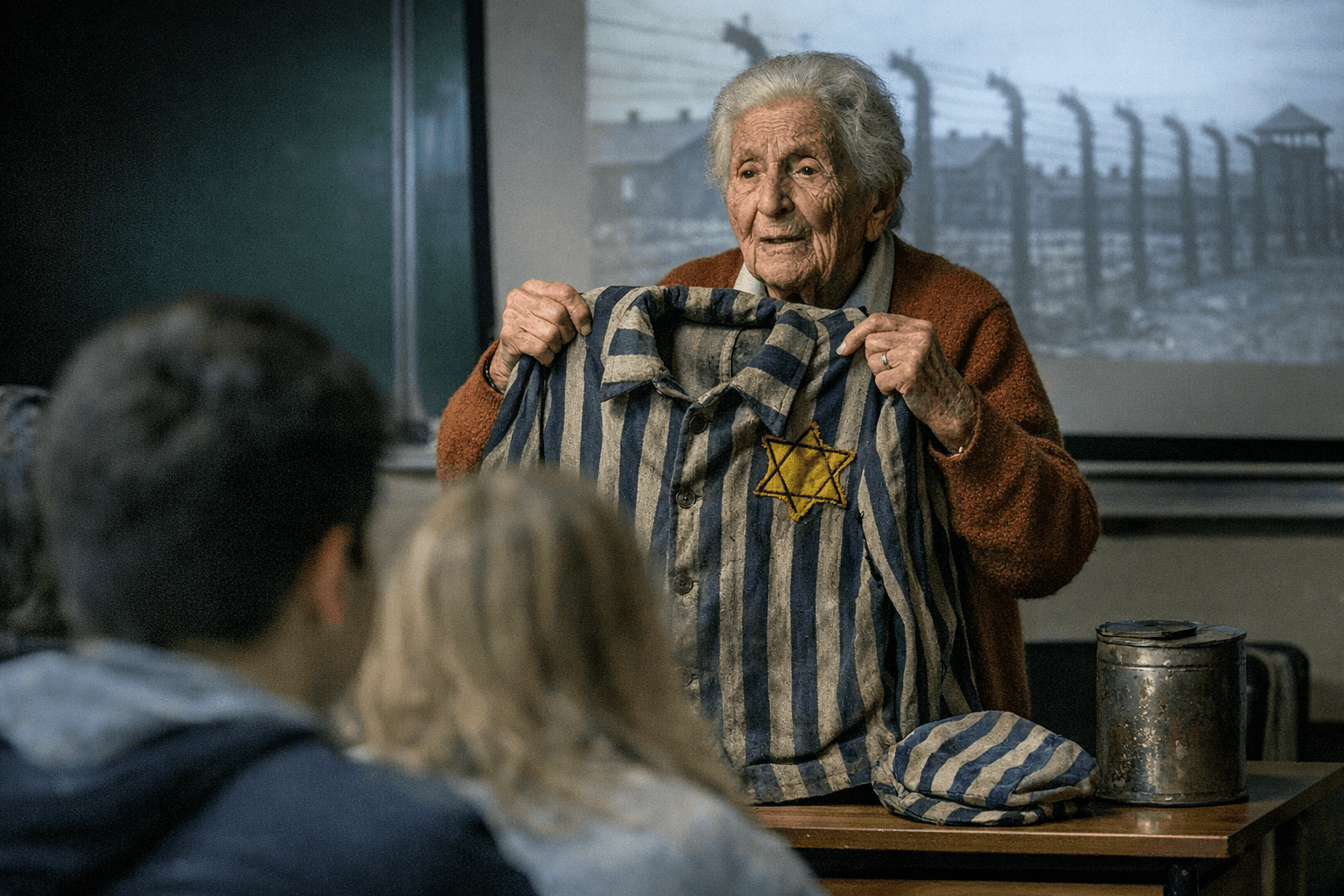
Ginette Kolinka has turned the silence after Auschwitz into a weapon against antisemitism in France. At 101, she still appears before schoolchildren, including at a high school in Saint-Maur-des-Fossés on March 21, 2026, making the history of Auschwitz-Birkenau immediate for students who never knew a survivor.
For decades, Kolinka rarely spoke about what she endured in the camps. That changed after Steven Spielberg’s Schindler’s List and the Shoah Foundation he launched in 1994 to record Holocaust testimony. When interviewers finally reached her in the 1990s, the memories came pouring out, and Kolinka emerged as one of France’s most prominent survivor voices through books, media appearances and school visits.
Her public role has taken on added urgency as the number of living witnesses dwindles. The Paris-based Union of Auschwitz Deportees says only a few dozen, possibly fewer than 30, French Auschwitz deportees were still alive. In France, Nazi occupation led to the deportation of about 76,000 Jews, most of them to Auschwitz-Birkenau, and only about 2,500 survived. Serge Klarsfeld’s memorial work now underpins an online database that lists 77,682 deportation records, a sign of how the historical record continues to be refined.
Kolinka’s testimony also lands in a national history shaped by late recognition. The Vél d’Hiv roundup of July 16 and 17, 1942, was the largest French deportation of Jews during the Holocaust. More than five decades later, on July 16, 1995, President Jacques Chirac formally acknowledged French state responsibility for the deportation of Jews, a turning point that gave survivor testimony even greater force in public life.
The institutions built to preserve those voices show how memory has been transformed into a public record. The U.S. Holocaust Memorial Museum says the Survivors of the Shoah Visual History Foundation recorded nearly 52,000 interviews between 1994 and 2002. USC Shoah Foundation now says its archive holds more than 59,893 testimonies in 44 languages from 70 countries. Kolinka’s late-life activism fits that broader effort: to keep the Holocaust from fading into abstraction and to make sure denial has to confront a living witness.
This article was produced by Prism’s automated news system from verified source data, official records, and press releases, then run through automated quality and moderation checks before publishing. The system is built and supervised by the people who set the standards it runs under. Read our full AI policy.
Did this article answer your question?


