Australia and EU Sign Sweeping Trade Deal After Eight Years of Negotiations
Australia's beef quota will grow more than 10 times, yet farmers called it the "worst ever" red meat trade deal, as the EU-Australia pact wiped over 99% of tariffs after 8 years.
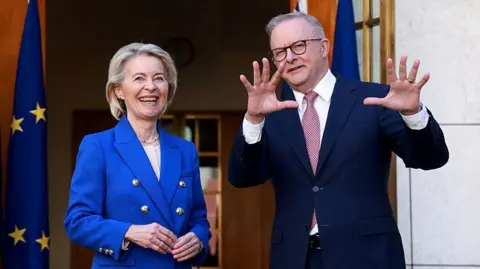
European Commission President Ursula von der Leyen and Australian Prime Minister Anthony Albanese signed a sweeping free trade agreement at Parliament House in Canberra on Tuesday, ending negotiations that began in 2018 and stalled in 2023 over agricultural access disputes, only to be revived amid surging pressure from U.S. tariffs and Chinese export controls.
The agreement, resulting from almost eight years of talks, removes most of the tariffs the two sides had imposed on each other's goods and allows the EU greater access to critical mineral supplies from Australia. Australia committed to removing over 99% of tariffs on EU goods, a step the European Commission said would cut roughly €1 billion a year in duties for companies. The deal slashes tariffs on most EU goods and farm exports.
The economic projections put forward by each side differ substantially. Australian government estimates, as reported by AFP, said the deal could add AU$7.8 billion (US$5.4 billion) to the country's GDP by 2030. Prime Minister Albanese offered a larger figure at a news conference, saying "This is a comprehensive, balanced and commercially meaningful agreement which will reduce costs for Australian consumers and open new markets for Australian producers." Reuters reported Albanese valued the agreement at about A$10 billion annually to the Australian economy. He said it "eliminates tariffs on key Australian exports including wine, seafood and horticulture."
The deal's agricultural terms immediately drew fire from Australian farming groups. The EU will open two tariff rate quotas of a total of 30,600 metric tons of Australian red meat, with 55% of that duty free. The announcement sparked a furious response from Australia's agricultural sector, with National Farmers Federation President Hamish McIntyre describing the deal as "extremely disappointing" and failing to provide any commercially meaningful improvement in access to the EU, warning farmers "will now pay the price for this subpar EU deal for decades to come." Meat & Livestock Australia called it the "worst ever free trade agreement for the Australian red meat industry."
On geographical names, a long-contested issue that had blocked progress in prior rounds, Australian agricultural producers will have to stop using most geographical-based names for branded food products, although Australian firms will still be able to use feta, gruyere and a few other names. Under the trade deal, Australian producers of prosecco will be banned from using the name on exports 10 years after the pact takes effect. European car manufacturers also gained ground: Australia agreed to raise the threshold for a luxury car tax on electric vehicles, making three-quarters of EVs exempt.
Beyond trade, the two sides signed a security and defence partnership to facilitate better cooperation on crisis management and security challenges. Australia and Europe agreed to increase military cooperation, including on cybersecurity and counter-terrorism, and also struck a deal to boost research ties. They also agreed to launch formal negotiations for the association of Australia to Horizon Europe, the world's largest funding programme for research and innovation. Von der Leyen told the joint sitting of Parliament: "With these dynamic new partnerships on security and defence, as well as trade, we are moving even closer together."
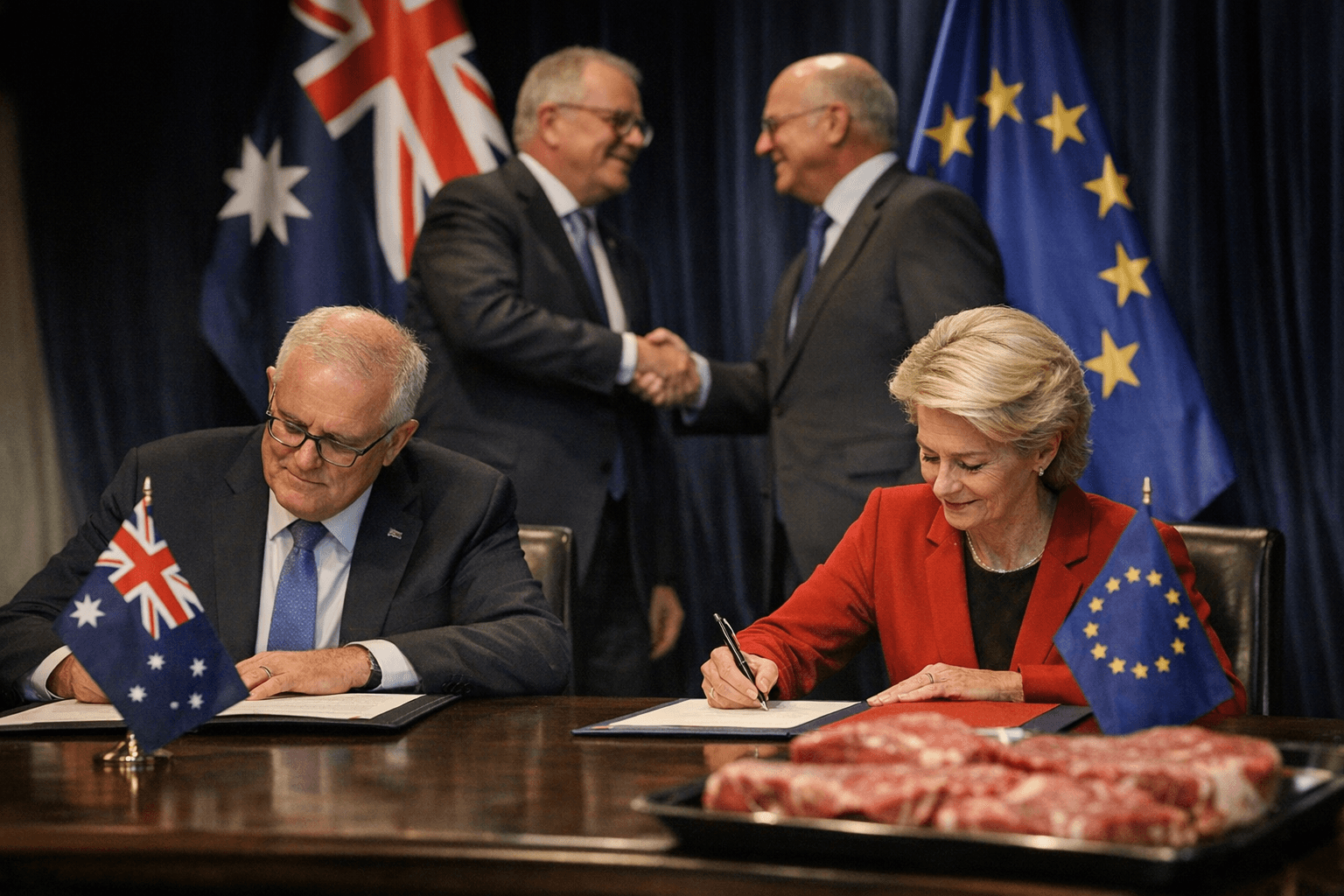
The strategic logic driving both sides is rooted in shared vulnerabilities. The deal reflects the EU's push to reduce dependency on China, particularly in critical minerals where Beijing has imposed export controls on some key resources, and signals Europe's growing engagement in the Indo-Pacific, after striking trade accords with Indonesia in September and India in January. The pact will also help the EU secure supplies of critical raw materials including lithium and tungsten.
For Australia, the calculus is equally pointed. Its largest export market remains China and its largest source of investment the United States, leaving it exposed on both flanks. Canberra has sought to diversify agricultural export markets since a 2020 dispute with Beijing blocked shipments for several years, a push accelerated by the global imposition of U.S. tariffs. In her address to Australia's parliament, von der Leyen linked the agreements on minerals, trade and security, emphasising they would make both regions more secure, and criticised China's recent "weaponisation" of supply chains.
Von der Leyen's visit was shadowed throughout by rising energy concerns. The EU chief called the Middle East conflict a "stark reminder" of Europe's vulnerabilities and in Canberra demanded an immediate end to hostilities, citing a "critical" situation for global energy supply chains. International Energy Agency chief Fatih Birol, also in Canberra, warned that the world faced an energy crisis not seen in decades if the conflict remained unresolved, a warning with particular resonance for Australia, which is heavily reliant on imported fuel.
Once the text is adopted by the European Council, it will need to be signed by both sides and then ratified by their respective parliaments to enter into force. A start date for the pact has not been announced.
Know something we missed? Have a correction or additional information?
Submit a Tip