Australia braces for mouse plague threatening wheat harvest and food supply
A mouse plague in Western Australia was spreading through grain country, with some farms reporting 40 burrows per 100 square metres as growers sought stronger bait.
Australia’s government said it was worried that a mouse plague in the west could hit food supply, as the outbreak pressed into key grain areas of Western Australia and threatened harvest protection costs, storage, and export reliability.
Energy Minister Chris Bowen said officials were especially concerned about the situation in Western Australia, where mice have long been a persistent problem in grain-growing districts. The latest warnings centered on the Mid West coast around Geraldton, the Central Wheatbelt around Merredin, and the Esperance region on the south coast, areas that the CSIRO said could already have outbreaks under way.
The scale of the infestation has been striking. In some paddocks north of Geraldton, growers found up to 40 mouse burrows per 100 square metres, a level far above the two or three burrows per 100 square metres that is already considered cause for concern. The outbreak followed a record 2025 harvest in Western Australia, including a 27-million-tonne grain crop, giving the rodents abundant feed and pushing the pest pressure deeper into the grainbelt.
Farmers and industry groups moved to secure stronger bait as losses mounted, but the national chemical regulator has rejected stronger poisons. The Australian Pesticides and Veterinary Medicines Authority says emergency use permits can be issued for a particular emergency need, including unregistered products or unapproved active constituents, and growers have been pushing that process as the infestation spread.
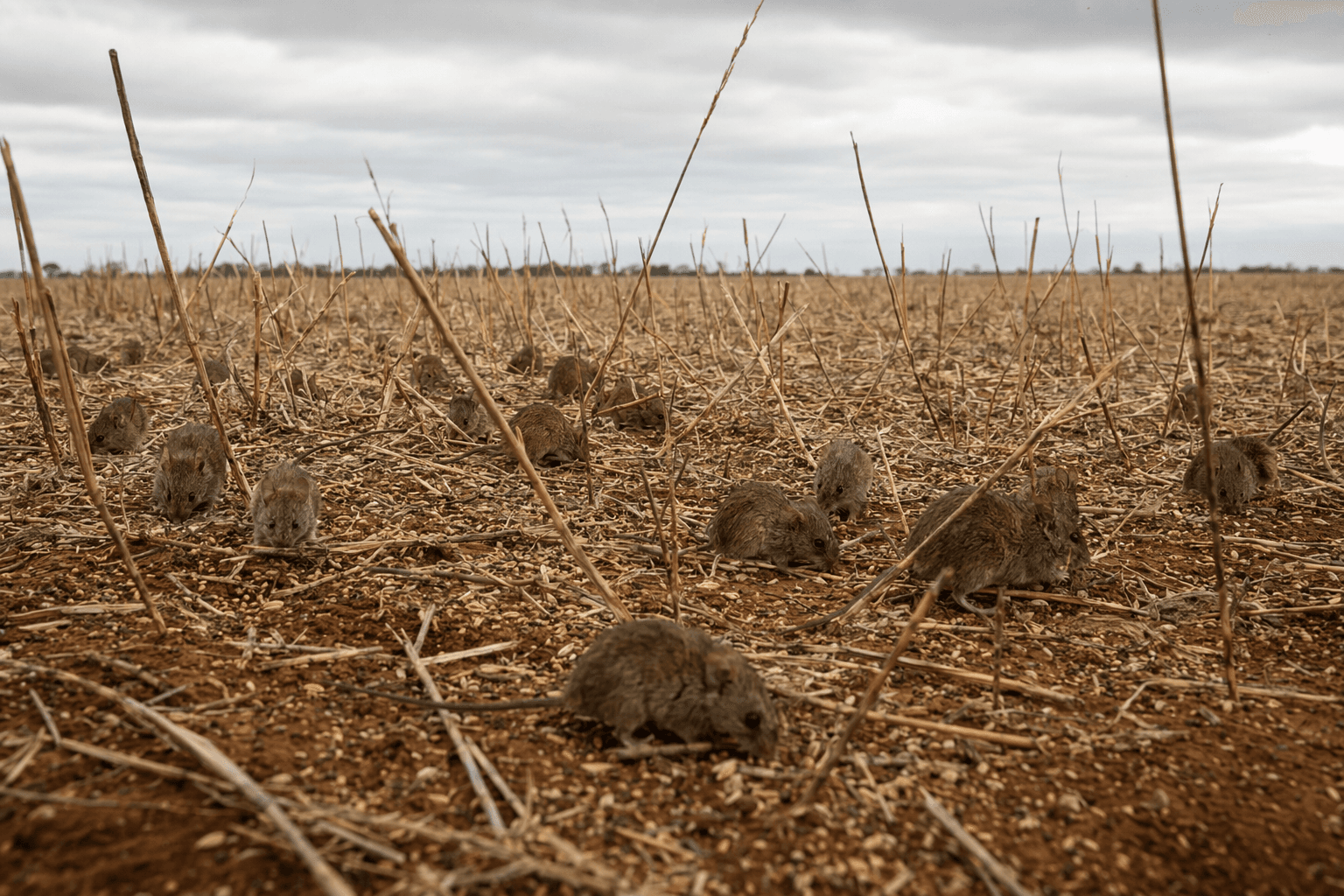
The immediate risk is not only damaged crops. Mice can chew through seedlings, grain stores, rubber, electrical insulation, farm vehicles, cars, and buildings, raising the cost of protecting a crop at the very stage when growers are trying to preserve yield. The broader risk reaches beyond one state. Western Australia is a major grain exporter, and a pest shock in one producing region can ripple through domestic supply, export volumes, and international price expectations when weather and war already strain global food markets.
History has sharpened the alarm. CSIRO says the 1993 mouse plague was the worst ever in Australia, caused an estimated $96 million in damage, destroyed thousands of hectares of crops, and attacked livestock in piggeries and poultry farms. That outbreak also damaged farm vehicles and buildings, showing how quickly a rural pest can become a wider supply-chain threat.
Western Australia has a reporting system in place through the Department of Primary Industries and Regional Development’s PestFacts WA service, which tracks pest risk across the grainbelt during each growing season. The current outbreak has now become a test of whether governments and industry can move quickly enough when climate, harvest conditions, and pest pressure converge on a major staple-producing region.
This article was produced by Prism’s automated news system from verified source data, official records, and press releases, then run through automated quality and moderation checks before publishing. The system is built and supervised by the people who set the standards it runs under. Read our full AI policy.
Did this article answer your question?


