Australia leads global push to block social media for children
Australia's hard line on under-16s is setting the pace, while Europe and China are testing different ways to police kids' social media access.
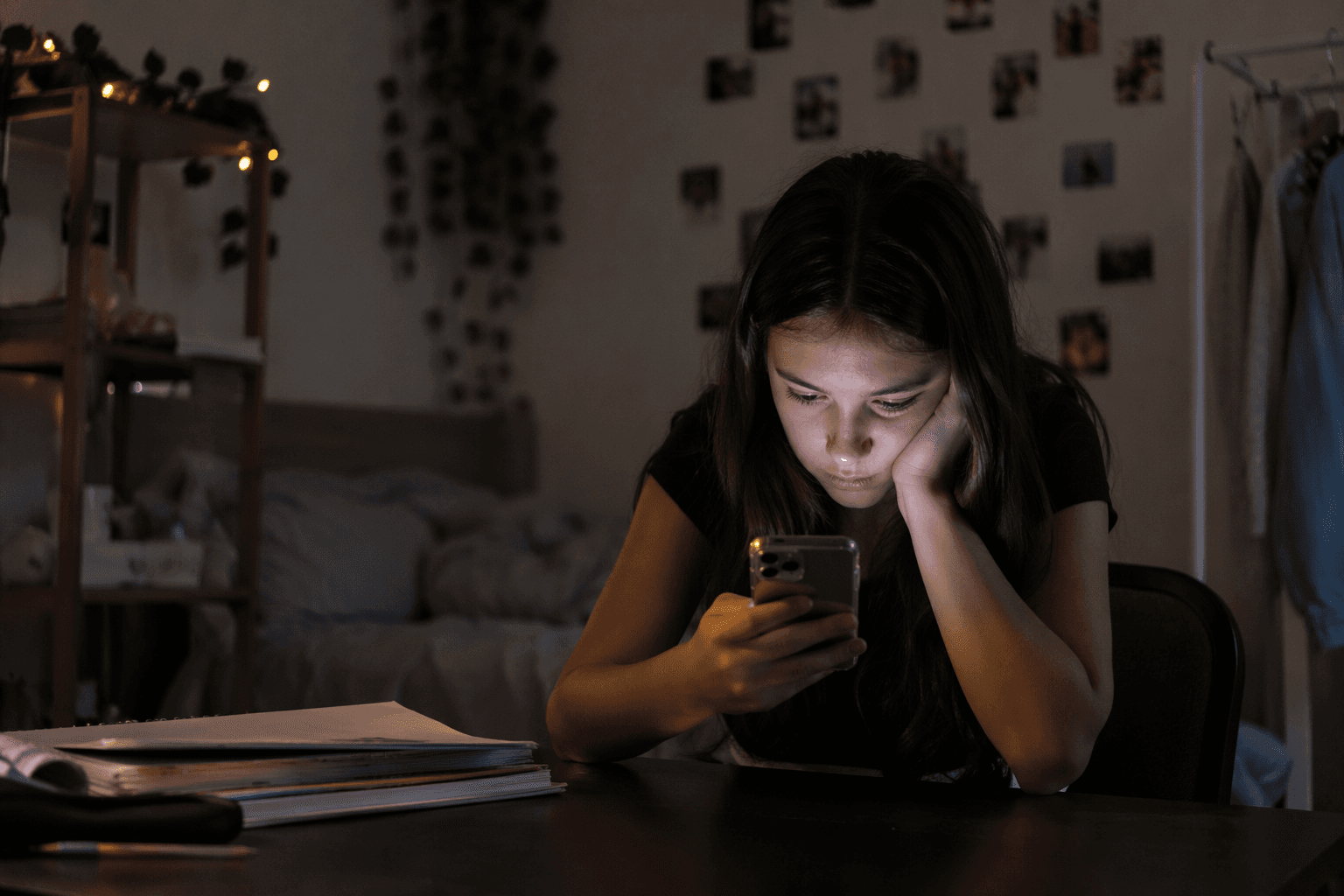
Australia has turned child safety online into a legal test of platform power, forcing social networks to block accounts for anyone under 16 or face fines as high as A$49.5 million. The country became the first to enforce a nationwide under-16 social media ban in December 2025, and the move has become the benchmark for a growing global experiment in how far governments should go to control teenage access to algorithm-driven platforms.
Australia sets the toughest baseline
Australia’s law was passed by parliament on November 29, 2024, through the Online Safety Amendment, Social Media Minimum Age Bill 2024. The policy puts the burden on platforms, not parents or children, to take reasonable steps to prevent account creation by under-16s, and it applies to services including TikTok, YouTube, Instagram and Facebook. That shift matters: it turns age checks from a family decision into a compliance obligation for some of the world’s largest digital firms.
The penalties sharpen the message. Companies that systematically fail to comply can be fined up to A$49.5 million, a level meant to force serious enforcement rather than box-ticking. Australia’s approach is also the bluntest in one key respect: it relies on a hard age cutoff instead of a softer framework built around warnings, time limits or parental supervision.
The trade-off is equally blunt. A strict ban may reduce easy access, but it also raises difficult questions about privacy, because proving age often means asking for more data, more identity checks or more device-level monitoring. It also raises practicality questions, since teenagers who want to stay online have strong incentives to evade rules through false birthdays, borrowed accounts or alternate services.
Britain is widening the policy target
Britain is following a similar path, but with a broader safety agenda. Prime Minister Keir Starmer has said his government plans to approve a ban on social media for under-16s by Christmas, with the measure expected to take effect around spring 2027. The proposal would apply to major platforms including TikTok, Snapchat, Instagram and YouTube, placing the same large services under the same kind of age gate Australia has chosen.
London is also signaling that a simple age ban may not be enough. Reuters reporting on the announcement said the UK could explore overnight curfews for teens alongside the under-16 restriction, and Starmer’s government has said it wants to pressure big tech firms to stop children from circulating nude images. That likely points to technical controls on phones and tablets, which moves the policy deeper into device management and content moderation.
That broader design reveals a different philosophy. Australia is concentrating on who gets in; Britain appears to be considering when they can be online and what they can share once they are there. Those changes may offer more flexibility than a pure ban, but they also widen the enforcement problem and increase the chances of accidental overreach into speech, messaging and private communication.
Europe is fragmenting into several different models
France is taking one of the most ambitious steps. A draft law being debated in January 2026 would ban social media for under-15s starting September 1, 2026, add a digital curfew for 15- to 18-year-olds, and include a separate ban on mobile phone use in secondary schools. That combination shows how quickly the debate has moved from social platforms alone to the broader architecture of teenage digital life.
Denmark is pushing in the same direction, but with a narrower age design. Reuters-linked reporting says the government secured parliamentary support in November 2025 and that the plan could become law as soon as mid-2026. The Danish approach would ban social media for under-15s, while still allowing limited parental access for those as young as 13, which gives families a small window of discretion inside a tighter national framework.
Germany sits closer to the middle. The Reuters factbox says the current approach allows social media use from ages 13 to 16 only with parental consent, and German governing parties have discussed tougher age limits. But legal and data-protection hurdles remain a major obstacle, a reminder that the hardest part of these policies is often not political intent but how a government squares age verification with privacy law and constitutional safeguards.
China’s model reaches deeper into the device
China’s minor-mode system takes a different route again. Instead of focusing only on account creation, it uses device-level restrictions and age-specific app rules to limit what minors can see and do. That makes China less dependent on individual platforms alone, but it also means a more direct form of state and device control than the more market-based models emerging in Australia, Britain or Europe.
The comparison is useful because it shows the range of enforcement tools now on the table. Some governments are using hard age limits. Others are layering on curfews, school bans or parental consent. China is leaning on software and device controls. Each approach solves one problem while creating another, whether that is privacy intrusion, speech restrictions, weak age verification or simple workarounds.

What the policy race is really testing
The common thread is not agreement, but convergence around the idea that the default social media environment is too risky for children. Governments are moving from debate over whether kids should have unfettered access to debate over whether the state should set a hard floor at all. That is a major shift in the regulatory politics of the internet, and it is happening fast enough that global platforms now face a patchwork of age rules rather than one consistent standard.
For companies, that means a growing compliance burden across markets that do not agree on the same definition of safety. For parents and schools, it means more pressure to understand age checks, curfews, consent systems and device controls. And for policymakers, the unanswered question is whether these rules change behavior in a durable way, or simply push young users toward different apps, later hours and more creative evasions.
Australia’s hard line has made the issue impossible to ignore. The next stage of the experiment will show whether the world’s governments can protect children online without turning everyday digital life into a maze of verification checks, legal exceptions and competing national rules.
This article was produced by Prism’s automated news system from verified source data, official records, and press releases, then run through automated quality and moderation checks before publishing. The system is built and supervised by the people who set the standards it runs under. Read our full AI policy.
Know something we missed? Have a correction or additional information?
Submit a Tip