Australia records highest-ever firearms total as parliament prepares gun reforms
Government figures show 4.1 million registered guns in 2025; Parliament will next week take up a national buyback and tougher hate-speech thresholds after the Bondi attack.
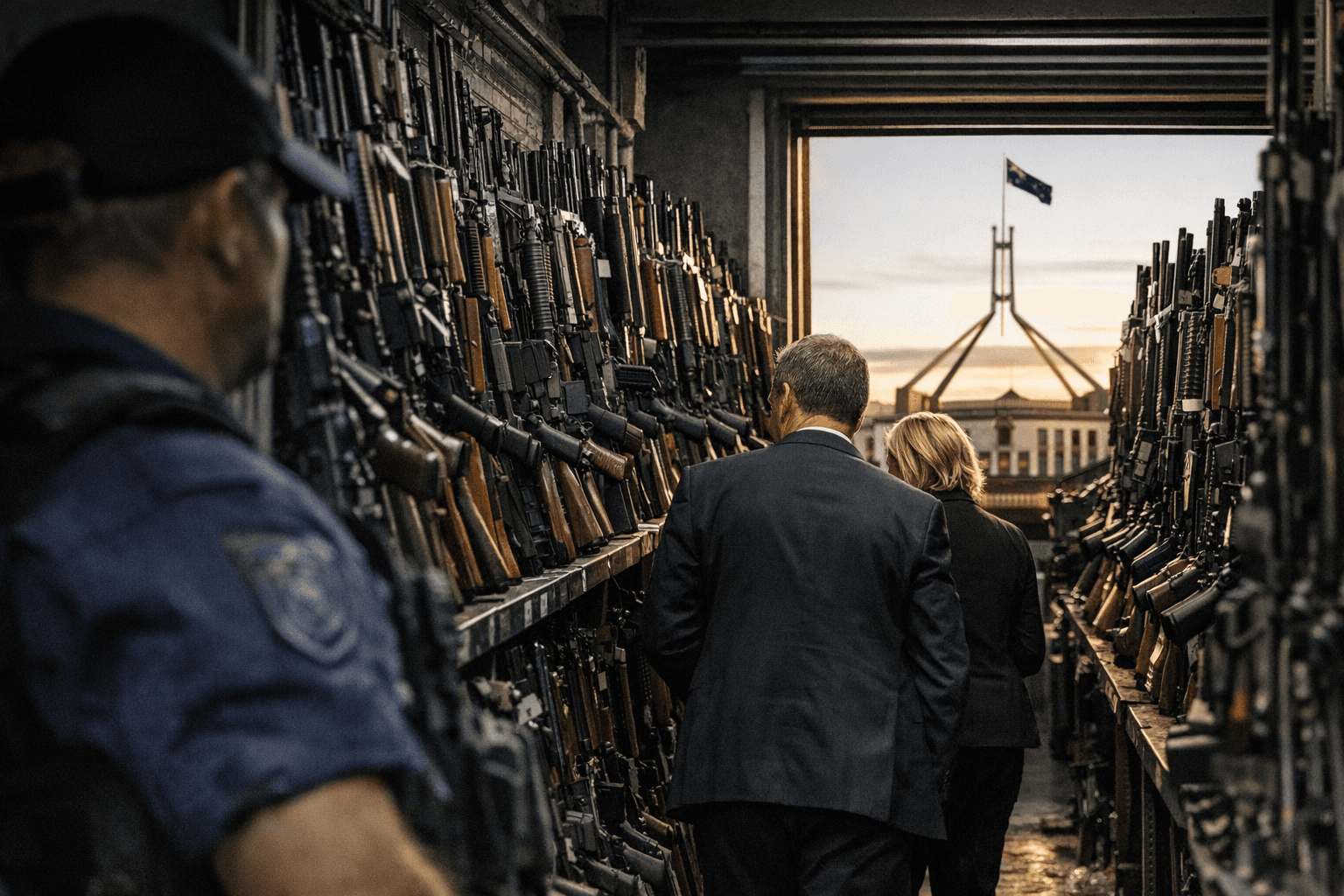
Australia’s Department of Home Affairs released figures on Jan. 18 showing the national firearms stock reached a record 4,113,735 registered firearms in 2025, the highest on record and a striking datum as Canberra prepares to introduce federal gun-reform legislation. The release came a day after the Labor government recalled Parliament and announced it will next week introduce bills to authorise a national gun buyback and to lower the legal threshold for prosecuting hate speech, measures drafted in the wake of the Dec. 14 Bondi Beach attack.
Home Affairs data show New South Wales holds the largest share of registered guns, with 1,158,654 firearms recorded in 2025. The government framed the stock number as a direct policy challenge, noting Australia now has more guns than at the time of the 1996 Port Arthur massacre that prompted a national buyback. Home Affairs Minister Tony Burke said the government was committed to “getting dangerous guns off our streets.”
The proposed legislative package responds to a deadly shooting at a Hanukkah celebration in Bondi Beach that authorities and reporting described as an anti-Semitic terrorist attack. Some reports put the death toll at 15. Police have said the alleged gunmen were inspired by ISIS; one alleged gunman identified in reporting as Sajid Akram was killed at the scene and is reported to have owned six registered firearms.
The numbers released expose trends that will shape parliamentary debate. Independent research cited by policymakers found that, on average, firearm licence holders own more than four guns and that ownership is increasingly concentrated: there are nearly one million firearm licences nationally, but despite a decline in licence holders the total number of guns has risen, with some individuals holding very large collections. One analysis noted two suburban Sydney residents who each owned more than 300 firearms. Aggregate estimates show private firearm holdings have almost doubled from about 20 years earlier, equating in one report to roughly one gun for every seven Australians.
States have already moved in different directions, complicating any national response. In December New South Wales passed laws that generally ban private individuals from owning more than four firearms, with exemptions for farmers who may hold up to 10. Western Australia enacted licence-based caps in March, allowing between five and ten firearms depending on licence and firearm type. Those divergent regimes underscore the federal government’s stated aim of a buyback but also point to the political and administrative complexities ahead.
Law enforcement agencies highlight parallel enforcement and supply challenges. Authorities reported that 870 firearm licences were revoked on disqualifying grounds in 2024-25 and launched Operation Whiskey Firestorm to target illicit ownership. Queensland faces a notable theft problem: more than 3,000 firearms were reported stolen in the previous five years, with over 2,000 still missing, and the state has been flagged for gaps around 3D-printed weapons and the criminalisation of illicit firearm blueprints.
The government’s immediate task will be to translate the Home Affairs tally into policy that can win parliamentary support and be implemented across disparate state regimes. A national buyback will require clear design on eligibility, valuation and enforcement, and coordination with state registries and police forces. With public opinion reported to broadly favour stricter limits, the proposed bills set up a test of whether federal action can overcome regulatory fragmentation and the logistical hurdles posed by concentrated private ownership and illicit supply.
This article was produced by Prism’s automated news system from verified source data, official records, and press releases, then run through automated quality and moderation checks before publishing. The system is built and supervised by the people who set the standards it runs under. Read our full AI policy.
Did this article answer your question?

