Bangladesh’s post‑uprising election hands BNP a tentative mandate
Bangladesh’s first national vote since the 2024 student revolution produced a claimed BNP victory, raising governance and economic questions for a nation of 180 million.
Voters returned to the polls on Feb. 12, 2026, in the first national election since a summer 2024 student-led uprising toppled the previous government, and the Bangladesh Nationalist Party declared it had secured a parliamentary majority. An Associated Press photograph captured BNP chairperson Tarique Rahman leaving a polling station in Dhaka after casting his ballot on election day.
Election results remained in formal flux as the Election Commission prepared to certify tallies, but rival parties and analysts already sketched the political contours of a fragile transition. The emergence of a new National Citizen Party born from the student movement captured five seats, a singular success for the uprising’s political offspring. Beyond that, detailed seat counts for BNP, Jamaat-e-Islami and the Awami League were not available in the immediate aftermath.
Political analysis framed the outcome as corrective rather than transformative. "In the end, the 13th parliamentary election in Bangladesh was not a revolution. It was a reckoning," wrote Abu Jakir. He argued the result flowed from structural advantages, targeted candidate selection and first-past-the-post mechanics that favored traditional party networks: "BNP’s victory, then, is a product of structural advantage, strategic candidate selection and the rational calculations of the country’s traditional voters. It was aided by Jamaat’s self-inflicted wounds on women’s rights and historical memory. It was enabled, paradoxically, by BNP’s own local misconduct, which inflated Jamaat’s vote share but not enough to overcome FPTP mathematics."
Hardline critics warn the uprising’s gains could be captured by old elites. "Now that the monsoon has evaporated, citizens find their revolution pickpocketed while they were still celebrating," wrote Wahiduzzaman Noor, urging rapid, inclusive processes to prevent democratic backsliding.
The political shift carries immediate economic stakes. Bangladesh, home to roughly 180 million people and the world’s second-largest garment exporter after China, faces pressing macroeconomic and structural challenges. New leadership must confront high inflation, rising unemployment and the intensifying costs of climate change, all flagged by observers as priorities for any incoming government. Global apparel brands and overseas buyers will watch policy continuity on labor standards, export incentives and supply chain stability; any abrupt regulatory or security shocks could ripple through imports and investment.
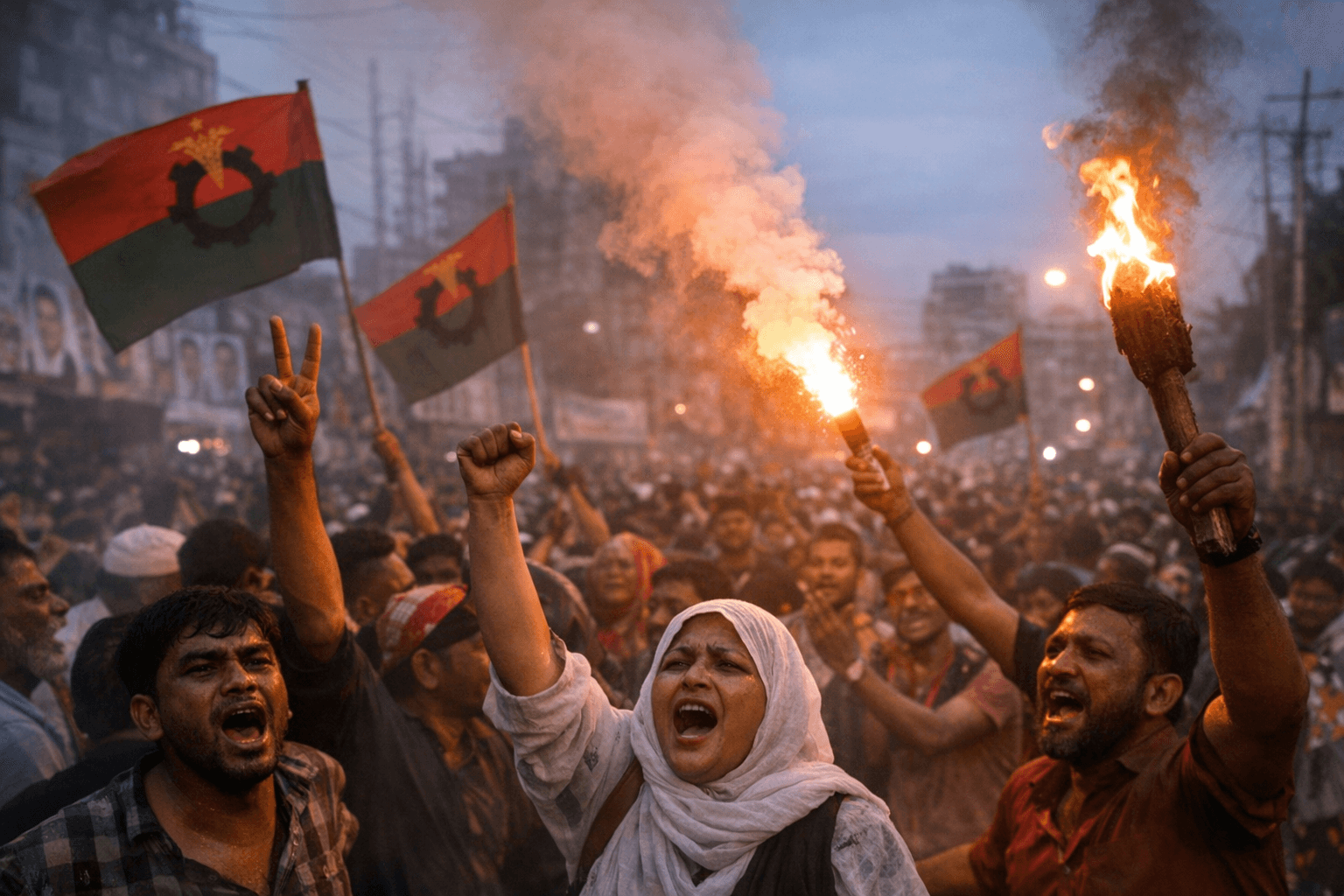
Institutional questions from the transition also remain unresolved. An interim authority scheduled the election after a year of upheaval, and reports from the transition period include disputed episodes that require verification, including alleged mass violence in late 2025. Democratic consolidation will depend on a transparent final certification of results, independent observation, and adjudication of electoral complaints.
For markets and long-term growth, the test is whether the new administration uses its mandate to stabilize macroeconomic variables and reassure international partners. A routinized return to party politics, driven by electoral math, would blunt revolutionary expectations but could restore predictability that export-dependent industries and creditors prefer. Conversely, continued confrontation among major parties or unresolved legitimacy claims would raise the country risk premium, hurt foreign direct investment and complicate financing for climate adaptation.
The election therefore marks an inflection point: it closes one chapter of popular revolt but opens another in which policy competence, institutional reform and economic management will determine whether the uprising’s social ambitions translate into lasting gains for Bangladesh’s people.
This article was produced by Prism’s automated news system from verified source data, official records, and press releases, then run through automated quality and moderation checks before publishing. The system is built and supervised by the people who set the standards it runs under. Read our full AI policy.
Did this article answer your question?


