Bank of Japan raises rates to 1%, highest since 1995
Japan lifted rates to 1% for the first time since 1995 as war-driven energy inflation and a weak yen forced a split 7-1 decision.

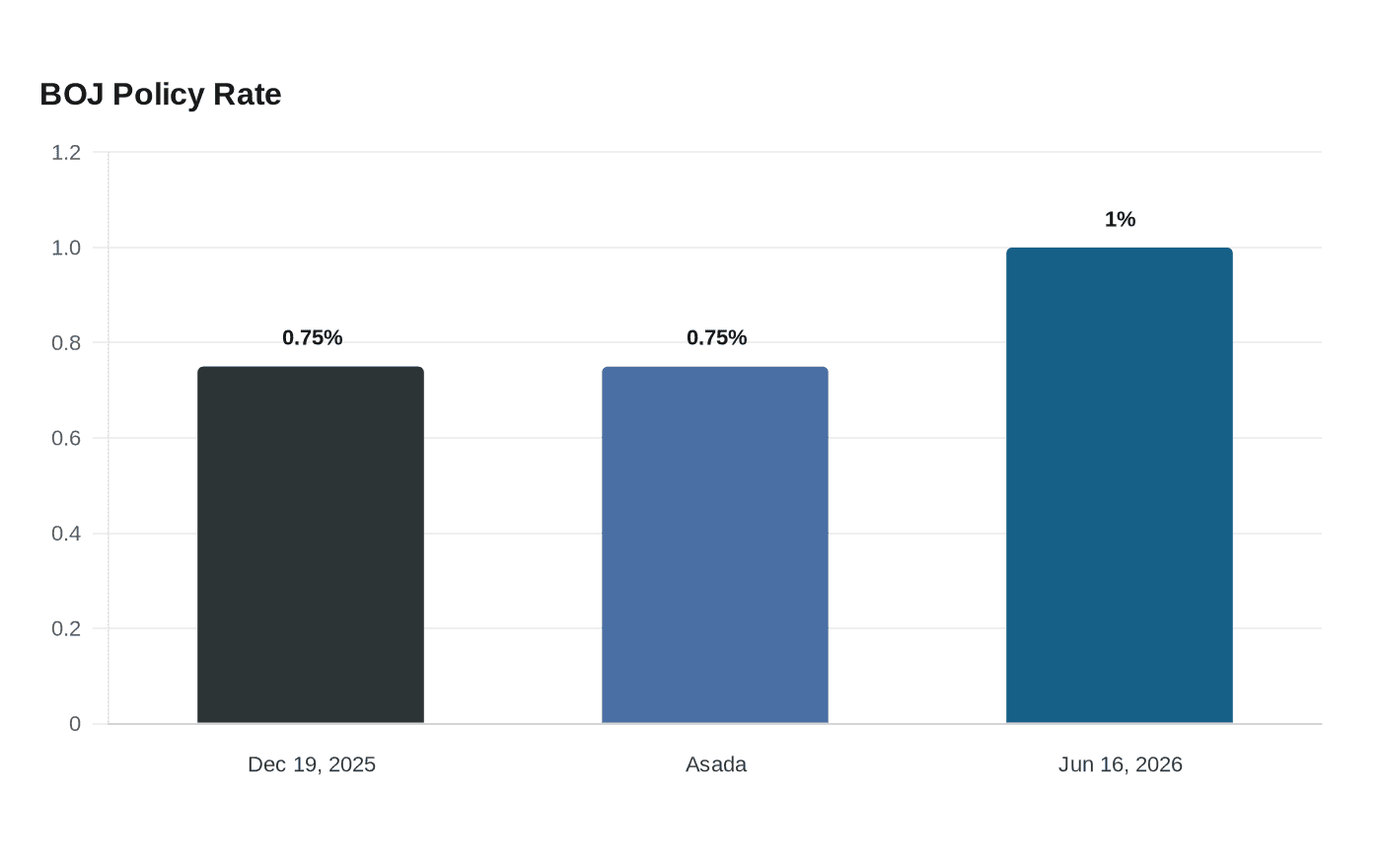
The Bank of Japan pushed its policy rate to 1.0%, the highest level since 1995, in a move that showed how quickly war-driven inflation, a sliding currency and domestic political pressure have converged on Tokyo. The 7-1 decision on June 16, 2026, marked the first time in 31 years that Japan’s benchmark rate reached 1%, and it came despite Prime Minister Sanae Takaichi’s opposition.
Board member Toichiro Asada dissented and argued for holding the rate at 0.75%. The central bank had last tightened on Dec. 19, 2025, when it lifted the policy rate to 0.75%, then a 30-year high. By June, the yen had weakened to around 160 per U.S. dollar, intensifying the case for action as imported costs rose and households felt the squeeze.
Inflation pressures had sharpened as energy markets absorbed the shock from the Iran war. The Bank of Japan said its consumer inflation had been buffered by government steps to ease household energy bills, but warned that higher crude prices were feeding through business-to-business transactions and could spread further into consumer prices. Producer prices rose 6.3% in May, the fastest pace in more than three years, driven largely by energy costs.
The tightening also reflected a broader shift in the central bank’s thinking. In December, Governor Kazuo Ueda said delaying a hike could force a much larger increase later and risk a major negative for the economy and financial system. November consumer inflation was 3%, above the BOJ’s 2% target for three years and eight months, underscoring how persistent price pressure has become.
The BOJ said it would keep reducing government bond purchases by 200 billion yen per calendar quarter before halting the taper, then maintain monthly purchases of 2 trillion yen from April 2027. Markets reacted quickly: the Nikkei 225 rose, the yen strengthened marginally and 10-year Japanese government bond yields climbed. Analysts also said expectations that the Strait of Hormuz would reopen eased some of the most acute supply-shock uncertainty, but not enough to remove inflation from the center of Japan’s policy debate.
For Japan, the significance reaches beyond one rate move. The central bank is now treating inflation risk, not growth support, as the more urgent threat, and the decision signals that global conflict is no longer just an external shock. It is actively reshaping domestic economic policy in one of the world’s largest economies.
This article was produced by Prism’s automated news system from verified source data, official records, and press releases, then run through automated quality and moderation checks before publishing. The system is built and supervised by the people who set the standards it runs under. Read our full AI policy.
Know something we missed? Have a correction or additional information?
Submit a Tip