Bayer Says 2026 Financial Outlook Intact Despite New U.S. Drug Tariffs
Bayer's U.S. head said the company built tariff scenarios into its 2026 guidance, shielded partly by a U.S.-EU deal capping drug levies at 15%.
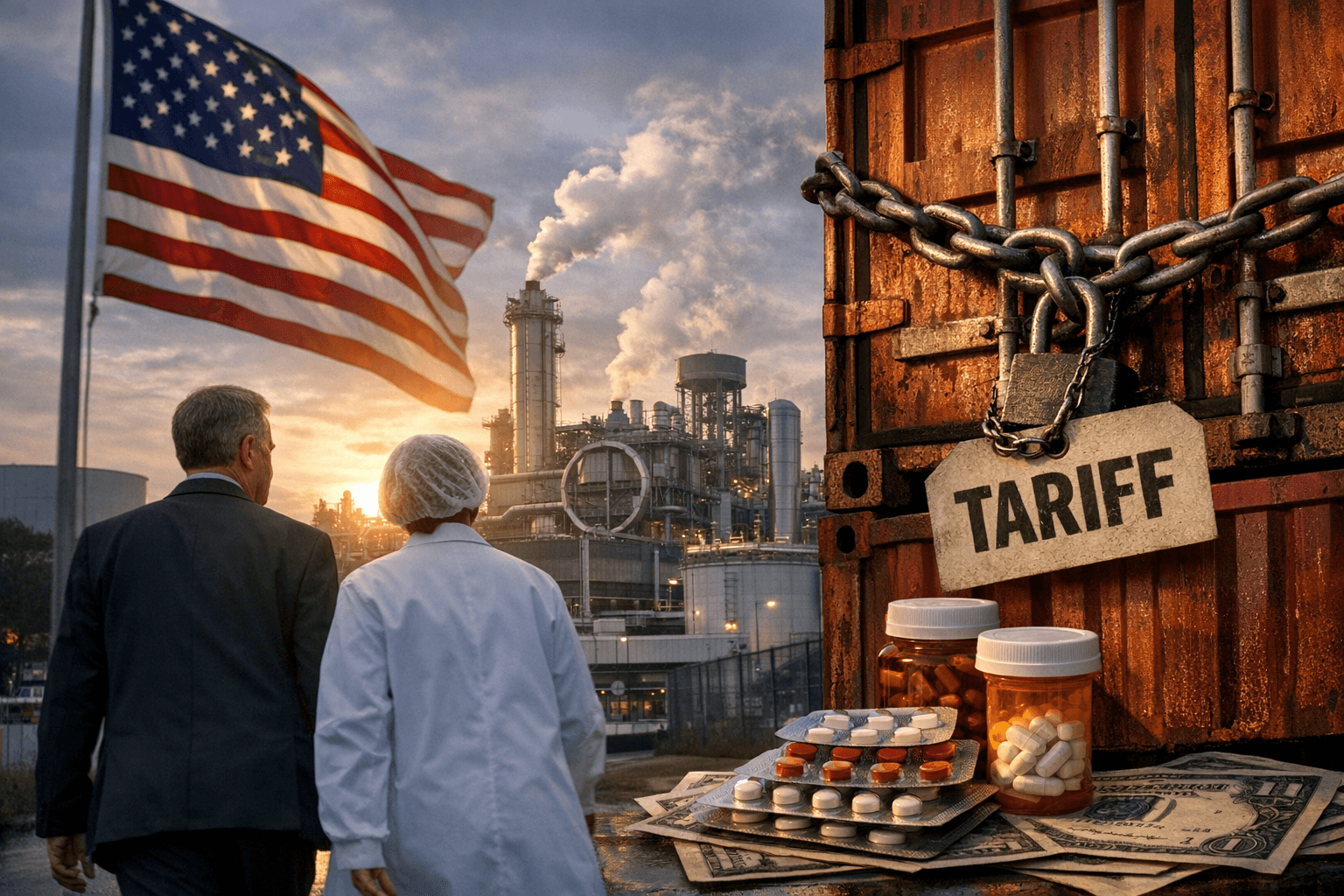
Bayer's top U.S. executive confirmed Monday that the German pharmaceutical and crop science giant had already stress-tested its financial forecasts against multiple tariff scenarios, leaving its 2026 outlook unmoved even as the White House rolled out an aggressive new pharmaceutical tariff framework.
Sebastian Guth, Bayer's chief operating officer and president of Bayer U.S., said the company's EBITDA-before-special-items target, established in its March guidance, remains intact. "We feel that we've appropriately anticipated tariffs as we think about our 2026 guidance," Guth said.
The administration's framework carries headline tariff rates as high as 100% on certain patented drugs and active pharmaceutical ingredients, though the effective reach of that rate is considerably narrower than the number implies. Manufacturers can avoid the highest levies by agreeing to pricing arrangements with the U.S. government or committing to onshoring production; many large companies have already negotiated transitional exemptions or are in active talks to do so.
Bayer's buffer comes partly from geography. A bilateral trade understanding between the U.S. and European Union caps tariffs on EU-origin pharmaceutical products at 15%, well below the headline rate. Because significant portions of Bayer's production flow through European facilities, the company concluded its actual tariff exposure falls substantially short of what the top-line figures suggest. Guth also cited the company's global manufacturing footprint and long-standing trade planning as reasons it could absorb the policy shift without revising financial targets.
The picture looks considerably more complicated for smaller pharmaceutical companies and those heavily reliant on contract manufacturers, particularly where supply chains run through countries not covered by bilateral carve-outs. Analysts warn those firms could face meaningful near-term cost increases, and the broader uncertainty is already prompting manufacturers to weigh additional onshoring investments or API sourcing diversification that could lift capital expenditures over the medium term.
Industry groups have pressed the administration for clearer implementation rules, with ambiguity around exemptions and enforcement timelines creating planning uncertainty across the sector. Some large drugmakers received limited transitional windows to meet onshoring timetables or conclude pricing negotiations, and companies continue to engage trade and public-health officials to minimize disruption. For Bayer, the calculus for now holds; for manufacturers without its European production base or bilateral trade cover, the math may not be as forgiving.
This article was produced by Prism’s automated news system from verified source data, official records, and press releases, then run through automated quality and moderation checks before publishing. The system is built and supervised by the people who set the standards it runs under. Read our full AI policy.
Did this article answer your question?