BBC upholds complaints over racial slur in Baftas broadcast
The BBC's own watchdog ruled a racial slur broadcast during the February 2026 BAFTAs had "no editorial justification," exposing failures in a compliance process already under scrutiny since the Glastonbury Bob Vylan incident.
The BBC's Executive Complaints Unit has ruled the corporation breached its editorial standards when a racial slur aired during its coverage of the EE BAFTA Film Awards in February, finding the broadcast was "highly offensive" and carried "no editorial justification," and citing "a lack of clarity" in the BBC's own compliance process.
The ruling represents the sharpest institutional rebuke yet over an incident that drew more than 1,500 viewer complaints, triggered a parliamentary inquiry, prompted the resignation of a BAFTA jury member, and exposed the gap between the safeguards the BBC said it had put in place and those that actually worked on the night.
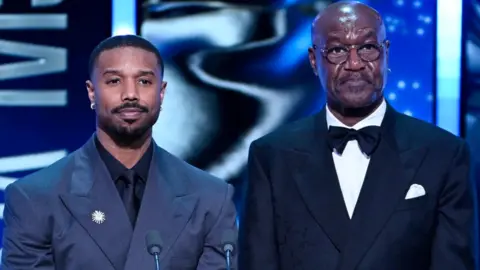
The slur was shouted by John Davidson, a Tourette's syndrome activist on whom the British independent film "I Swear" is based, while actors Michael B. Jordan and Delroy Lindo were on stage presenting an award at the Royal Festival Hall in London on 22 February 2026. Davidson's condition includes coprolalia, which causes the involuntary use of obscene language. He later said he was "deeply mortified" and that what he said was "not a reflection of my personal beliefs." BAFTA host Alan Cumming addressed the audience immediately after the incident, explaining that Tourette syndrome is characterised by involuntary tics, and attendees had been pre-warned about the possibility before the ceremony began.
The critical institutional failure lies in what happened in the edit suite. Although the ceremony ran for approximately three hours, the BBC broadcast it in a condensed two-hour format on a two-hour delay, a structure that carries greater editorial responsibility than a live transmission because editors have time to review and remove offensive material. The BBC's team did remove a second instance of the slur, which Davidson also directed at actress Wunmi Mosaku, but the first, directed at Jordan and Lindo, was aired in error. A microphone placed close to Davidson compounded the problem. The clip then remained on BBC iPlayer for approximately 15 hours before the programme was taken down and re-edited.
The failure is especially difficult to defend because it followed a previous, widely-scrutinised compliance breakdown. In June 2025, BBC staff failed to pull a livestream of Glastonbury after Bob Vylan's frontman led crowds in an anti-Israel chant including "death to the IDF." Following that incident, the BBC said it had introduced "editorial policy support on site to improve compliance processes." Those measures were in place at the BAFTAs, yet the slur still reached broadcast audiences and then sat on iPlayer for the better part of a day.
Outgoing Director-General Tim Davie called the incident a "serious mistake," adding: "It was a genuine mistake, and we take full responsibility for our error." BBC content chief Kate Phillips issued a formal apology, writing: "I'm so sorry that a racial slur was not edited out of our broadcast. We understand how distressing this was." BBC Chair Samir Shah was present in the auditorium at the time of the incident, though a BBC source said he did not hear what was said. Warner Bros. Discovery executives, who did hear the outburst in the room, raised immediate concerns with BAFTA and were assured a message would be passed to the BBC.

The political fallout arrived quickly. Culture Secretary Lisa Nandy described the broadcast as "completely unacceptable and harmful," adding: "The BBC must ensure that this never happens again." Dame Caroline Dinenage, the Conservative MP who chairs the Commons Culture, Media and Sport Committee, wrote to Davie asking how the incident occurred and whether lessons had genuinely been taken from the Glastonbury episode. Black BAFTA jury member Jonte Richardson resigned, citing what he described as "systematic racism" and BAFTA "repeatedly failing to safeguard the dignity of its Black guests, members and the Black creative community." Actor Jamie Foxx called the incident "unacceptable" on Instagram.
The BBC's accountability problem was further complicated by a parallel editing decision the ECU was also asked to examine. The BBC removed the phrase "Free Palestine" from the acceptance speech of Outstanding Debut winner Akinola Davies Jr., the British-Nigerian filmmaker who won for "My Father's Shadow," while the racial slur was allowed to remain. Davies Jr. had ended his speech with the words "For Nigeria, for London, Congo, Sudan, free Palestine" and wore pins of the Palestinian and Democratic Republic of Congo flags to the ceremony. His co-winner and brother Wale Davies appeared in the broadcast edit, but the political conclusion of the speech did not. Davies Jr. described the cut as "a shame." The ECU found that Davies Jr. had a right to express his views, but ruled the removal did not hinge on considerations of impartiality, determining that the edited content "was remote from the event's main thrust and the likely focus of the audience's interest." Critics pointed to the juxtaposition: a political statement excised, a racial slur left in.
The episode brings into focus how differently public broadcasters and commercial networks in other jurisdictions handle offensive language in broadcast events. In the United States, the Federal Communications Commission regulates indecent and profane content under statute, prohibiting broadcasts of indecent speech between 6 a.m. and 10 p.m. and carrying the authority to impose monetary penalties, deny licence renewals, or revoke licences entirely. The FCC fined CBS $550,000 following the 2004 Super Bowl halftime show incident, a penalty Congress subsequently increased the ceiling for tenfold to $325,000 per violation per network. The BBC, as a public service broadcaster governed by charter and regulated by Ofcom, operates under a different structure, with the ECU serving as an internal accountability mechanism rather than an external regulator. The question the ECU's latest ruling raises is whether internal review, however fast-tracked, constitutes sufficient accountability when the same compliance failures can recur within eight months.
The BBC has not yet detailed what structural changes will follow the ECU's ruling, but the finding of "a lack of clarity" in its compliance process means the corporation cannot treat this as a one-off error. The editorial policy support introduced after Glastonbury did not stop the BAFTA failure. What replaces it, and who is responsible for verifying it works, now sits at the centre of the BBC's institutional credibility on live and delayed broadcast events.
This article was produced by Prism’s automated news system from verified source data, official records, and press releases, then run through automated quality and moderation checks before publishing. The system is built and supervised by the people who set the standards it runs under. Read our full AI policy.
Did this article answer your question?