Cardi B Says Four Men Stole Her AmEx, Racked Up $60,000 in Charges
Four men allegedly charged $60,000 on Cardi B's stolen AmEx in under an hour at Saks and Apple before real-time alerts shut the card down.

Grammy-winning rapper Cardi B says four men stole her American Express card and burned through nearly $60,000 in fraudulent purchases in approximately one hour, targeting Saks Fifth Avenue for $40,000, Apple for $20,000, and attempting a cash withdrawal at a Chase branch before the card was shut down.
The Bronx native disclosed the theft during an Instagram Live session on April 6, 2025, saying the card had vanished from her purse two to three weeks earlier. What caught the fraud wasn't law enforcement but technology: her AmEx was linked to real-time purchase alerts she described as receiving "like a n***a is texting me." Her accountant, who also received the alerts, called her almost simultaneously. "Before I even called my accountant, my accountant called me," she said.
The Saks charge came first, and Cardi initially considered whether her stylist, Kollin Carter, might have had an assistant shop on her behalf. That theory collapsed 35 minutes later when a $20,000 Apple charge appeared. The card was cut off immediately. Cardi said she has clear surveillance images of all four suspects, describing one as "bald-headed, with a very thick beard," and addressed them directly: "Y'all went to Chase, y'all went to Saks, y'all went to Apple. B—h, y'all going to jail." An investigation is underway. How the suspects obtained her card numbers remains unclear.
The unanswered question in Cardi's case reflects a broader reality. Stolen card numbers rarely require stealing the physical card. The most common mechanism is skimming: a device installed on an ATM, fuel pump, or point-of-sale terminal captures magnetic stripe data, which is then transferred to a blank card to create a functional clone. The FBI estimates skimming costs merchants and consumers roughly $1 billion annually. In Cardi's situation, the card went missing two to three weeks before the fraud appeared, meaning the data could have been copied at any point during that window.
High-limit premium cards are especially attractive targets. A $40,000 single-transaction purchase requires a card capable of absorbing it, and luxury retailers like Saks Fifth Avenue are less likely to flag a large charge as immediately anomalous. Contactless payment technology adds a separate attack surface: near-field communication fraud, sometimes called "ghost tapping," allows criminals to relay cloned card data through compatible payment terminals without the physical card present. Cybersecurity researchers documented multiple such incidents in the first quarter of 2025 exceeding several million dollars in combined losses at U.S. financial institutions.
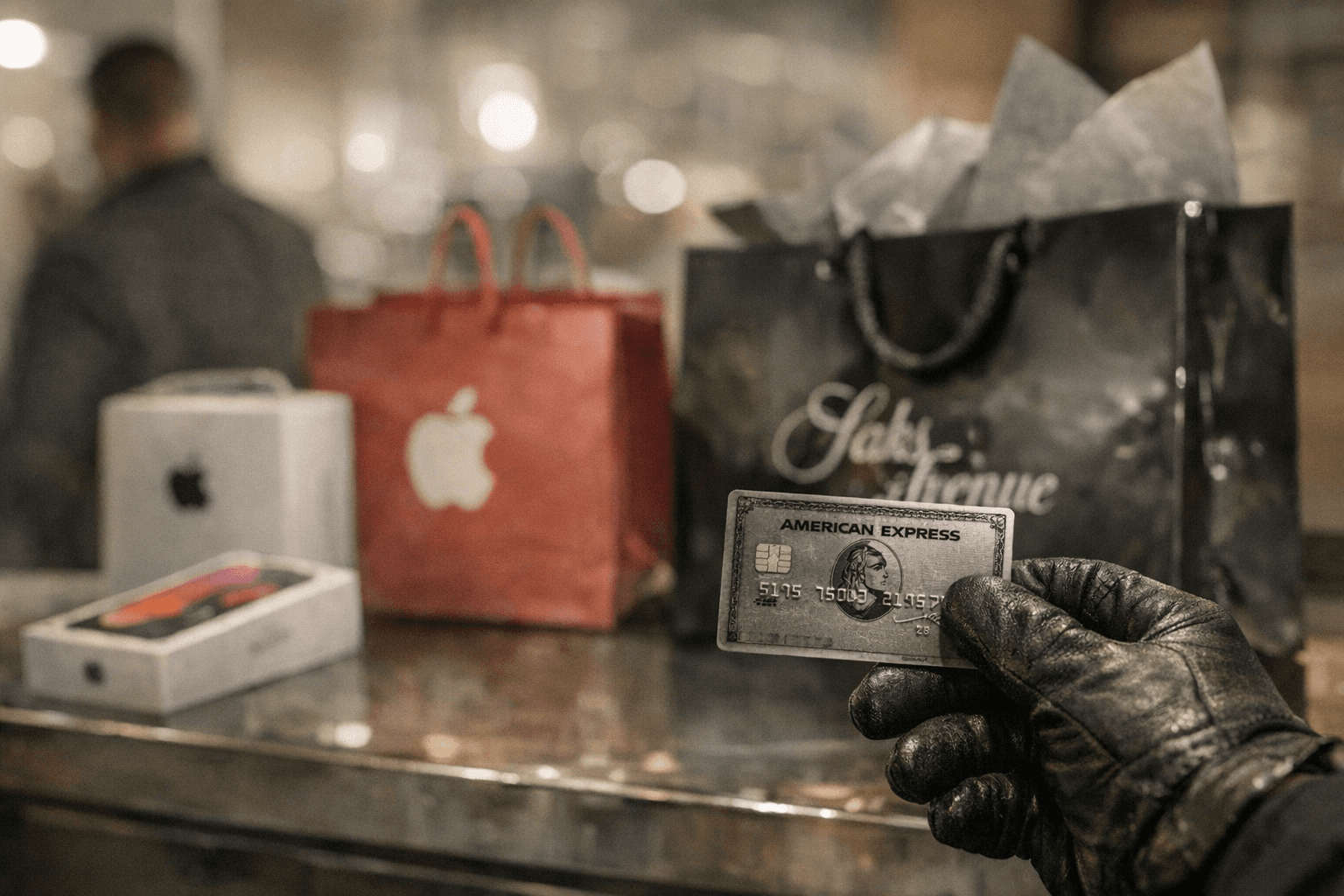
When fraud strikes, time is the most critical variable. The first call should go to the card issuer to freeze or cancel the account. Every disputed transaction should be flagged individually by transaction number. A local police report, while not always required by issuers, creates documentation that strengthens a dispute. Placing a fraud alert with any one of the three major credit bureaus, Equifax, Experian, or TransUnion, automatically notifies the other two.
AmEx, along with Visa, Mastercard, and Discover, offers $0 fraud liability for unauthorized charges, provided cardholders take what AmEx calls "reasonable care," primarily notifying the issuer promptly once a card is suspected lost or stolen. Federal law caps cardholder liability at $50 for fraudulent charges, but most major issuers waive that amount entirely. Disputed credit card charges are also reversed before they touch a cardholder's actual funds, unlike debit fraud, which requires clawing back money already withdrawn.
Cardi's real-time notification setup limited the damage. The Chase ATM withdrawal failed entirely. The $60,000 in charges were processed before the freeze, but not beyond it.
The Federal Trade Commission recorded more than $12.5 billion in consumer fraud losses in 2024, a 25% increase from $10 billion in 2023, with 2.6 million fraud complaints filed. Approximately 449,000 people reported credit card fraud specifically that year, and the U.S. accounts for roughly 39% of global payment card fraud losses. Total damages have surged 291% since 2015, when losses stood at $3.2 billion. Cardi's Little Miss Drama Tour wraps April 17 in Atlanta after 30 dates, with remaining stops in Philadelphia, Washington D.C., Charlotte, and Raleigh.
This article was produced by Prism’s automated news system from verified source data, official records, and press releases, then run through automated quality and moderation checks before publishing. The system is built and supervised by the people who set the standards it runs under. Read our full AI policy.
Did this article answer your question?