Beginner Pranayama Guide: Simple Breathwork to Calm Nervous System and Focus
Simple, safe pranayama techniques can calm your nervous system and sharpen focus; short daily practice yields measurable benefits for stress, attention, and yoga classes.
Breath, or prana, is the bridge between movement and nervous-system regulation, and a few simple, well-timed exercises can down-regulate stress responses and steady attention. For beginners, clear cues, short sessions, and safety thresholds matter more than long, dramatic practices.
Start with diaphragmatic or belly breathing to build efficient mechanics. Sit or lie comfortably with one hand on the chest and one below the ribcage. Inhale slowly through the nose so the belly lifts under your hand; exhale with a gentle draw-in of the belly while keeping shoulders relaxed. Begin with 3–5 minutes daily; this practice improves breath efficiency, calms the sympathetic nervous system, and supports better posture.
Box breathing teaches rhythm and control. Inhale for a count of four, hold for four, exhale for four, then hold empty for four; adjust the counts for comfort and repeat 4–8 rounds. Box breathing reduces anxiety and steadies attention, making it a practical tool before classes, exams, or any high-stress moment.
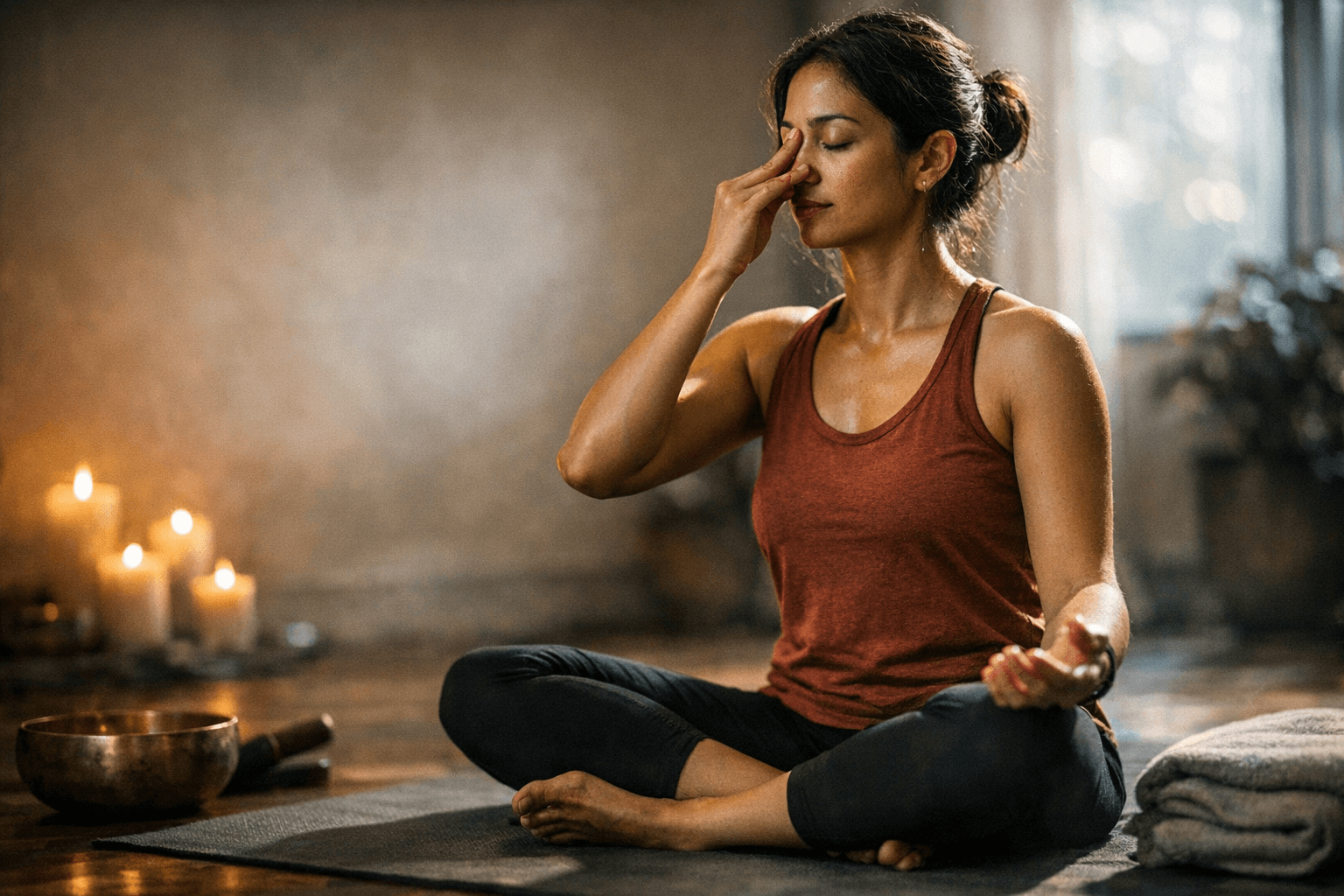
Alternate nostril breathing, or Nadi Shodhana, balances lateral breath channels. Using the right thumb and ring finger, close the right nostril and inhale left; close the left nostril and exhale right; then inhale right, close right and exhale left, continuing to alternate. Keep the breath smooth and unforced and start with 3–5 minutes using short inhale and exhale counts. Avoid deep retention (kumbhaka) if you are pregnant, hypertensive, or have cardiovascular concerns unless cleared by a qualified teacher or clinician.
Ujjayi, the Victorious breath, slightly constricts the back of the throat to create a soft oceanic sound on inhale and exhale through the nose. Maintain mostly diaphragmatic breathing. Ujjayi is commonly used in vinyasa flows to coordinate movement and breath and to teach steady, longer breath cycles.
Progress carefully. Master diaphragmatic breathing before adding retention, long counts, or advanced pranayama. Keep sessions short and consistent, 5–10 minutes daily is more effective than occasional long sessions. If you have severe asthma, cardiovascular disease, high or low blood pressure, or are pregnant, consult a healthcare provider and practice under a trained teacher. Pair breathwork with gentle movement such as cat-cow or seated twists to feel embodied changes.
A simple 10-minute beginner sequence: two minutes diaphragmatic breathing seated or lying, three minutes box breathing at comfortable counts, three minutes alternate nostril breathing gently, then two minutes silent observation of the natural breath in a Savasana-style release. Learn from a certified, trauma-informed teacher who can adapt cues for injuries and medical conditions, and consider short online courses that emphasize safety, anatomy, and progressive skill-building. When using breathwork in therapeutic contexts such as anxiety, PTSD, or substance withdrawal, coordinate with healthcare providers.
These practices give you an immediate, portable tool to lower reactivity, improve vagal tone, and anchor attention. Start small, stay consistent, and let the breath be the quiet workhorse that supports your yoga practice and daily resilience.
Know something we missed? Have a correction or additional information?
Submit a Tip