Beijing Summons U.S. Consul General Over Hong Kong Device Password Alert
China summoned U.S. Consul General Julie Eadeh after Washington warned Hong Kong's new rules let police demand phone passwords, with refusal carrying up to a year in prison.
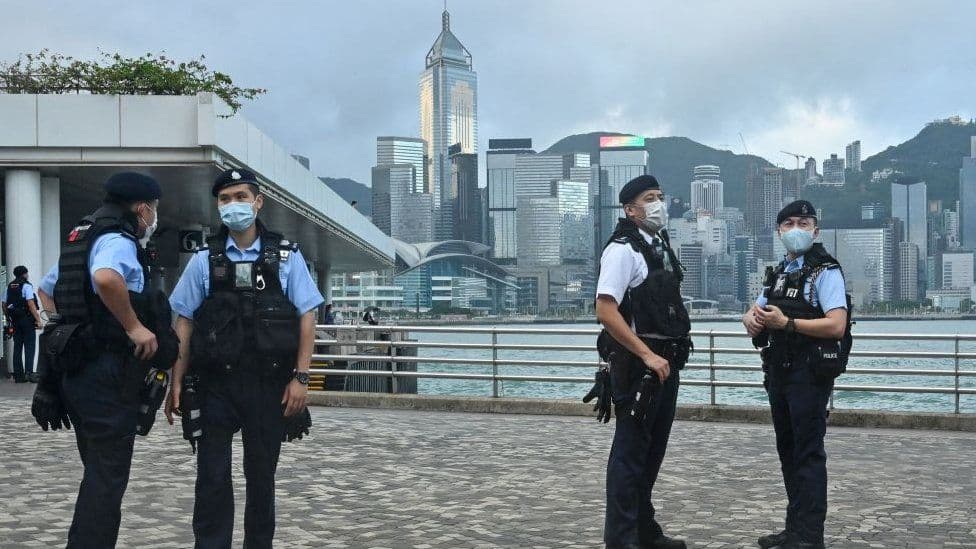
If your phone is in your bag when Hong Kong police stop you in a national security investigation, rules that took effect March 23 give officers the power to demand your password on the spot. Refuse, and you face up to a year in prison.
That is the core warning the U.S. Consulate General in Hong Kong posted in a security alert on March 26, telling U.S. citizens that it is now "a criminal offence for anyone, including US citizens, to refuse to provide police with passwords or decryption access for personal electronic devices." The alert added that Hong Kong authorities now hold broader power to seize and retain those devices as evidence in cases tied to national security offenses.
Beijing's response was swift. Commissioner Cui Jianchun of China's Foreign Ministry Office in Hong Kong summoned Consul General Julie Eadeh on March 27, urging Washington to "immediately cease all interference in Hong Kong and Beijing's internal affairs." The U.S. Consulate declined to comment on the summons.
The Hong Kong government moved the same day to contain the diplomatic fallout, issuing a clarification that police need legal authorization to search an electronic device before demanding a password and stating that "there is no case where police can randomly ask ordinary citizens on the street for such information." Officials expressed "strong dissatisfaction with misleading information and sweepingly generalised descriptions" of the new rules by foreign organizations and media.

For business travelers, journalists, and multinational employees moving through the territory, the practical stakes are concrete. The compelled-decryption provision places anyone carrying work devices with encrypted client files, source communications, or sensitive corporate data in an altered legal position. The rules raise concerns about cross-border data requests and legal risks for users storing journalistic, client, or activist material on phones and laptops; multinational companies operating in Hong Kong now face fresh legal reviews of data-access policies, cross-border encryption practices, and employee device guidance.
The rules are part of a broader tightening of Hong Kong's national security framework that has intensified since 2020. Commissioner Cui's formal summons of Eadeh fits a pattern in which Beijing has consistently treated foreign consular advisories on Hong Kong security legislation as political interference rather than routine travel guidance, a posture that makes diplomatic de-escalation difficult once an advisory has been published.
Whether the dispute moves beyond the diplomatic channel may hinge on what happens in the weeks ahead; analysts have pointed to the potential for formal trade sanctions or further decoupling of Western tech infrastructure from the Hong Kong market as one possible trajectory if frictions deepen.
Know something we missed? Have a correction or additional information?
Submit a Tip

