Beyond Energy, Britain Confronts Another Major Force Driving Up Costs
Network upgrades, water infrastructure and council tax are adding hundreds of pounds to UK household bills even as wholesale energy prices fall.
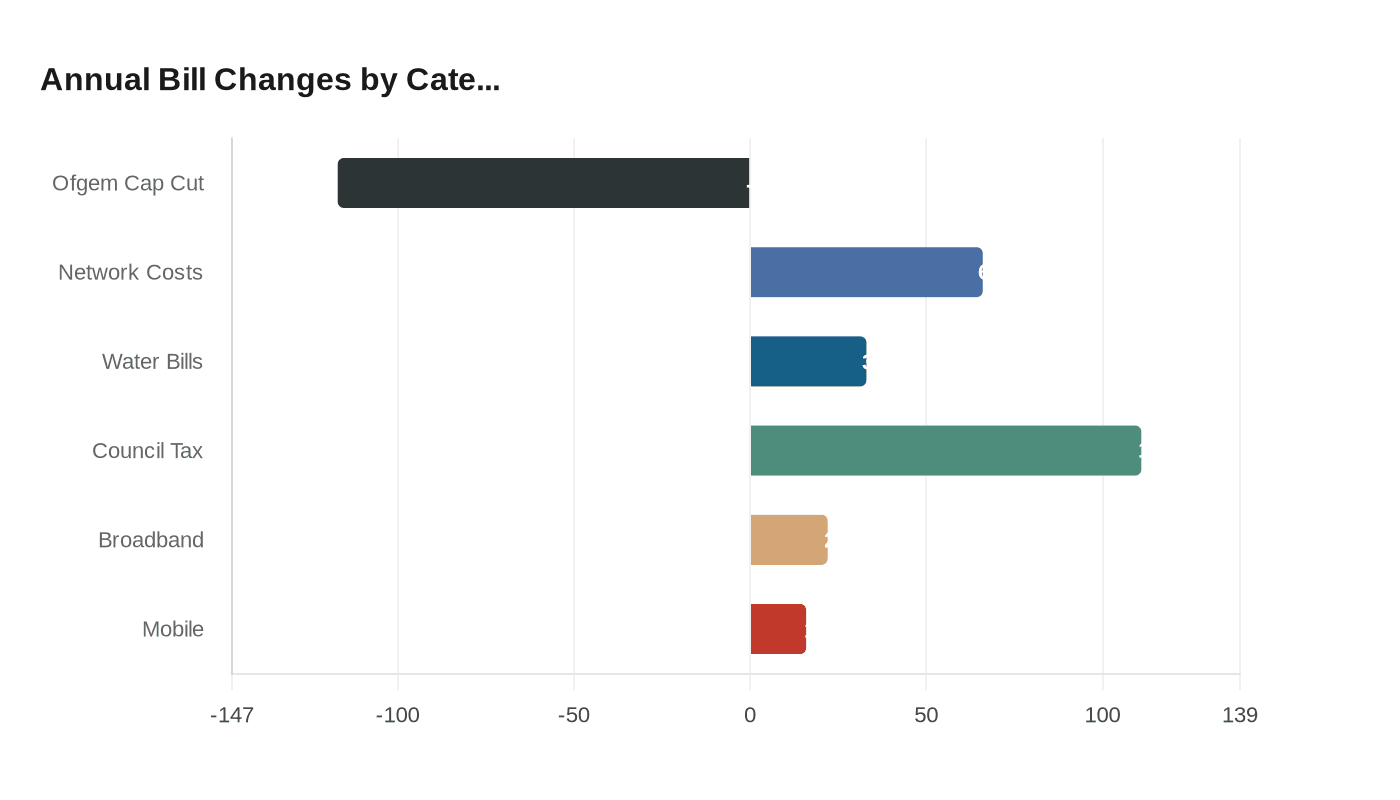
Wholesale gas prices are lower than at any point since the peak of the energy crisis, and Ofgem cut the household price cap by £117 in April 2026. Yet the underlying pressure on British household finances has not followed commodity markets down. The reason sits largely outside the energy trading floor: a convergence of regulated infrastructure charges, local government levies and utility investment programmes that collectively added hundreds of pounds to typical bills regardless of what happens to oil and gas.
Network costs embedded in the energy price cap increased by £66 a year under the current RIIO-3 price control framework, which governs investment in upgrading power and gas grid infrastructure. That increase partially absorbed the £38 a year that households would otherwise have saved from falling wholesale prices. More strikingly, the standing charge element for electricity's high-voltage transmission system rose 65% in the second quarter of 2026, equivalent to nearly 9 pence per day, to fund a large increase in the National Energy System Operator's investment in the transmission network. Electricity standing charges moved from 54.7 pence per day to 57.2 pence per day, while gas standing charges fell from 35.1 pence to 29.1 pence. The net effect: even households benefiting from the lower unit rate cap are paying structurally more for the privilege of being connected to the grid.
Water and sewerage bills in England and Wales rose an average of 5.4% from 1 April 2026, adding approximately £33 to the typical annual bill and pushing the national average to £639. That increase is the second year of what Water UK describes as a record £104 billion investment programme running to 2030, with around £20 billion being deployed in 2026/27 alone, targeting sewage spill reductions, pipe replacements and the installation of over 8 million smart water meters by 2027. The geography of those rises is sharply uneven: customers of United Utilities in the North West face the largest average increase at £57, while Southern Water customers see bills rise by £55, pushing their typical annual bill to £759, the highest in the country. David Henderson, chief executive of Water UK, acknowledged the difficulty directly: "While we urgently need investment in our water and sewage infrastructure, we know that for many this increase will be difficult." Water's regulator, Ofwat, projected in December 2024 that average bills would rise 36% across the full five-year programme, amounting to an annual increase of around £157 by 2030, before inflation.

The average Band D council tax bill for 2026/27 reached £2,392, an increase of £111 or 4.9% on the previous year, with over three-quarters of English councils choosing to raise charges by the maximum permitted 4.99%. In London, nearly every borough raised council tax by the full 4.99%, with Wandsworth and Westminster the only exceptions, opting for a 2% rise. Councils consistently point to adult social care costs as the primary pressure, a structural burden that central government funding formulas have not fully absorbed.
British households endured an average £1,254 rise in essential bills across 2025, with energy debt reaching an eight-year high and households collectively owing £780 million to suppliers. Telecommunications added to the pressure, with annual jumps averaging £21.99 for broadband and £15.90 for mobile as nearly every major provider updated pricing.
The common thread across water, electricity networks and council tax is not market volatility but regulatory and investment pipelines locked in years ahead. Grid modernisation to connect renewable generation, ageing water pipes, and social care demand curves all produce cost trajectories that move independently of commodity prices. For policymakers and regulators, the question of whether any levers remain to ease household pressure before the next billing cycle in July may have a simpler answer than they would prefer to give.
This article was produced by Prism’s automated news system from verified source data, official records, and press releases, then run through automated quality and moderation checks before publishing. The system is built and supervised by the people who set the standards it runs under. Read our full AI policy.
Did this article answer your question?
%3Amax_bytes(150000)%3Astrip_icc()%2FCertificate-of-deposit-2301f2164ceb4e91b100cb92aa6f868a.jpg&w=1920&q=75)