Rising Fuel Costs Push Food and Travel Prices Higher for Consumers
Gasoline prices surged 21% in March, the largest monthly jump in 59 years, adding $740 in annual fuel costs to the average household as food and airfare follow higher.
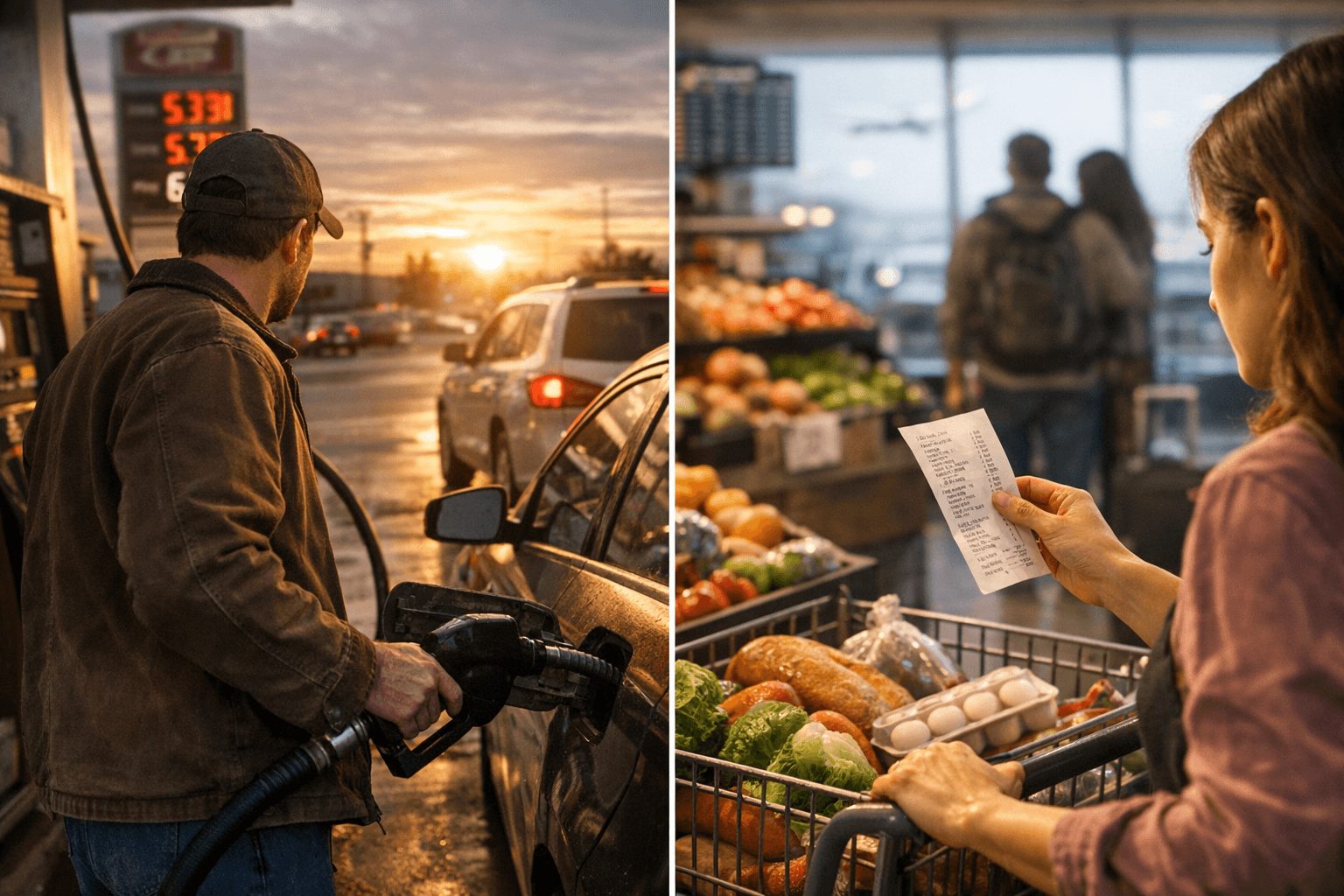
Gasoline prices surged 21.2% in March, the largest single-month jump in 59 years of records, pushing the national average above $4 per gallon for the first time since 2022 and setting off a chain reaction through grocery aisles, airline terminals, and shipping depots that is now squeezing household budgets far beyond the pump.
The average U.S. household will absorb an additional $740 in gasoline costs this year because of the jump in oil prices, according to economists at the Stanford Institute for Economic Policy Research. That figure, spread across 12 months, amounts to roughly $62 a month pulled directly from spending that might otherwise cover a restaurant dinner, a streaming subscription, or a tank of groceries. Bank of America Institute data from the second week of March showed gasoline spending running more than 14% higher year over year, a figure that captures the shock before the full month's prices were even tallied. For a household on a fixed income, that $62 monthly drain arrives without a corresponding raise. For a young renter already stretching to cover elevated housing costs, it crowds out nearly every non-essential line item.
The March consumer price index rose a seasonally adjusted 0.9% for the month, pushing the annual inflation rate to 3.3%, the highest since April 2024 and a sharp acceleration from February's 2.4% reading. Energy costs alone accounted for nearly three-quarters of that monthly gain, driven by a 10.9% surge in energy prices.
Food has not moved as dramatically yet, but the pipeline is filling. As long as fuel prices remain elevated, grocery prices are expected to increase in coming months, with perishable foods such as berries, dairy, and meat likely to see upticks first because they require refrigeration during transportation. USDA data showed some produce prices already shifting, including green beans, Brussels sprouts, and limes. David Ortega, a food economist and professor at Michigan State University, offered a measured warning: "Food prices at the retail end are a little bit more buffered. That doesn't mean we aren't going to feel the effect, there's just a lag."
The lag is shortest in air travel. Average U.S. travel costs rose 7% compared with this time in 2025, according to NerdWallet's Travel Price Index, which draws on Bureau of Labor Statistics consumer price data. Airfare alone climbed 14.9% over the past year. United Airlines raised the price of checked luggage and warned that 5% of its routes could be cut over the next two quarters as jet fuel costs bite into margins. The U.S. Postal Service added an 8% surcharge on some packages because of higher fuel costs, a fee that will filter quietly into the price of goods ordered online.
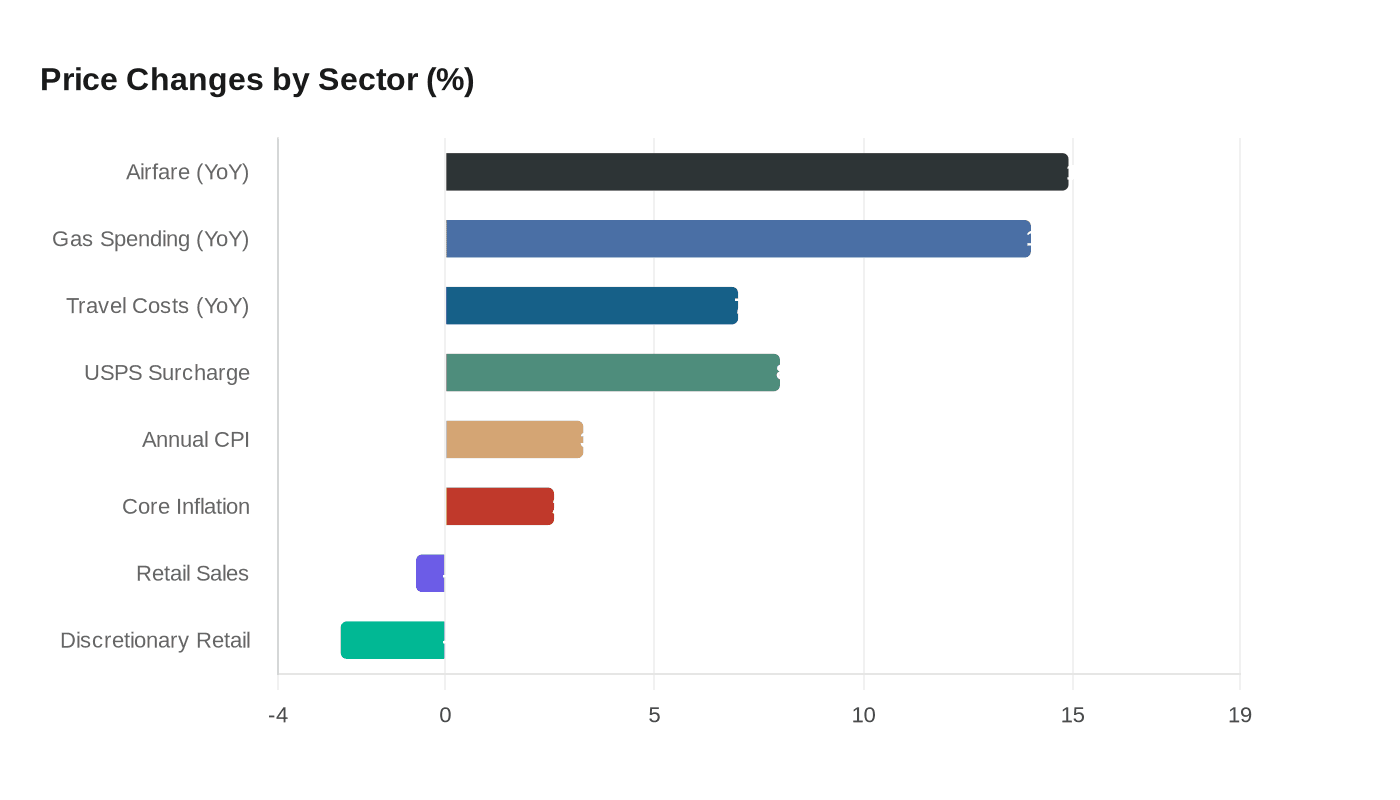
The compounding effect is now registering in retail data and consumer sentiment. Real retail spending fell 0.7%, with discretionary sectors including apparel, electronics, and home furnishings dropping nearly 2.5%. The University of Michigan's consumer sentiment index stagnated in the mid-50s in early March, reflecting a broad loss of confidence. Andy Tsay, a professor at Santa Clara University's Leavey School of Business, put it plainly: "Once gas crosses a certain threshold at the pump, you see a broad pullback as people delay big-ticket purchases and cut back on 'nice-to-have' items, even if they still make the essential trips."
The Federal Reserve, watching core inflation hold relatively steady at 2.6% annually, is not expected to cut rates in the near term. Higher energy costs could continue to push up other prices this year, such as apparel and food, in part because a sharp spike in diesel prices is raising transportation costs. With summer driving season approaching, when gasoline prices historically climb further, Heather Long, chief economist at Navy Federal Credit Union, was direct: "This is only the beginning. Food prices, travel and shipping costs are all going up in April and will exacerbate the pain.
This article was produced by Prism’s automated news system from verified source data, official records, and press releases, then run through automated quality and moderation checks before publishing. The system is built and supervised by the people who set the standards it runs under. Read our full AI policy.
Did this article answer your question?

