Bipartisan Senate Delegation Urges Taiwan to Pass $40 Billion Defense Budget
Four U.S. senators pressed Taiwan's opposition to unblock a $40 billion defense budget blocked 10 times, as China warns of "all necessary measures."
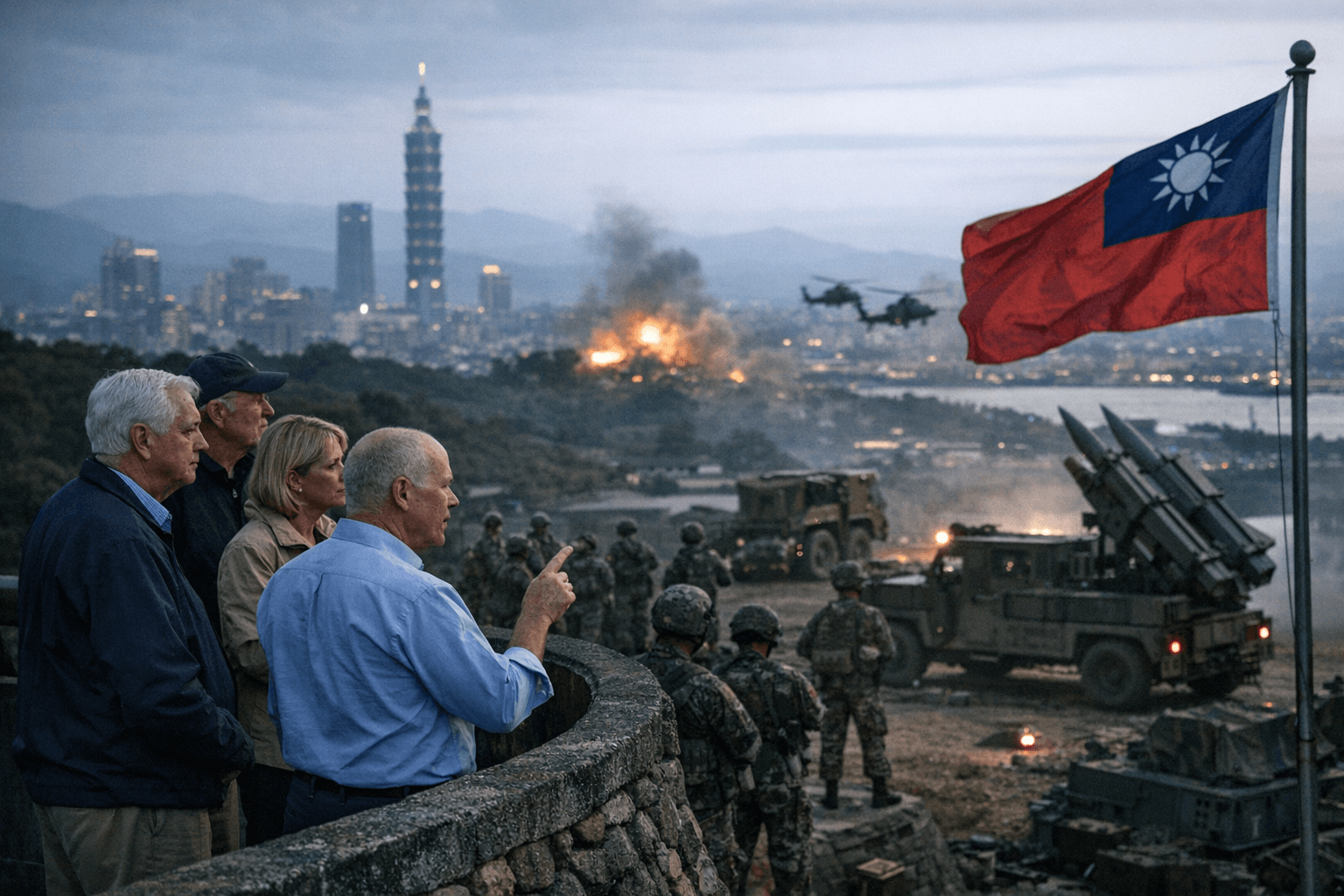
A bipartisan group of four U.S. senators arrived in Taipei pressing Taiwan's opposition-controlled legislature to pass a stalled $40 billion special defense budget, warning that continued delays risk undermining the island's deterrence against Beijing.
Sens. John Curtis (R-UT) and Jeanne Shaheen (D-NH), who co-led the delegation, were joined by Sens. Thom Tillis (R-NC) and Jacky Rosen (D-NV). The two-day Asia trip also includes stops in Japan and South Korea, timed ahead of President Donald Trump's planned May summit with Chinese President Xi Jinping in Beijing and widely seen as a signal of Washington's frustration over the budget's repeated defeats in Taiwan's legislature.
At a March 30 press conference at Taiwan's Presidential Office, Curtis made the stakes explicit. "I'd like to personally endorse the special defense budget and tell you back in Washington, D.C., that my colleagues are watching — this is important," he said. "We want to make sure that as we invest in this part of the world, that you are also investing and that we're in this together." Shaheen, ranking member of the Senate Foreign Relations Committee, added: "We are concerned by the increased pressure from Beijing, including military activity around Taiwan that raises the risk of miscalculation."
AIT Director Raymond Greene and Taiwan's National Security Council Secretary-General Joseph Wu also attended. The American Institute in Taiwan publicly backed the special budget, and President Lai Ching-te thanked the delegation, citing DPP polling showing roughly two-thirds of the public supporting the measure.
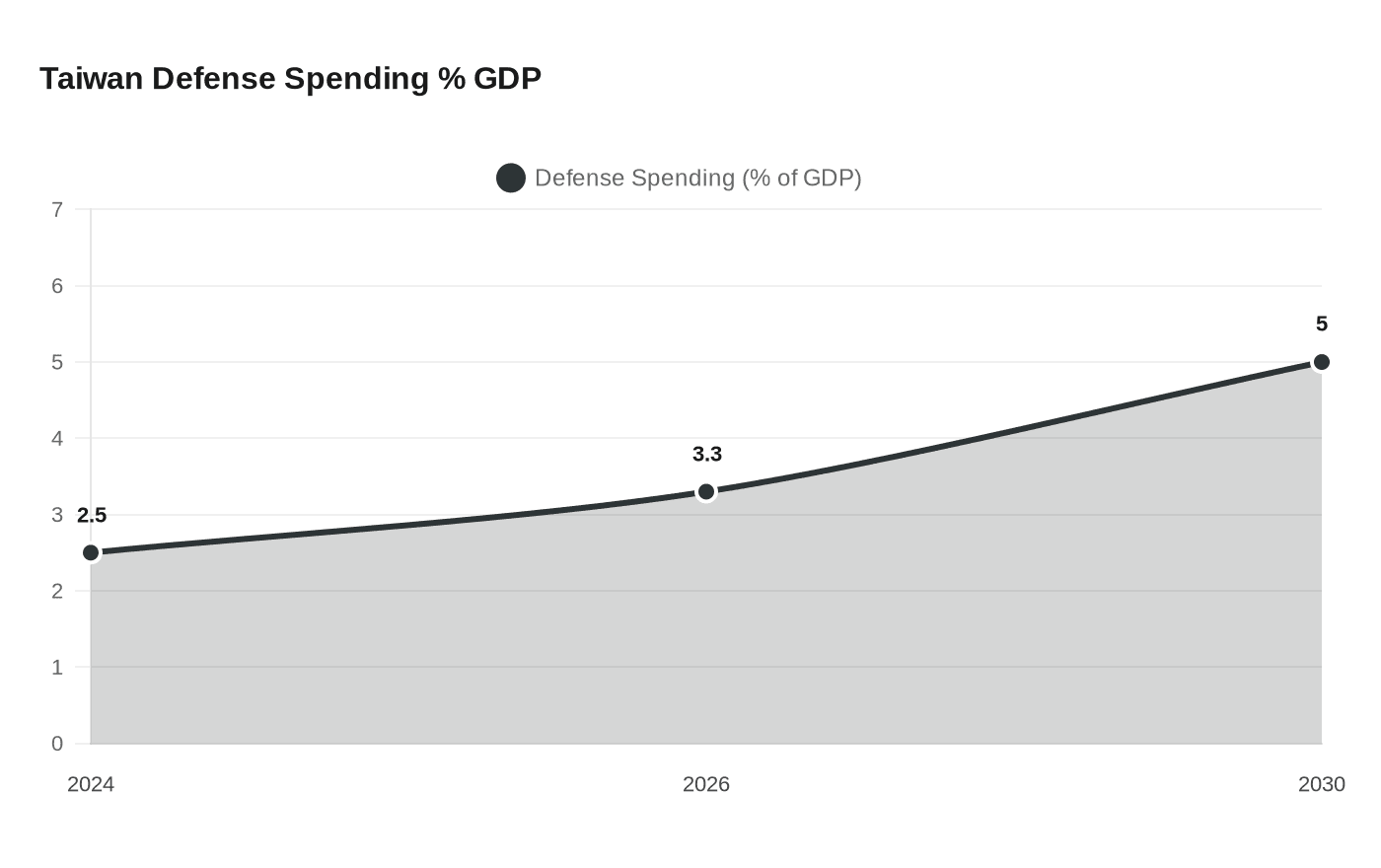
The NT$1.25 trillion plan, announced by Lai on November 25, 2025, spans eight years and would fund HIMARS rocket systems, M109A7 howitzers, Javelin and TOW-2B missiles, Harpoon missiles, and an integrated air defense network Lai has called "T-Dome." Passage would push Taiwan's defense spending from 2.5% of GDP in 2024 to an estimated 3.3% in 2026, with Lai targeting 5% by 2030.
The Kuomintang and the Taiwan People's Party have together blocked the budget at least 10 times in the Legislative Yuan. On March 5, the KMT counter-proposed a scaled-back NT$380 billion ($12 billion) package focused on nine items from a December 2025 U.S. congressional notification. Four of those items, HIMARS systems, M109A7 howitzers, and TOW-2B and Javelin missiles, have already reached the contracting stage with looming payment deadlines. The opposition has authorized the Ministry of Defense to sign those contracts and has separately cleared roughly $9 billion in U.S. arms deals, though the broader special budget remains frozen.
The Trump administration approved a record $11 billion arms package for Taiwan in December 2025, the package the stalled budget is partly intended to fund. Trump's nominee for Under Secretary of Defense for Policy, Elbridge Colby, told his March 2025 Senate confirmation hearing that Taiwan should spend 10% of GDP on defense, echoing a figure Trump had raised as a candidate in 2024.
Beijing responded sharply. Foreign Ministry spokesperson Mao Ning called on Washington to "stop all forms of official interactions with the Taiwan region" and warned that China would "take all necessary measures to safeguard its sovereignty and territorial integrity." Asked whether China would sanction the visiting senators, Mao Ning declined a direct answer, calling the Taiwan question "a red line that cannot be crossed." China conducted its eighth major military drill around the island, designated "Justice Mission 2025," in late December 2025.
The standoff mirrors an impasse from two decades ago, when President Chen Shui-bian sought to push through a U.S. arms purchase while the KMT controlled the legislature. That deadlock stretched for years. With payment deadlines tightening and Beijing's military tempo accelerating, Taiwan's legislature has considerably less room to stall.
Know something we missed? Have a correction or additional information?
Submit a Tip