Brazil Supreme Court Halts Reduced Sentence for Bolsonaro Amid Legal Challenge
Brazil’s top court froze a law that would have shortened Jair Bolsonaro’s sentence, setting up a direct test of whether lawmakers can undo punishment the judiciary has already imposed.
Brazil’s Supreme Court has halted a law that would have sharply reduced Jair Bolsonaro’s prison term, turning the former president’s legal fate into a fresh separation-of-powers clash between Congress and the judiciary.
Justice Alexandre de Moraes barred the measure from taking effect while the Supreme Federal Court reviews constitutional challenges filed against it by two political parties and the Brazilian Press Association, ABI. The law would have cut Bolsonaro’s 27-year and three-month sentence for plotting a coup after losing the 2022 election, a change that could have moved up his possible release to 2028. It would also have reduced penalties for other people convicted in connection with the January 8, 2023 riot, when Bolsonaro supporters stormed and ransacked the Presidential Palace, Congress and the Supreme Court in Brasília.
The confrontation goes beyond Bolsonaro himself. It asks whether elected officials can rewrite the consequences of a criminal conviction in ways the court may view as unconstitutional, especially when the punishment already stems from a landmark ruling by the country’s highest bench. The Supreme Court said the January 8 assault began at about 3:40 p.m. and amounted to an attack on Brazil’s democratic order, targeting all three branches of government in the capital.
Bolsonaro was sentenced by a Supreme Court panel on September 11, 2025, and the court published the written judgment on October 22, 2025. The court also continued issuing convictions in 2025 tied to the January 8 violence, including 119 more people in one set of judgments. Those cases have made accountability for the riot a defining issue in Brazil’s political life, not just a criminal matter.
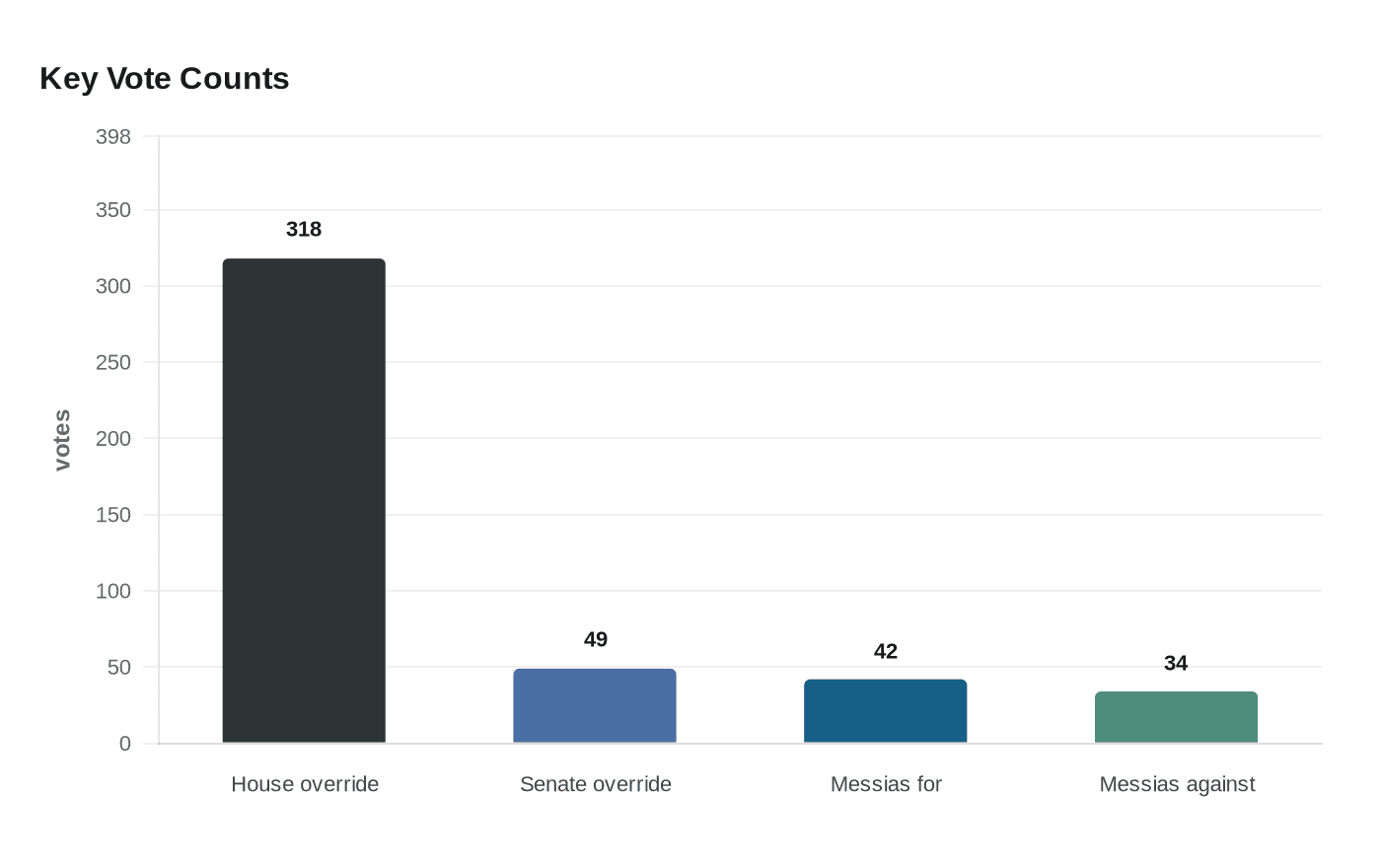
The legislative fight escalated after President Luiz Inacio Lula da Silva issued a full veto to the sentencing-reduction bill on January 8, 2026, the second anniversary of the attacks. Congress overrode that veto on April 30, 2026, with wide margins in both chambers, including 318 votes in the Brazilian Chamber of Deputies and 49 in the Senate. One day earlier, the Senate had rejected Lula’s Supreme Court nominee, Jorge Messias, by 42 votes to 34, the first such rejection in 132 years, underscoring how fragile the president’s coalition has become.
By suspending the law, Moraes ensured that the judiciary will have time to decide whether Brazil’s Constitution permits lawmakers to blunt a sentence handed down to a former president convicted in an effort to stay in power. The outcome will shape not only Bolsonaro’s future, but also the limits of political power after the January 8 assault on Brazil’s democratic institutions.
This article was produced by Prism’s automated news system from verified source data, official records, and press releases, then run through automated quality and moderation checks before publishing. The system is built and supervised by the people who set the standards it runs under. Read our full AI policy.
Did this article answer your question?


