Venice Biennale Opens Amid Protests, Boycotts and Jury Resignations
Protesters, jury resignations and artist boycotts turned the Venice Biennale's opening into a geopolitical clash, with Israel and Russia at the center.
Protests over Israel and Russia turned the Venice Biennale’s opening into a political flashpoint, pushing the contemporary art on display into the background. The 61st edition opened on May 9, 2026, and will run until Nov. 22, but it began without a jury after the event’s entire five-member awards panel resigned on April 30.
The jurors said they would not award prizes, including the Golden Lion for best national pavilion, to countries whose governments or leaders have been charged with crimes against humanity by the International Criminal Court, including Israel and Russia. Dozens of artists then withdrew from awards consideration in solidarity, among them Laurie Anderson, Alfredo Jaar and Zoe Leonard. The withdrawal statement also cited support from the national pavilions of France, Ecuador and the United Arab Emirates.
Pressure had been building for months. Nearly 200 Biennale participants signed a March 2026 letter organized by the Art Not Genocide Alliance demanding that Israel be excluded from the exhibition. The letter said it had been delivered to Biennale president and board on March 17, after an earlier appeal on Oct. 2, 2025 went unanswered. Signatories included Alfredo Jaar, Yto Barrada, Rosana Paulino, Meriem Bennani, Cauleen Smith, Binna Choi and Carles Guerra.
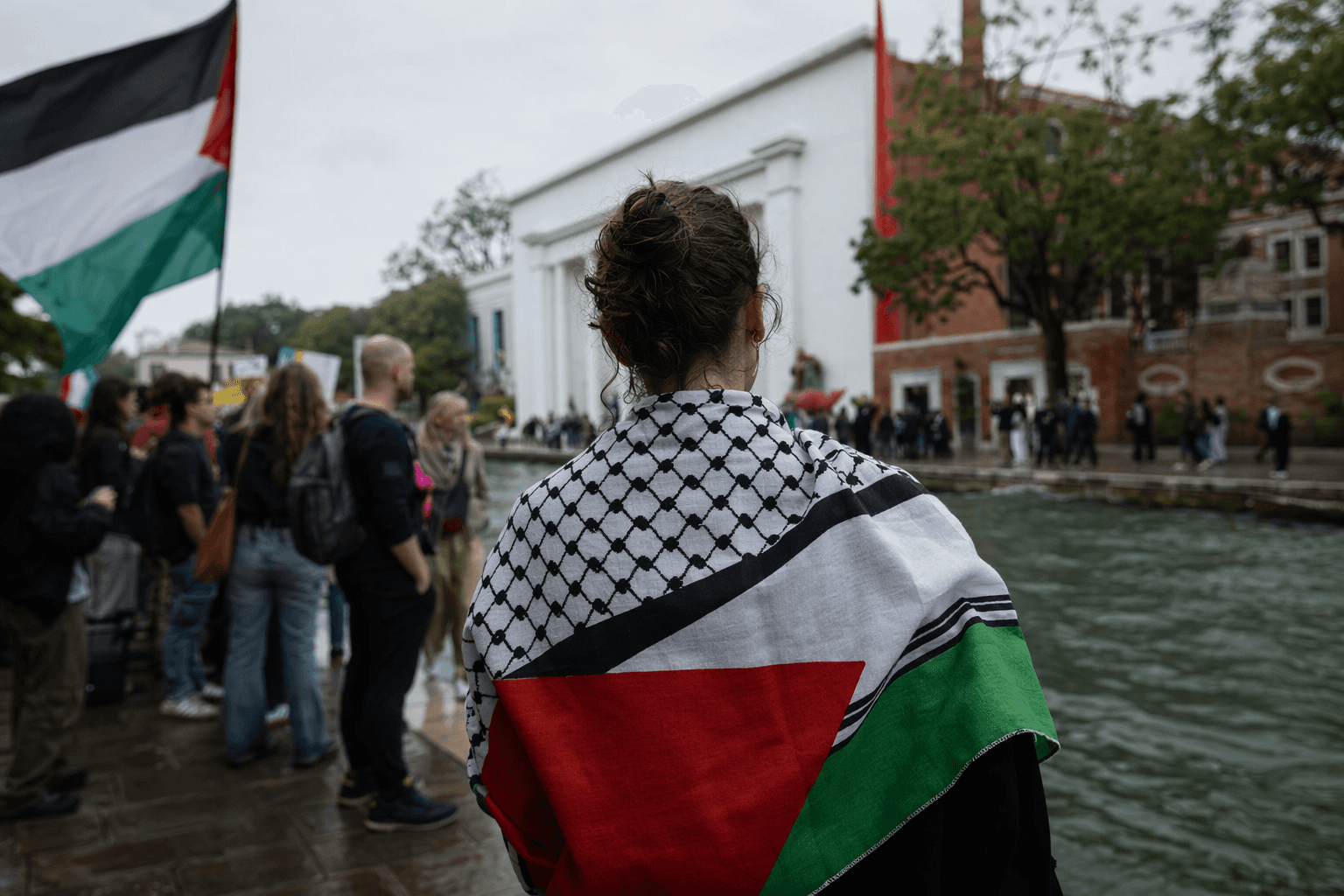
The dispute was visible outside the pavilions before the public opening. More than 200 people protested on May 6 outside the temporary Israeli pavilion in the Arsenale, calling on organizers to stop “art-washing” and close the space. The Israeli pavilion was moved from the Giardini because that site remains closed for renovation. Around 60 artists in the main exhibition also joined a daily collective action called Solidarity Drone Chorus, inspired by Ahmed Muin’s Drone Song and repeated at noon through May 8 to draw attention to artists in Gaza and to those affected by war in Palestine and elsewhere.
Russia’s return to the Biennale for the first time since its 2022 invasion of Ukraine triggered a second front of anger. The European Union cut a 2 million euro grant to the Biennale over Russia’s participation, and the Italian government opposed the decision while acknowledging the Biennale’s independence. At the Russian pavilion on May 6, Pussy Riot and FEMEN staged protests in pink balaclavas and smoke bombs, shouting anti-Kremlin slogans before police blocked their entry for about 30 minutes.
Supporters of Ukraine also pushed the fight onto other national pavilions. Latvia’s pavilion circulated a design reading “Death in Venice - Russia go home!” By the time the doors opened, the Biennale had become one of the most openly politicized editions in its history, with questions of patronage, protest and institutional neutrality now inseparable from the art itself.
This article was produced by Prism’s automated news system from verified source data, official records, and press releases, then run through automated quality and moderation checks before publishing. The system is built and supervised by the people who set the standards it runs under. Read our full AI policy.
Did this article answer your question?