Breakthrough Prize honors scientists behind gene therapy and CRISPR breakthroughs
A $3 million prize spotlighted the science behind the first sickle cell CRISPR therapy and a blindness treatment now used in four countries.
The Breakthrough Prize put the path from laboratory discovery to real-world medicine at center stage, awarding Jean Bennett, Katherine A. High and Albert Maguire for gene therapy for inherited blindness and honoring Stuart H. Orkin and Swee Lay Thein for work that helped lead to gene therapies for sickle cell disease and beta-thalassemia. Together, those projects show how high-risk basic research can become treatment, while also exposing how slowly such advances reach patients.
The 2026 laureates were announced April 18, the 14th year of the prize, and celebrated in Los Angeles that night. The prize foundation said this year’s total purse was $18.75 million, with six main prizes worth $3 million each, six New Horizons Prizes for 15 early-career physicists and mathematicians, and three Maryam Mirzakhani New Frontiers Prizes for women mathematicians who recently completed PhDs. The ceremony was set to premiere on YouTube April 26 at 3 p.m. Eastern and noon Pacific.
For patients with inherited blindness, the award recognized work that became Luxturna, the first FDA-approved gene therapy for a disease caused by mutations in a specific gene. The treatment, developed by Bennett, Maguire and High, is now in use in the United States, Canada, Australia and Switzerland, a sign both of progress and of the uneven global reach of cutting-edge medicine.
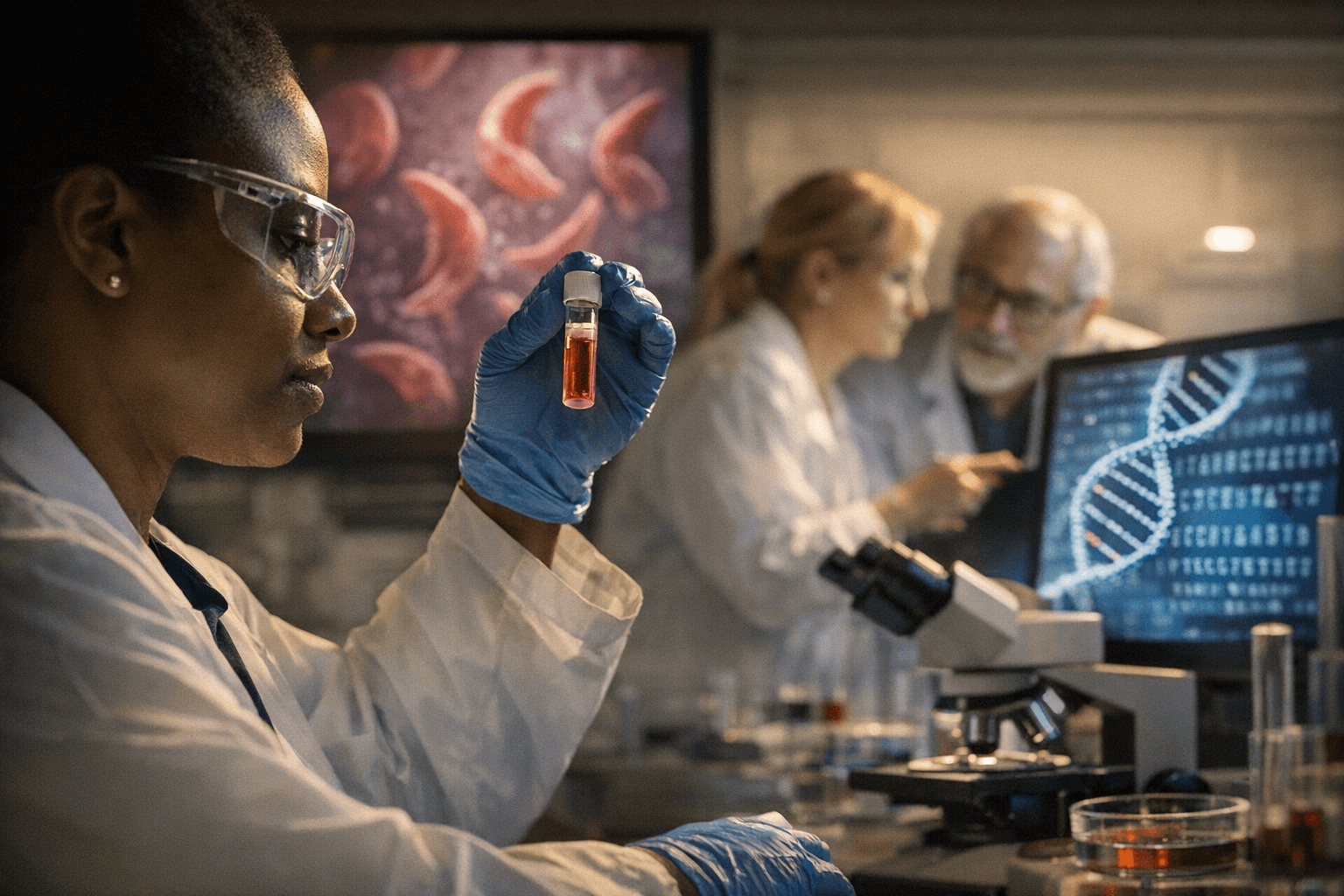
The sickle cell and beta-thalassemia award underscored a similar arc. Swee Lay Thein traced the genetic basis of continued fetal hemoglobin production, and Stuart H. Orkin helped move the discovery from bench to bedside. The prize is tied to research that led to the first sickle cell CRISPR therapy, a landmark that turned decades of genetics into a therapy for a disease that falls hardest on Black communities and patients who have long faced gaps in specialty care, transplant access and consistent follow-up.
The life sciences awards also went to Rosa Rademakers and Bryan Traynor, whose work identified a key genetic cause of ALS and frontotemporal dementia, two devastating adult-onset neurodegenerative disorders. In mathematics, Frank Merle was honored for advances in nonlinear evolution equations, and in fundamental physics the Muon g-2 Collaborations at CERN, Brookhaven National Laboratory and Fermilab won for a multi-decade effort that produced the world’s most precise measurement to date of the muon. The $3 million physics prize will be split among the living co-authors of the experiment’s publications.
The foundation also gave a Special Breakthrough Prize in Fundamental Physics to David J. Gross and created the inaugural Vera Rubin New Frontiers Prize for Carolina Figueiredo of Princeton University. The overall message of the night was clear: the biggest scientific prizes are increasingly about what happens after discovery, when a result leaves the paper and enters the clinic.
This article was produced by Prism’s automated news system from verified source data, official records, and press releases, then run through automated quality and moderation checks before publishing. The system is built and supervised by the people who set the standards it runs under. Read our full AI policy.
Did this article answer your question?


