Canada Pushes Arctic Defense, As Troops Endure Extreme Northern Patrol
Canadian troops pushed 5,000 kilometers by snowmobile through minus 60 C weather, a field test of whether Ottawa can back Arctic sovereignty with real endurance.
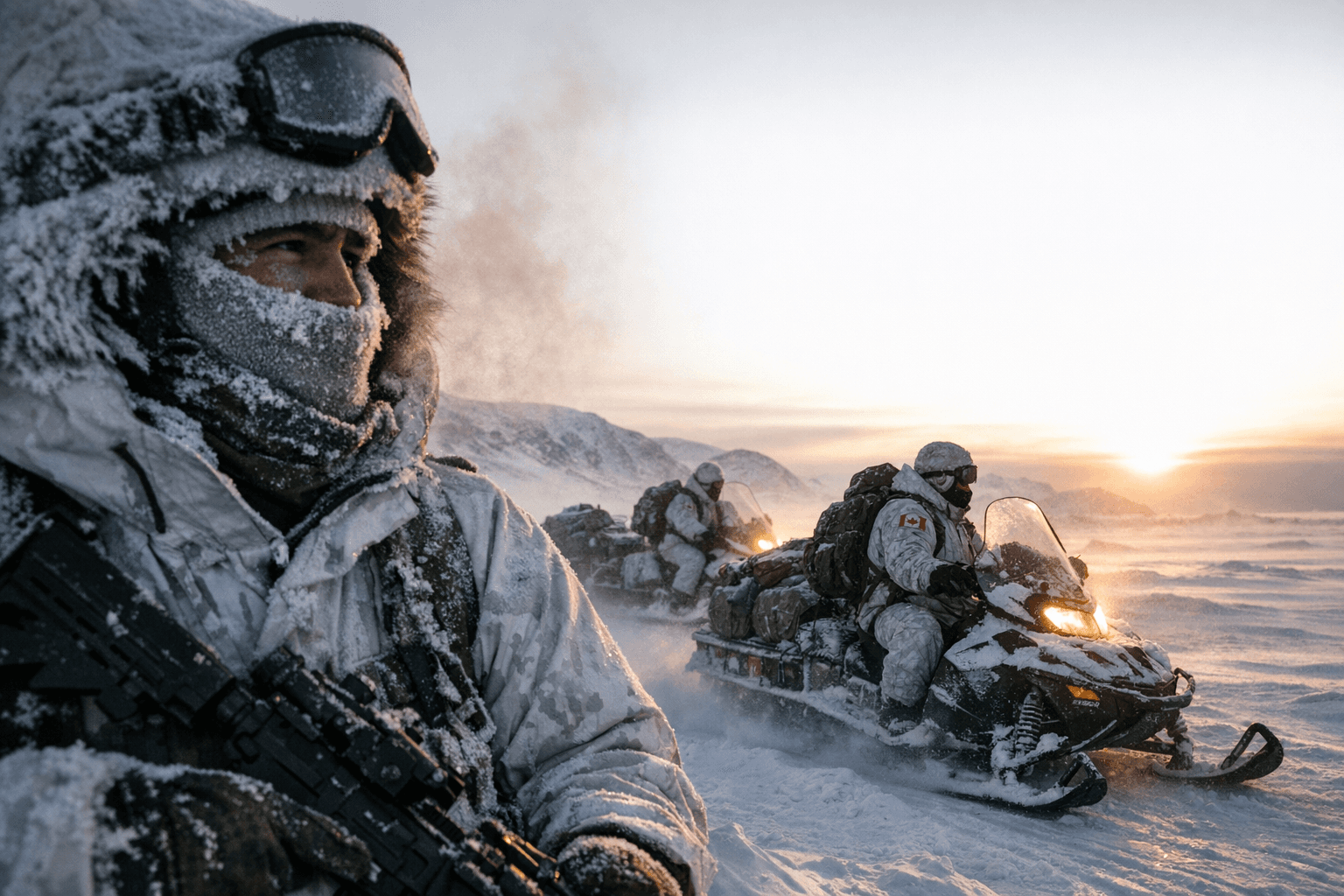
Snowmobiles punched through blizzards and deep cold as Canadian soldiers and Rangers covered more than 5,000 kilometers from Inuvik in the Northwest Territories to Churchill, Manitoba, in a patrol meant to prove that Canada can defend the Arctic on its own. Temperatures fell to minus 60 degrees Celsius during the three-month trek, turning the exercise into a test of endurance, logistics and national will as much as military readiness.
The message from Ottawa is plain: the Arctic is no longer a distant flank but a central sovereignty issue. Prime Minister Mark Carney has promised that Canada will assume “full responsibility” for Arctic sovereignty and unveiled a C$35 billion plan to reinforce the military presence in the region. The shift comes as Washington looks less reliable to Canadian planners, with Donald Trump’s repeated threats to make Canada an American state, his talk of taking control of Greenland and his criticism of NATO sharpening doubts about how steady the U.S. security umbrella will remain.
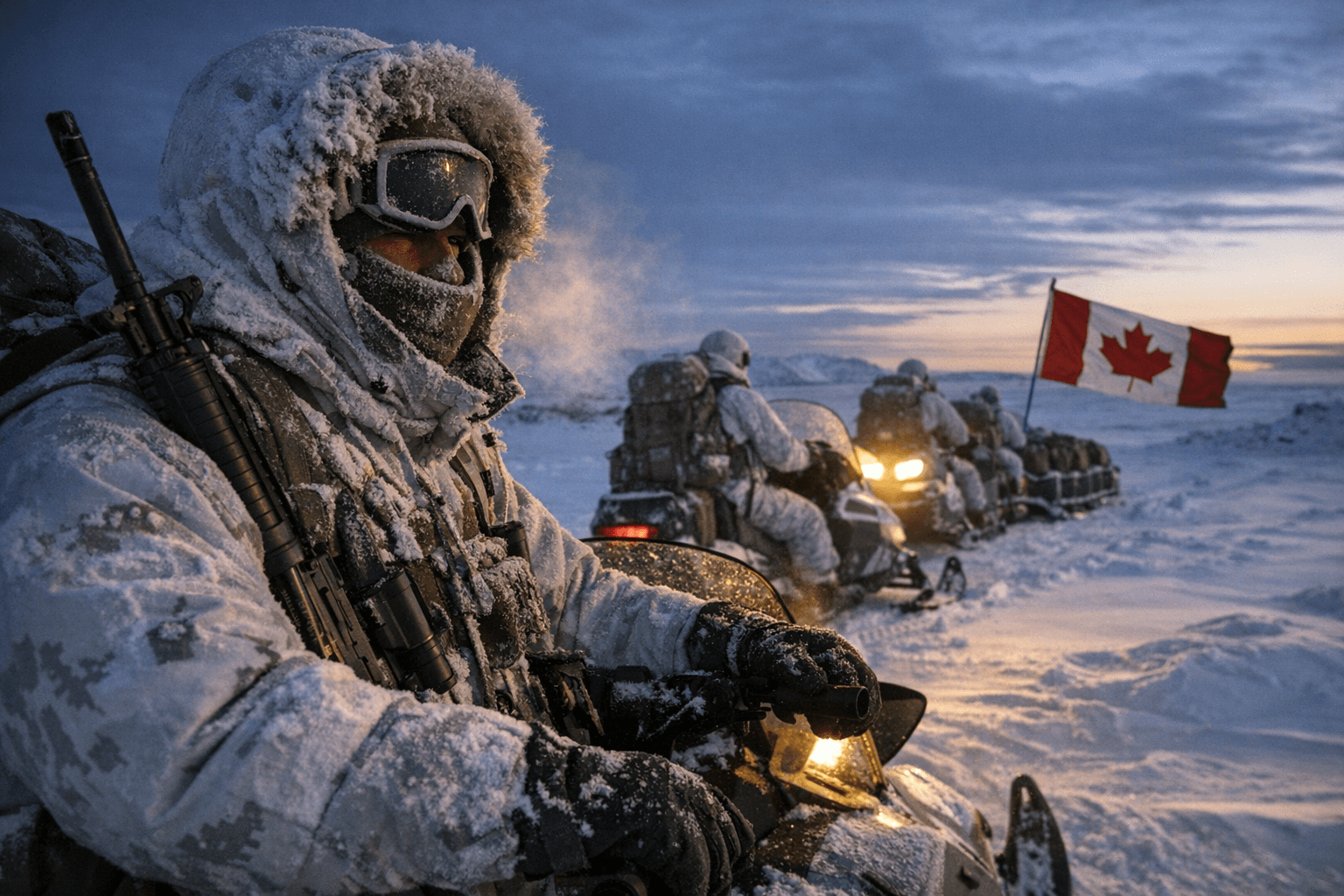
Travis Hanes, a commanding officer in the 1st Canadian Ranger Patrol Group, said the conditions themselves underline why Canada insists on a persistent northern presence. “There are Canadians up here defending the country at all times of the day,” he said, describing the terrain as among the most inhospitable imaginable. Speaking while recovering from a frostbitten nose, Hanes added, “We are the landowners and it's hard to see how someone thinks it could be taken away.”
The stakes stretch far beyond one patrol. Canada’s Arctic and Northern Policy Framework, launched in 2019, sets a long-term vision through 2030 and beyond and links Arctic policy to Indigenous priorities and sovereignty. Canada’s 2024 defence policy update, Our North, Strong and Free, adds C$8.1 billion over five years and C$73 billion over 20 years, with a pledge to reach 2% of GDP on defence by 2032. Ottawa has also set aside C$2.67 billion over 20 years for Northern Operational Support Hubs and announced the first hub locations in 2025 to extend military reach and year-round presence.
Still, the practical challenge is immense. Canada’s Arctic coastline runs about 162,000 kilometers, and roughly 40% of the country’s landmass lies in its three northern territories. Canada and the United States have worked together in the region since they created NORAD in 1958, and NORAD added a maritime warning mission in 2006, but Ottawa now wants to reduce dependence on any single partner. That urgency reflects a wider warning in Canada’s 2024 Arctic foreign policy, which says the country is at an “inflection point” as Russia’s actions since 2022, climate change and other emerging threats reshape the far north.
The deeper history makes the sovereignty argument more fraught. Inuit High Arctic relocations between 1934 and 1948 remain a dark chapter in Canadian history, when the federal government forced Inuit families onto unfamiliar northern lands to strengthen sovereignty claims. Against that backdrop, today’s patrols are about more than training. They are an attempt to show that Canada can hold the north not just on a map, but in the field, in winter, and without assuming others will always come first.
This article was produced by Prism’s automated news system from verified source data, official records, and press releases, then run through automated quality and moderation checks before publishing. The system is built and supervised by the people who set the standards it runs under. Read our full AI policy.
Did this article answer your question?