CBS News foreign correspondent Elizabeth Palmer retires after 26 years
Elizabeth Palmer spent seven years crossing Syria and got into Afghanistan after 9/11. Her retirement closes 26 years of old-school foreign reporting at CBS.
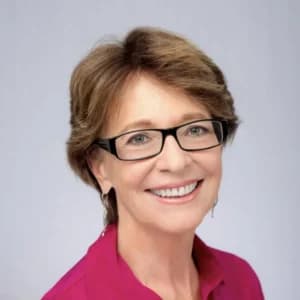
Elizabeth Palmer’s retirement closes a 26-year run at CBS News that helped define what a senior foreign correspondent could still do: live in London, move across Europe and the Middle East, and stay close to conflicts long after the first headlines faded. CBS said Palmer joined the network in 2000, and her farewell on CBS Sunday Morning on April 26, 2026, marked the end of a career built on reach, stamina and repeated exposure to war.
Her CBS years tracked the major fault lines of the post-9/11 era. CBS said Palmer was one of the first network correspondents to get into Afghanistan after the Sept. 11 attacks, then spent much of the next decade reporting from Afghanistan and Iraq. She also filed frequently from Iran on politics, culture and the nuclear program, and CBS said she was one of very few Western journalists to visit some Iranian nuclear sites. The job required a kind of on-the-ground persistence that has become harder to sustain, with a correspondent staying long enough to know the terrain, the people and the risks.
That same depth showed up in her war coverage. Palmer reported on the 2011 NATO intervention in Libya and the 2012 aftermath of the attack in Benghazi that killed Ambassador Chris Stevens. Her reporting on the Syrian civil war won a duPont-Columbia Award, and CBS said she traveled across Syria for more than seven years on multiple trips to gain access to both the Syrian Arab Army and rebel fighters. She also won the 2005 Sigma Delta Chi Award for coverage of the Beslan school hostage siege. In a 2019 CBS News interview, Palmer told journalism students that the core qualities they need are curiosity and perpetual skepticism, a description that fit a career spent moving from one crisis to the next.
Palmer’s range was wider than the battlefield. Her work for CBS Sunday Morning included profiles of Josephine Baker and an interview with novelist Amor Towles, and one of her more memorable assignments had her appear disguised as a bunch of bananas in a story on Austrian body painter Johannes Stötter. CBS said some of her arts pieces won Emmy Awards, while she also accumulated several Emmy nominations. Before CBS, Palmer opened the Canadian Broadcasting Corporation’s Latin American bureau in Mexico City in 1994, worked on The Journal from 1990 to 1994 and Venture from 1988 to 1990, and hosted CBC Radio’s Olympic coverage for both the 1988 Winter and Summer Games.
CBS also said Palmer was born in London, a detail that neatly framed a career that ended back in the city where she had become a familiar foreign face. Her departure leaves a narrower bench of veteran correspondents who can combine war reporting, regional expertise and feature work across continents, the kind of newsroom asset that once anchored American television news from Kabul to Kyiv.
This article was produced by Prism’s automated news system from verified source data, official records, and press releases, then run through automated quality and moderation checks before publishing. The system is built and supervised by the people who set the standards it runs under. Read our full AI policy.
Did this article answer your question?