CDC Analysis Finds 2026 Flu Vaccine Less Effective Than 2025 in Some Groups
The 2025-26 flu vaccine cut hospitalization risk by just 29% in adults 18-64 and 31% in seniors, well below children's 41% protection, as H3N2 dominated the season.
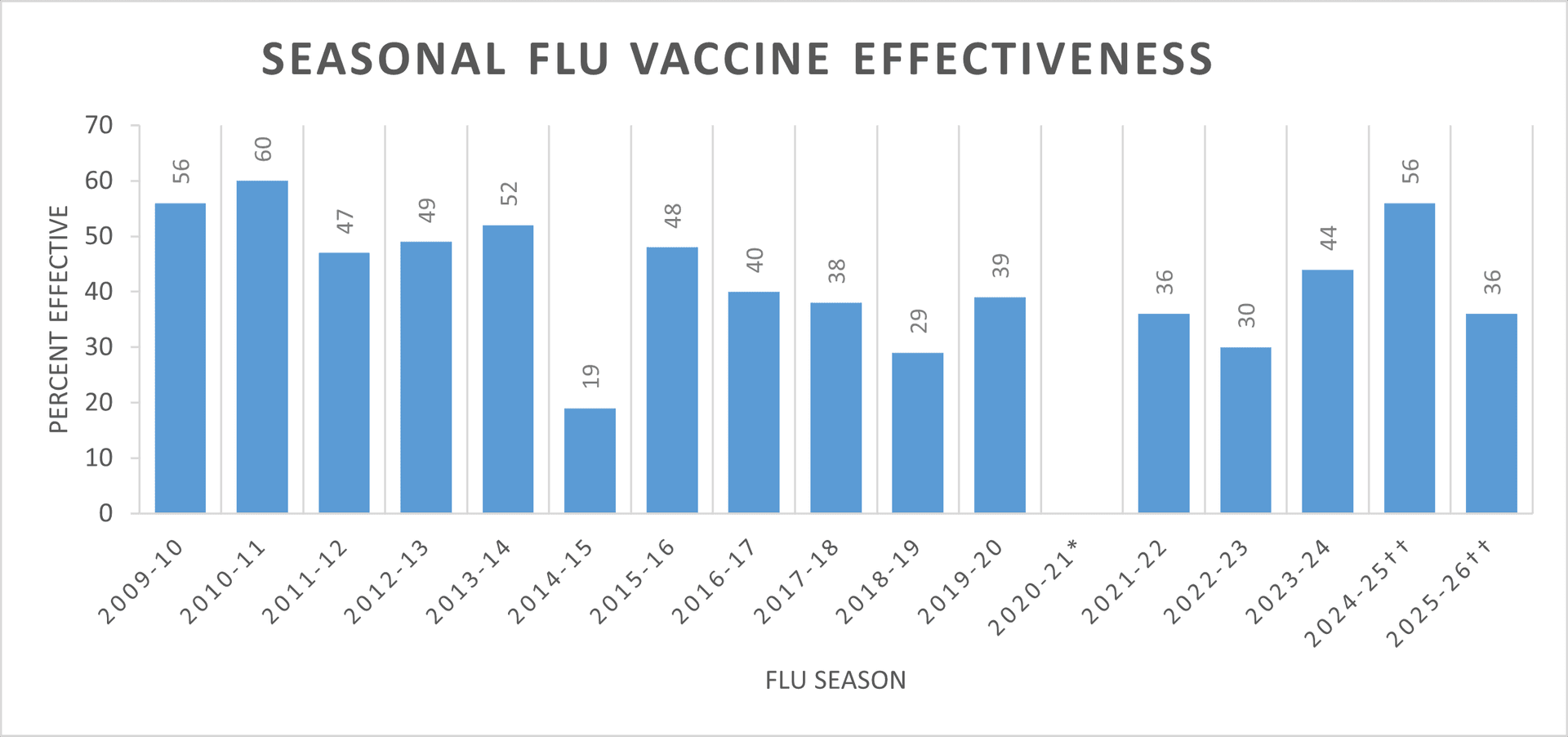
The influenza vaccine covering the current season offered measurably weaker protection to adults than to children, and fell short of recent historical benchmarks, according to a CDC analysis published in the Morbidity and Mortality Weekly Report in March 2026.
The findings drew on data from 142,494 patients across three national surveillance networks, covering acute respiratory illness cases from September 2025 through February 2026. Vaccine effectiveness against influenza-associated hospitalization reached 41% among children and adolescents aged 6 months through 17 years, but dropped to 29% for adults aged 18 to 64 and only modestly recovered to 31% for those 65 and older. Protection against outpatient visits followed a similar pattern: children showed effectiveness of 38% to 41%, while adults ranged from 22% to 36% depending on the surveillance network used.
Much of the shortfall tracked back to influenza A(H3N2). As of February 28, influenza A accounted for 93% of detected viruses nationally, and the vaccine showed notably weaker performance against that subtype, with effectiveness against H3N2-associated outpatient illness reaching just 35% and 38% for hospitalization in the pediatric group. Against influenza B, by contrast, effectiveness ranged from 45% to 71%, numbers far more consistent with stronger prior seasons.

Antigenic drift, the incremental genetic changes circulating strains undergo over time, is the primary driver of year-to-year variation in vaccine performance. When circulating viruses drift from the strains selected months earlier during the manufacturing process, the match deteriorates. Health officials acknowledged that manufacturing timelines leave limited room to adjust once dominant strains are identified, underscoring why real-time surveillance and rapid data-sharing remain so critical.
The drop in effectiveness does not erase the vaccine's value. The same CDC analysis estimated that at least 26 million illnesses, 340,000 hospitalizations, and 21,000 deaths resulted from influenza across the full season. Even reduced protection at the margins of those numbers represents tens of thousands of prevented hospitalizations. The researchers were explicit on the complementary role of antivirals, noting that such medications are "an additional important public health tool, particularly during seasons with lower VE." Clinicians treating older adults, pregnant patients, infants, and people with chronic conditions should move early with antiviral prescriptions at first sign of illness rather than waiting for laboratory confirmation, given that every day of delay narrows the treatment window for drugs such as oseltamivir.
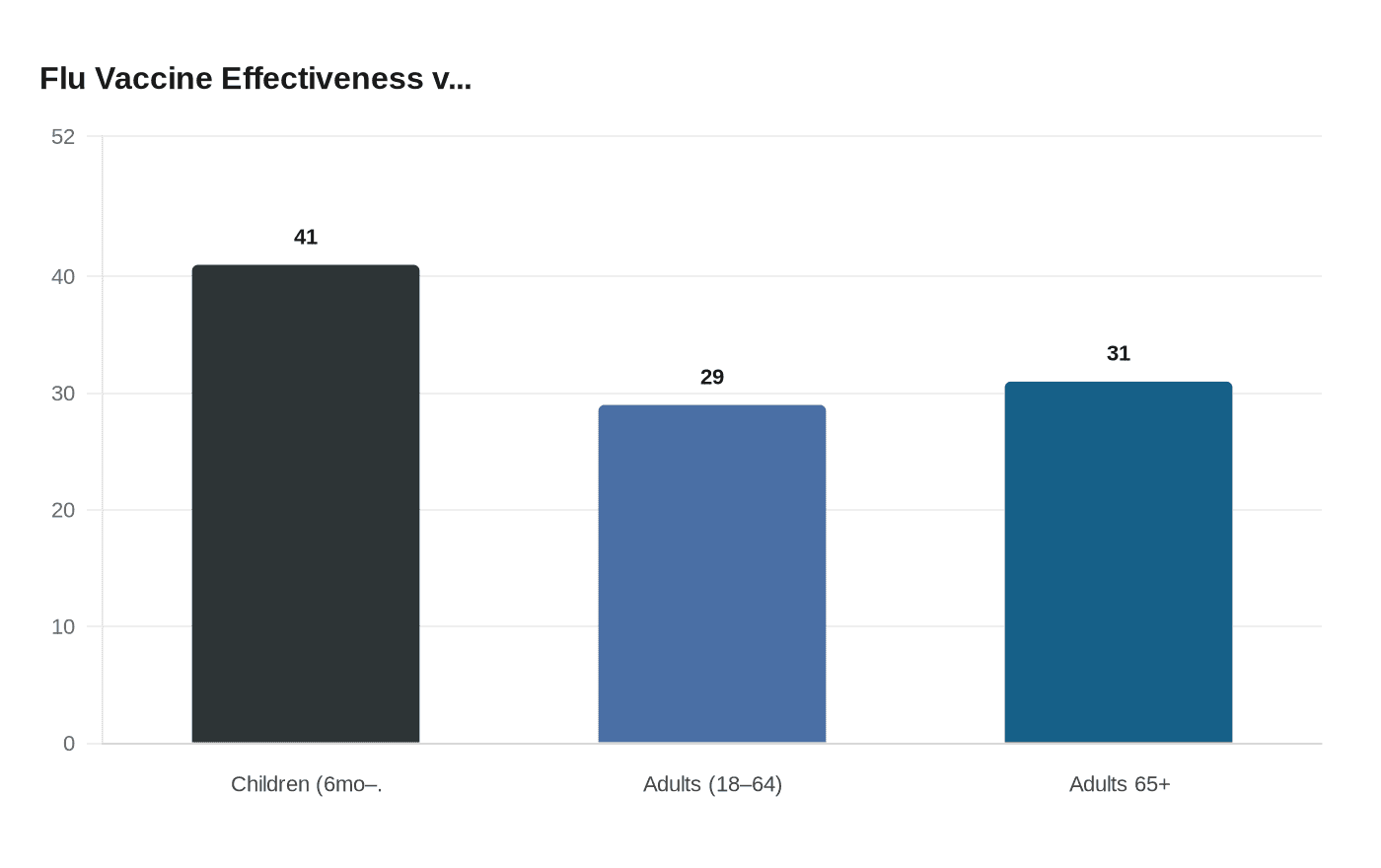
The practical guidance that follows from these numbers is layered. For the highest-risk groups, including adults over 65, people with diabetes, heart disease, or respiratory conditions, and pregnant individuals, vaccination remains the single best individual protection even at 31% hospitalization effectiveness. Masking in crowded or clinical settings and consistent hand hygiene add meaningful marginal risk reduction in high-transmission environments. Health systems in areas reporting cluster outbreaks have been asked to coordinate surge planning with state and local health departments and to submit vaccine performance data to national surveillance pipelines so the CDC can track whether effectiveness shifts as the season progresses.
Public health advocates also raised equity concerns, pointing to the need to expand vaccination access in underserved communities where baseline health disparities amplify the consequences of a weaker-than-average season. A season with reduced effectiveness presses harder on populations that already face higher hospitalization rates, making outreach and access infrastructure more consequential, not less, than in years when the vaccine performs at its peak.
This article was produced by Prism’s automated news system from verified source data, official records, and press releases, then run through automated quality and moderation checks before publishing. The system is built and supervised by the people who set the standards it runs under. Read our full AI policy.
Did this article answer your question?