Resident Doctors Strike for Six Days Over Easter, Creating NHS Triple Threat
Resident doctors staged a six-day Easter walkout, the fifteenth strike round in a dispute the BMA says has cut pay 20% in real terms since 2008.

Resident doctors walked out for six days over Easter 2025, staging what the Chief Medical Officer for St George's, Epsom and St Helier NHS Foundation Trust called a "triple threat": the fifteenth round of industrial action in a two-year pay dispute collided with the bank holiday surge in A&E attendance and a seasonal spike in children being treated for injuries during school holidays.
The walkout ran from 7am on Tuesday 7 April to 7am on Monday 13 April, immediately following the Easter bank holiday weekend. NHS managers had warned that demand during the period would be "challenging," and the timing left hospital trusts managing acute pressure on multiple fronts simultaneously.
Consultants and other specialist doctors continued working throughout the strike. NHS England urged the public to attend all scheduled appointments unless directly contacted and told otherwise. Anyone facing a genuine emergency was advised to call 999 or go to A&E; for urgent but non-life-threatening concerns, NHS 111 online was the recommended first port of call.
The walkout marked the fifteenth round of action in a dispute that formally began on 13 March 2023, though the BMA's campaign for pay restoration dated to a vote at its annual conference in June 2022. A previous chapter appeared to close in September 2024, when junior doctors voted to accept a deal averaging a 22.3% pay rise over two years. Fresh action resumed when the BMA's Resident Doctors Committee rejected the government's latest offer without putting it to a member vote.
That offer included an average 4.9% pay uplift for the current year, comprising a 3.5% headline rise plus structural changes. Health Secretary Wes Streeting said basic pay for resident doctors would have been 35.2% higher than four years ago had they accepted, calling the BMA's rejection "enormously disappointing for NHS patients and staff alike." In response to the BMA refusing to suspend the strike notice, the government withdrew a previously announced allocation of 1,000 extra specialty training posts that had been due at the April 2026 recruitment round.
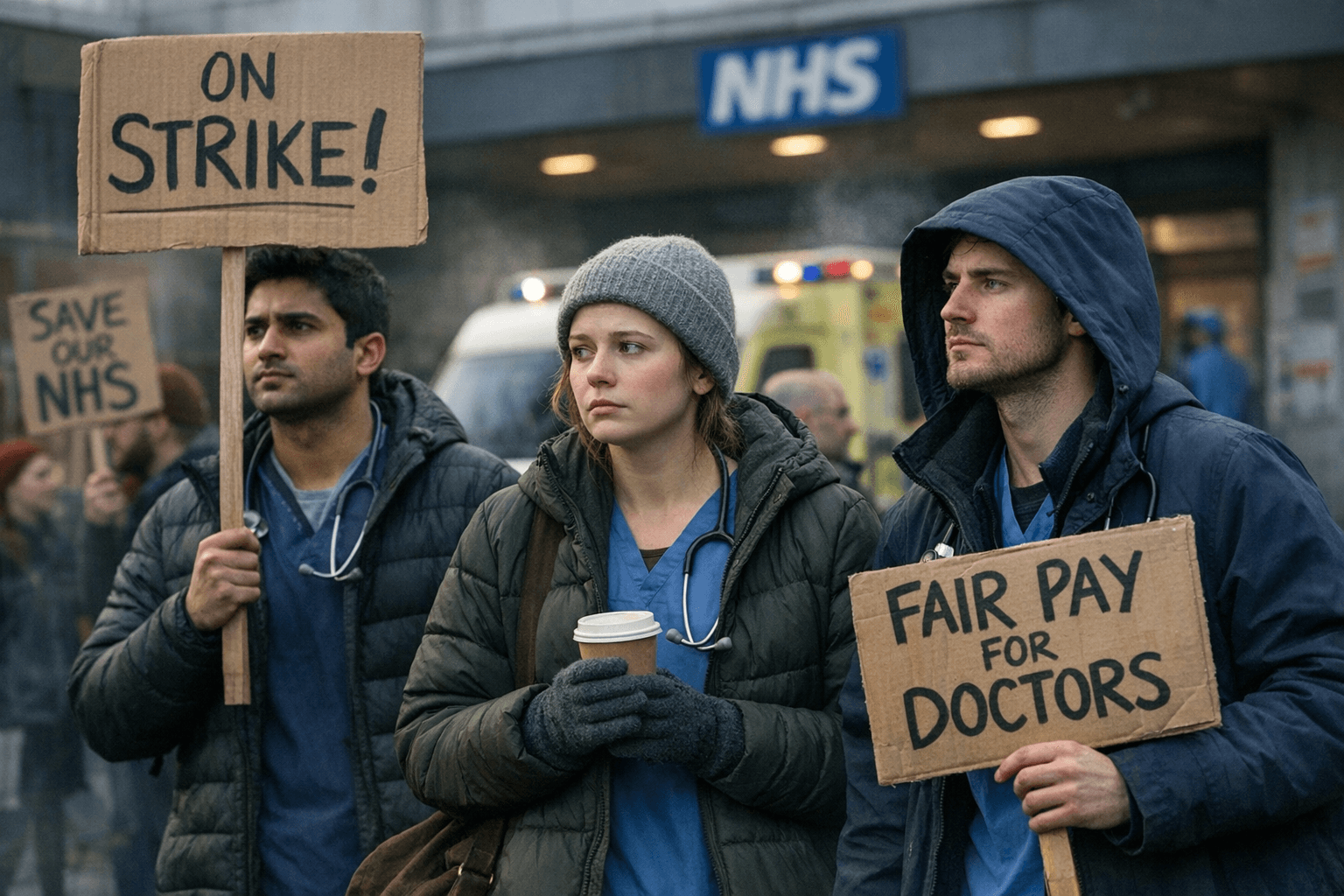
The BMA's position rested on a longer arc of pay erosion. Dr Dolphin of the Resident Doctors Committee said the offer "fails to keep pace with the rising cost of living, let alone restore the pay that doctors have lost over the past 17 years." The union's central argument was that resident doctors' pay in real terms remains roughly 20% below 2008 levels. Beyond pay, the BMA pointed to workforce policy failures leaving many qualified doctors unable to secure NHS posts, pushing some to emigrate or leave medicine entirely.
The financial toll of repeated strikes had been mounting well before this round. The NHS Confederation warned that each bout of action costs up to £300 million. The previous wave between 2023 and 2024 cost taxpayers almost £1.7 billion and led to more than 1.5 million cancelled appointments. Rory Deighton, the NHS Confederation's acute director, said the strikes "not only cause appointments to be cancelled and patients to have to wait longer for tests, treatment and surgery" but also drain NHS leaders' capacity to modernise services.
Individual strikes illustrated the cumulative scale. A single five-day walkout in July 2023 rescheduled approximately 61,000 appointments. A six-day strike in London in January 2024 cancelled more than 330,000. Before the current wave, NHS-wide doctor strikes had occurred only twice in modern history: in 1975, and again during a junior doctors' dispute in 2016.
The withdrawal of the 1,000 training posts, a concession intended as a bridge toward settlement, hardened the impasse. With the BMA arguing that cumulative losses since 2008 remain unaddressed and the government pointing to a 28.9% cumulative rise over three years, the structural gap between the two sides extends well beyond any single percentage point.
Sources:
Know something we missed? Have a correction or additional information?
Submit a Tip