China Accelerates Energy Security Push Amid Escalating U.S. Geopolitical Tensions
China's 1.3 billion-barrel crude stockpile, built largely in response to U.S. tensions, now gives Beijing up to four months of import cover against any supply shock.
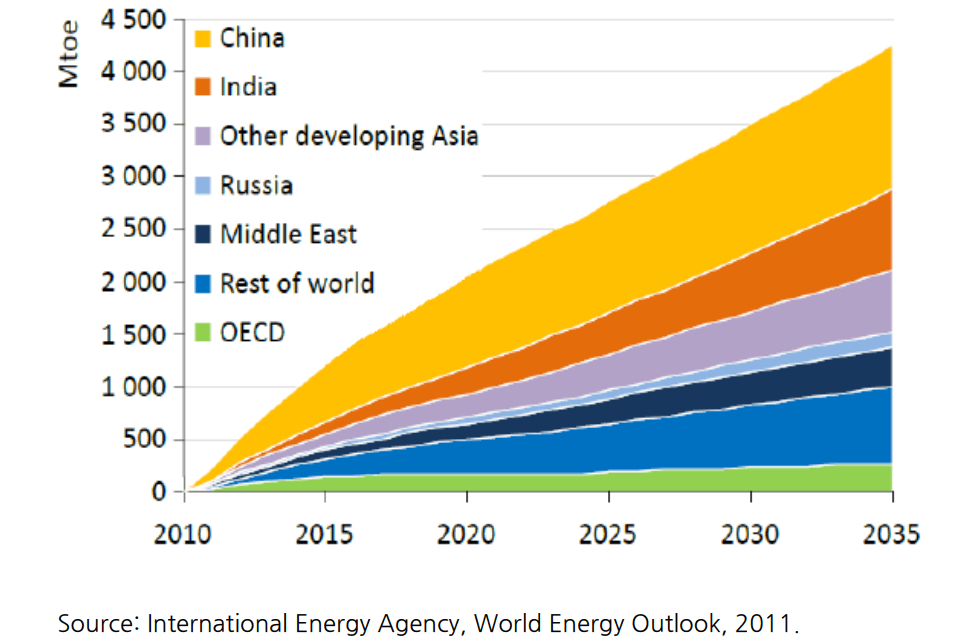
When the Trump administration's tariff escalation resumed in early 2025, Beijing responded to one pressure point with particular speed: it stopped taking American liquefied natural gas. As of last September, China had not received a single U.S. LNG cargo since February, having imposed retaliatory levies as part of the broadening trade war. The move was less an act of desperation than a demonstration of how thoroughly China has repositioned its energy supply chains over the past decade.
China currently holds an estimated 1.3 billion barrels of crude in onshore storage, equivalent to around four months of seaborne imports at the 2025 average rate, according to Vortexa Lead China Oil Market Analyst Emma Li. That buffer was not accumulated overnight. The government instructed state-owned oil corporations to add nearly 60 million barrels of crude to China's strategic reserve in July 2024 and called for accelerating annual stockpiling of strategic fuels, including oil, in March 2025. State oil companies including Sinopec and CNOOC will add at least 169 million barrels of storage capacity across 11 sites during 2025 and 2026. S&P Global Commodity Insights estimated China stockpiled an average of 530,000 barrels per day in 2025, a pace that soaked up surplus global supply and helped support prices as OPEC+ wound down production cuts.
The chokepoints that have always haunted Beijing's energy planners remain as critical as ever. In the first half of 2025, about 23.2 million barrels of oil per day passed through the Strait of Malacca, accounting for roughly 22 percent of global oil demand and 29 percent of seaborne oil trade, making it the largest oil transit chokepoint in the world. Disruptions at these chokepoints can lead to supply delays, higher freight costs, and rising global prices, and chokepoints such as the Strait of Hormuz have limited substitutes. China imports nearly 70 percent of its crude oil through precisely these sea lanes, making diversification away from maritime dependence a strategic imperative.
Pipeline gas has become a central hedge. The apparent breakthrough agreement on Power of Siberia 2 came against the backdrop of Trump renewing his trade war with China since returning to office. As part of the tariffs battle, China introduced levies on U.S. LNG and had not taken delivery of a cargo since February. Gazprom and China National Petroleum Corporation signed a legally binding memorandum to build the 50 billion-cubic-meter Power of Siberia 2 pipeline and agreed to expand capacity of both the existing Power of Siberia 1 line and the planned Eastern Route. The pipeline offers Beijing an overland alternative to the maritime routes that remain vulnerable to interdiction; for Moscow, it partially replaces European revenues gutted by Western sanctions.
Sanctioned crude has also become a structural feature, not an emergency measure. Sanctioned crudes, including Russian barrels, probably accounted for more than one-fifth of China's imports in 2025, spurring increased purchases from Brazil and Indonesia while decreasing purchases from Oman. In late August 2025, China received its maiden delivery from Russia's Arctic LNG 2 project, which had been blacklisted by the Biden administration in late 2023 and struggled to find buyers. Each such purchase chips away at the practical reach of American-led sanctions regimes and offers allied governments a sobering lesson in the limits of economic coercion against a buyer of China's scale.
The longer game, however, may be the renewable buildout. China is the biggest investor in clean energy worldwide, spending $625 billion in 2024, representing 31 percent of the global total of $2.033 trillion. In the 12 months to June 2025, wind and solar generated 2,073 terawatt-hours of electricity, surpassing the combined output of nuclear, hydro, and bioenergy at 1,936 terawatt-hours. Electrification of the vehicle fleet is already cutting demand for road fuels, with gasoline and diesel consumption in decline and overall oil demand expected to peak around 2027.
China is also rapidly developing renewable energy and electrifying its vehicle fleet, with both gasoline and diesel demand declining and overall oil consumption likely to peak in 2027. That trajectory matters for Washington's strategic calculus. The window in which U.S. energy exports or energy-linked sanctions carry maximum leverage over Beijing is narrowing. China has built its redundancies with precisely that clock in mind.
This article was produced by Prism’s automated news system from verified source data, official records, and press releases, then run through automated quality and moderation checks before publishing. The system is built and supervised by the people who set the standards it runs under. Read our full AI policy.
Did this article answer your question?