Trump-China Trade Tensions Mount Ahead of High-Stakes Summit
American households face an additional $600 in tariff costs as Trump launches sweeping Section 301 trade probes targeting China weeks before a high-stakes Beijing summit.

With a May summit in Beijing approaching, the Trump administration fired a preemptive economic shot in March, announcing Section 301 trade investigations targeting China and 15 other economies, covering industries from electronics and semiconductors to batteries and industrial machinery. For American households already absorbing what the Tax Foundation calculates as the largest tariff-driven tax increase as a share of GDP since 1993, the new probes carry a concrete additional cost: an estimated $600 per household in 2026, piled atop the $1,500 burden already imposed by broader Trump-era tariffs. The industries squarely in the crosshairs, electronics and appliances chief among them, are dominated by Chinese manufacturing, meaning fresh tariffs would translate directly to higher sticker prices at retail.
The probes followed the Supreme Court's decision in February to strike down Trump's "reciprocal" tariffs, which curtailed his ability to deploy tariffs at will, giving China a boost in leverage ahead of the summit. U.S. Trade Representative Jamieson Greer announced the investigations on March 11 under Section 301 of the Trade Act of 1974, targeting what Washington calls "structural excess capacity" in manufacturing across China, the European Union, Japan, Mexico, India, South Korea, Vietnam, and nine other countries. Section 301 is the same authority used during Trump's first term to impose tariffs on hundreds of billions of dollars in Chinese goods. The timing is not accidental: it is leverage.
Treasury Secretary Scott Bessent and Chinese Vice Premier He Lifeng held preparatory talks in Paris on March 15 to iron out sticking points and clear a path for Trump's trip to Beijing. But the diplomatic choreography has not quieted Beijing. China's Ministry of Commerce announced its own mirror trade barrier probes against the United States on March 27, a direct counter to Trump's Section 301 actions. China's Foreign Ministry spokesperson Guo Jiakun was unambiguous: "We oppose any form of unilateral tariff measures," calling the investigations "extremely unilateral, arbitrary and discriminatory."
The escalation arrives against the backdrop of a fragile truce struck just five months earlier. Trump and Xi Jinping met on October 30, 2025, on the sidelines of the Asia-Pacific Economic Cooperation summit in Busan, South Korea, where the two sides agreed to a temporary truce in a trade war that saw tariffs between the world's two largest economies briefly soar to triple-digit figures. Under that deal, Washington halved its fentanyl tariffs on Chinese imports to 10%, while Beijing committed to resuming U.S. soybean imports and postponing export controls on five rare earth elements. American farmers remain acutely exposed to any breakdown: China had previously suspended U.S. soybean purchases entirely, cutting off the world's largest soybean importer from its primary supplier.
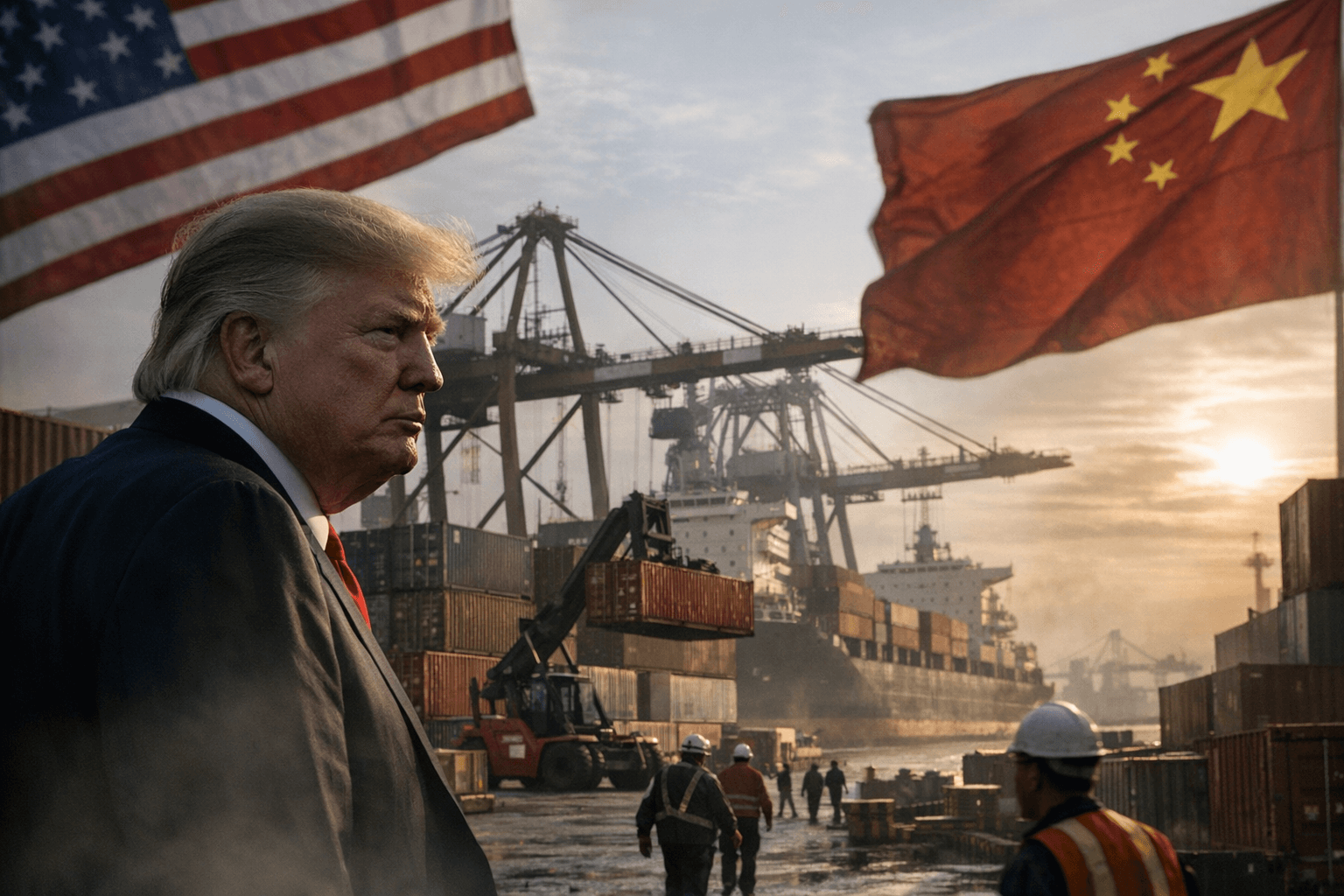
What distinguishes this round from Trump's first-term trade war is the sophistication of China's countermeasures. Beijing now wields export controls over rare earth elements critical to U.S. defense and semiconductor industries, a tool it demonstrated willingness to use as diplomatic pressure in the months before Busan. Despite the Supreme Court's decision, Trump may continue to play the tariff card, yet Beijing now feels more confident in confronting the tariff challenge and will not treat it as a major concern; instead, it wants to address technology controls, the Commerce Department's entity list, and investment restrictions.
Analyst expectations for the summit have been scaled back. Deliverables have narrowed to commercial purchases such as soybeans rather than any grand bargain, with the two leaders expected to frame the meeting as the opening of a longer conversation set to unfold across the rest of 2026. As one analyst described China's core objective: "Beijing will essentially be asking how high the fence will get and how big the yard will be."
The last time Trump visited Beijing was November 2017, when he was received with elaborate state-plus honors inside the Forbidden City. Within months, he launched an unprecedented trade war against China. Whether the May visit produces a durable framework or another truce with a countdown already running will hinge not on ceremony, but on whether both sides can move past the leverage games long enough to negotiate anything that lasts.
This article was produced by Prism’s automated news system from verified source data, official records, and press releases, then run through automated quality and moderation checks before publishing. The system is built and supervised by the people who set the standards it runs under. Read our full AI policy.
Did this article answer your question?