China amplifies Taiwan critics online to undermine government support
China recycled Taiwanese critics across Douyin, Facebook and TikTok, turning local voices into anti-government messages that security officials said were built to erode trust in Taipei.
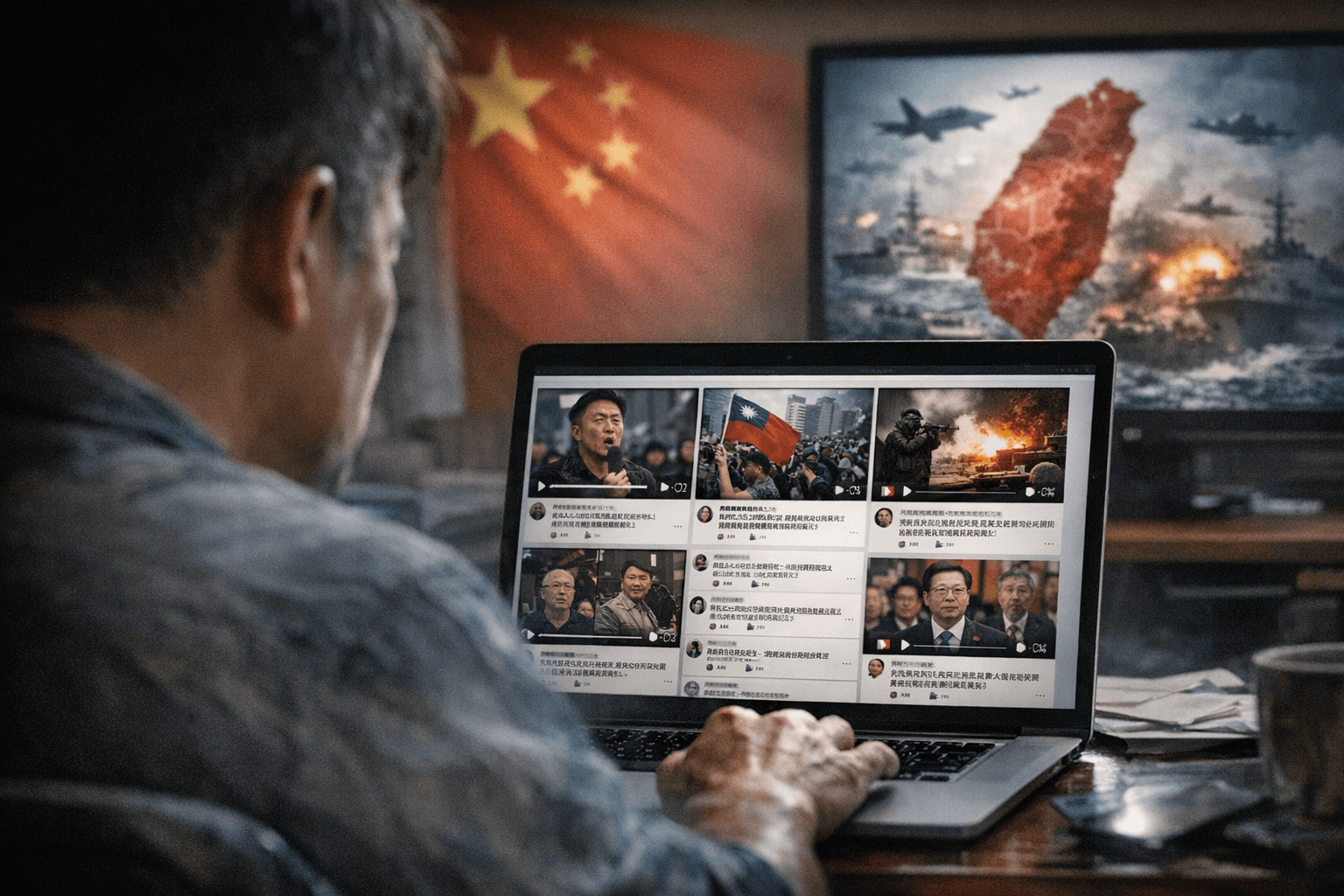
China has sharpened its pressure on Taiwan by recycling Taiwanese critics and dressing Beijing’s messaging in familiar local accents. Instead of leaning only on obvious state-linked voices, Chinese media and online channels have amplified opposition figures, influencers and Kuomintang-aligned politicians, then pushed their remarks back into Taiwan through Facebook, YouTube, TikTok and Douyin.
The tactic was on display around a December Chinese military drill near Taiwan and a parallel online operation. One example was a 51-second video posted on Douyin showing opposition leader Cheng Li-wun criticizing President Lai Ching-te. The clip then circulated across platforms popular in Taiwan, giving Beijing a way to launder its message through a Taiwanese speaker before it reached a wider audience. Five Taiwanese security officials and data from the Taipei-based research group IORG helped map how the campaign worked and how it had expanded.
The method matters as much as the message. By recycling authentic domestic criticism, Beijing made anti-government arguments sound less like foreign influence and more like homegrown skepticism. Security officials said the campaign was designed to weaken support for the Democratic Progressive Party, which Beijing accused of pushing independence, and to discourage backing for additional defense spending by feeding the idea that China’s military strength made resistance futile. Added framing on some posts further obscured Beijing’s role, blurring the line between local debate and coordinated influence work.
The effort fits into a broader struggle over Taiwan’s political future, where military intimidation and information warfare have increasingly moved in tandem. Taiwan’s defense ministry has been trying to counter what it calls cognitive warfare by improving media literacy and psychological resilience inside the armed forces. President Lai’s office has argued that peace must rest on strength rather than concessions to authoritarian pressure. For Taipei, the danger is not only that China broadcasts its own message, but that it can borrow the credibility of Taiwanese critics to turn democratic disagreement into a weapon against democracy itself.
This article was produced by Prism’s automated news system from verified source data, official records, and press releases, then run through automated quality and moderation checks before publishing. The system is built and supervised by the people who set the standards it runs under. Read our full AI policy.
Did this article answer your question?