China Amplifies Taiwanese Critics to Undermine Support for Ruling Party
A 51-second Douyin clip of Cheng Li-wun attacking Lai Ching-te spread to Facebook and YouTube, showing how Beijing launders its message through Taiwanese voices.
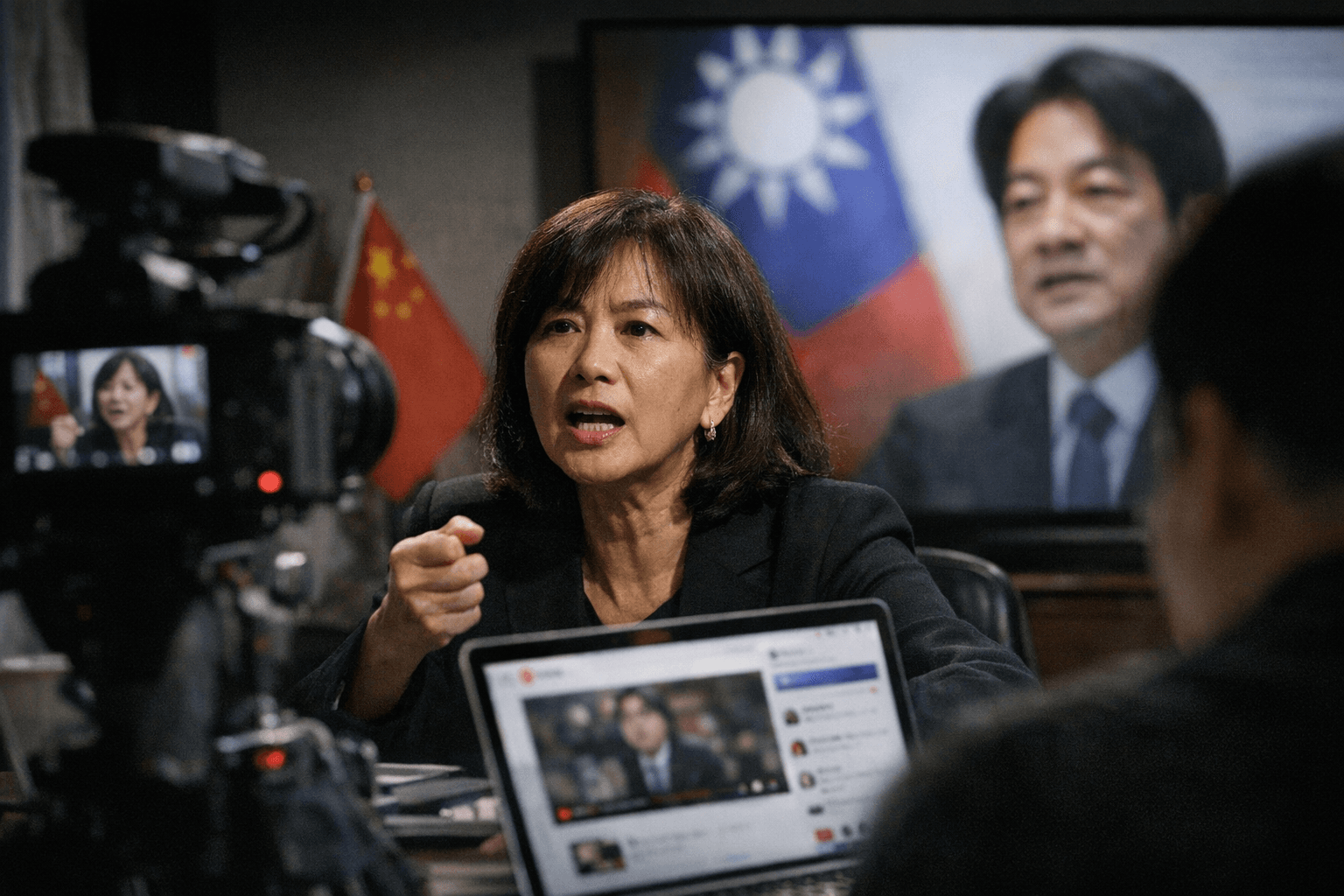
China is broadening its campaign against Taiwan by elevating Taiwanese critics, not just pushing out overt state propaganda. During major military drills around Taiwan in December 2025, a 51-second video on Douyin showed Cheng Li-wun, then a rising force in the Kuomintang, accusing President Lai Ching-te of inviting Chinese aggression. The clip quickly moved onto Facebook and YouTube, where it could circulate inside Taiwan with far less friction than a message stamped as coming from Beijing.
That method matters because it gives hostile messaging a local accent and a familiar face. Security officials and researchers say the tactic is designed to make anti-government content sound more credible when it comes from Taiwanese politicians, commentators and influencers rather than from Chinese state accounts alone. The point is not only to criticize Lai’s government, but to blur the line between domestic political dispute and foreign information operations, making the campaign harder to dismiss and easier to share.
The effort also lands in the middle of a fight over Taiwan’s defense posture. The Democratic Progressive Party is seeking $40 billion in extra defense outlays, and the messaging pushed through Taiwanese intermediaries often tries to make that effort look futile. The larger argument is that Taiwan cannot stand up to China’s military power, a line that can discourage public support for spending meant to harden the island’s defenses.
Taiwanese authorities say the scale of hostile information has surged. The National Security Bureau reported 2.159 million cases of controversial information in 2024, nearly double the 1.329 million recorded in 2023. Other reporting based on the bureau’s analysis said Taiwan logged more than 45,000 sets of inauthentic social-media accounts and 2.3 million pieces of disinformation tied to China-Taiwan issues last year. Taiwan’s defense ministry has responded by strengthening media-literacy training and psychological resilience to counter what it calls cognitive warfare.
Cheng’s own political trajectory has added fuel to the debate. She emerged as an unexpected dark-horse candidate to lead the KMT in 2025 and has taken hardline pro-unification positions. From April 7 to April 12, 2026, she traveled to China and met Xi Jinping, sharpening scrutiny inside Taiwan’s opposition camp over how far political engagement with Beijing should go. For Lai’s office, the message remains that peace across the Taiwan Strait must rest on strength, not concessions to authoritarian pressure, a position now being tested not just by missiles and drills, but by the strategic use of Taiwanese voices to carry Beijing’s argument.
This article was produced by Prism’s automated news system from verified source data, official records, and press releases, then run through automated quality and moderation checks before publishing. The system is built and supervised by the people who set the standards it runs under. Read our full AI policy.
Did this article answer your question?


