China patrols Scarborough Shoal as Philippines warns of threat
China sent military and coast guard patrols around Scarborough Shoal, sharpening pressure on Manila just as Philippine officials warned of continuing threat.

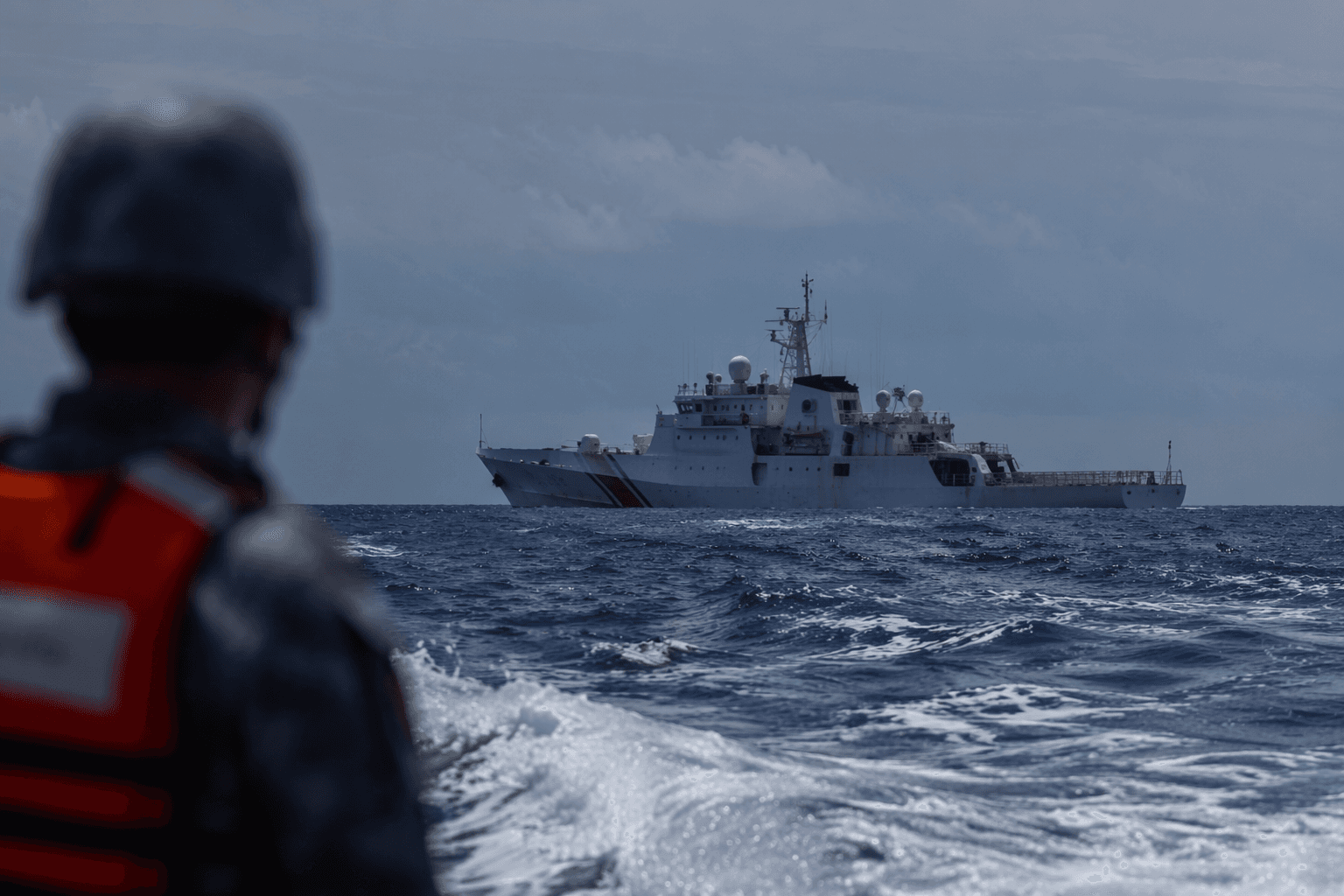
China’s military and coast guard sent patrols around Scarborough Shoal, turning a routine-looking deployment into another step in a sustained pressure campaign against the Philippines. The move kept one of Asia’s most volatile maritime flashpoints active even as tensions eased elsewhere between Washington and Beijing.
The People’s Liberation Army’s Southern Theatre Command described the operation as a combat-readiness patrol in the territorial sea and airspace around the atoll, while the China Coast Guard said it also conducted law enforcement patrols there. Philippine Defence Secretary Gilberto Teodoro, speaking on the sidelines of the Shangri-La Dialogue in Singapore a day earlier, said Manila remained under “severe threat” from China, territorially and politically, and had no choice but to stay resilient in the face of pressure.
Scarborough Shoal, known in the Philippines as Bajo de Masinloc and in China as Huangyan Dao, sits about 222 kilometers west of Zambales, well inside the Philippines’ 200-nautical-mile exclusive economic zone. China’s nearest major landmass is Hainan, about 650 kilometers away. That geography has made the shoal a symbol of the wider South China Sea struggle, where sovereignty claims, fishing rights and freedom of navigation repeatedly bring Chinese and Philippine vessels into confrontation.
The present standoff has deep roots. China took effective control of Scarborough after the April 2012 confrontation, and analysts and Philippine accounts say a U.S.-brokered deal that followed was not fully honored by Beijing. The shoal is widely regarded as a traditional fishing ground shared by fishermen from the Philippines, China, including Taiwan, and Vietnam, which is why access there carries such political weight.
Legal pressure has not settled the dispute. On July 12, 2016, the Permanent Court of Arbitration in The Hague ruled that China had no legal basis to claim historic rights to resources inside the nine-dash line beyond what the U.N. Convention on the Law of the Sea allows. The tribunal also found that China’s operations at Scarborough Shoal unlawfully prevented Filipino fisherfolk from exercising their traditional fishing rights there.
The patrols underline a larger strategic pattern: China can use coast guard vessels, military flights and other gray-zone measures to tighten control without crossing into open conflict. That makes miscalculation more likely, and it raises the stakes for the United States, whose treaty commitments to the Philippines could be tested if a maritime encounter at Scarborough Shoal escalates.
This article was produced by Prism’s automated news system from verified source data, official records, and press releases, then run through automated quality and moderation checks before publishing. The system is built and supervised by the people who set the standards it runs under. Read our full AI policy.
Know something we missed? Have a correction or additional information?
Submit a Tip