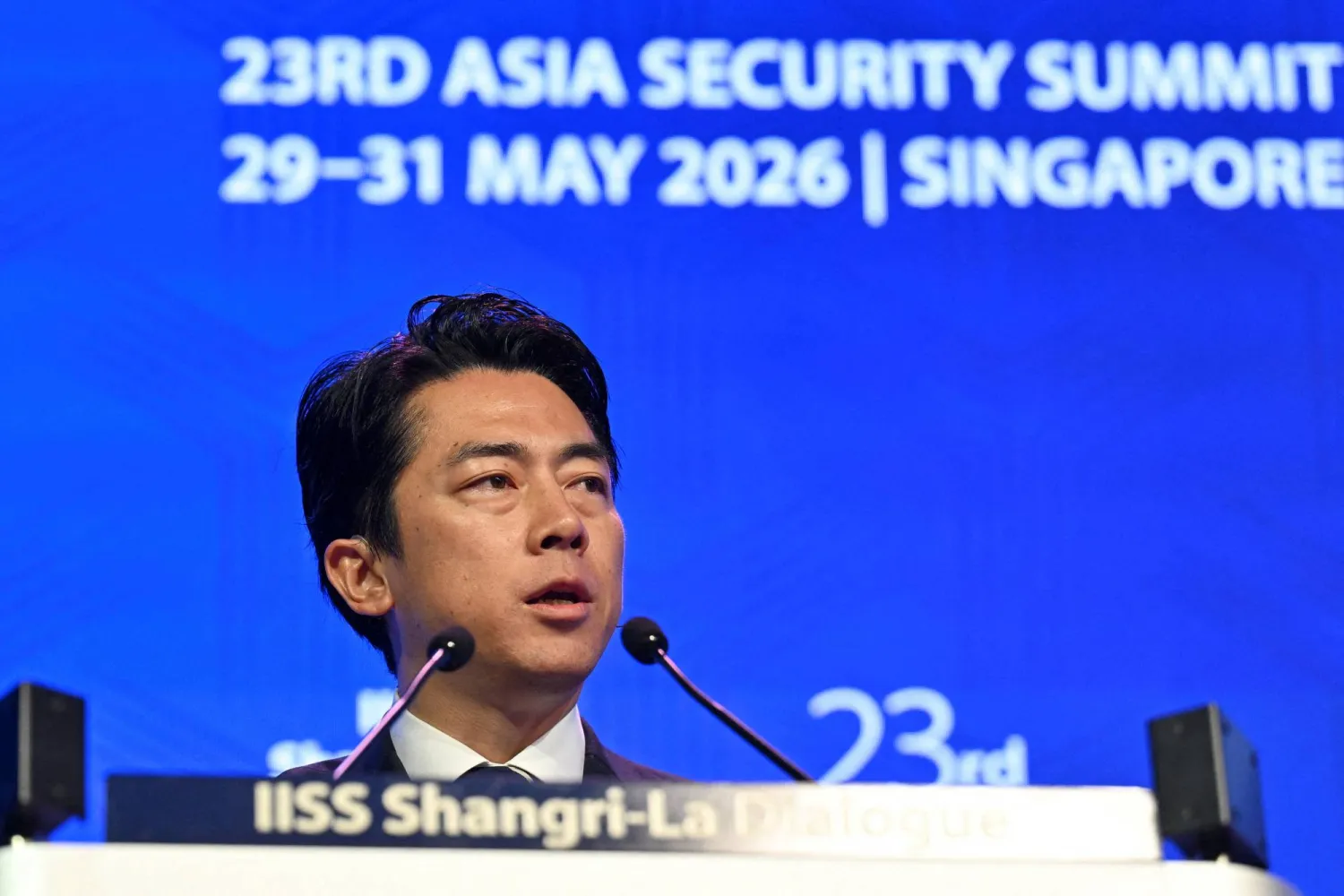
Japan’s defence minister rejects China’s militarism claims in Singapore
Koizumi used a Singapore security forum to reject China’s “new militarism” charge, saying Beijing’s own arsenal and opacity are the real concern.
Shinjiro Koizumi used one of Asia’s main security stages to push back hard against Beijing’s accusations, telling delegates in Singapore that Japan was not returning to militarism even as it expands its military. Speaking at the 23rd Shangri-La Dialogue on May 31, 2026, Japan’s defence minister rejected China’s claim of “new militarism” and said Japan remained a peace-loving country that respects international law.
Koizumi framed the dispute as a broader contest over deterrence and regional power. He said China posed the greater concern because of its “huge arsenal” of nuclear weapons and strategic bombers, while Japan has neither. He also said China’s rapid military expansion and lack of transparency were matters of serious concern, a message aimed at audiences well beyond the room in Singapore as tensions deepen across the East China Sea, the South China Sea and over Taiwan.
The Japanese minister also tried to keep the door open to diplomacy. He said Japan’s door to dialogue was always open and expressed disappointment that he could not meet Dong Jun, China’s defence minister, at the forum. China skipped the Shangri-La Dialogue for the second consecutive year, sending a lower-profile delegation from the People’s Liberation Army National Defence University instead. That absence sharpened the contrast between Tokyo’s public messaging and Beijing’s decision to keep its top defence leadership away from the table.
Koizumi’s remarks landed as Japan presses ahead with its biggest security shift in decades under Prime Minister Sanae Takaichi, who took office in October 2025 and has accelerated defence policy changes. Japan’s fiscal 2026 defence budget plan reached 9.04 trillion yen, the first time it exceeded 9 trillion yen, as Tokyo moves toward spending around 2% of gross domestic product. In April 2026, Japan also approved a major overhaul of defence export rules, opening the way for exports of warships, missiles and other weapons.
That shift collides with Japan’s postwar constitutional identity. Article 9 renounces war and the maintenance of war potential, a pledge that remains central to how Japan describes its security posture even as its budget, export rules and alliances change. Koizumi’s message in Singapore reflected that tension: Tokyo says its buildup is defensive, while Beijing casts it as remilitarization, and the argument now sits at the center of Asia’s strategic balance.
This article was produced by Prism’s automated news system from verified source data, official records, and press releases, then run through automated quality and moderation checks before publishing. The system is built and supervised by the people who set the standards it runs under. Read our full AI policy.
Know something we missed? Have a correction or additional information?
Submit a Tip