Colombia votes in polarizing presidential race testing Petro's leftist legacy
Iván Cepeda and Abelardo de la Espriella were locked in a near-tie as Colombians weighed Petro’s legacy, Israel ties and a surge in political violence.
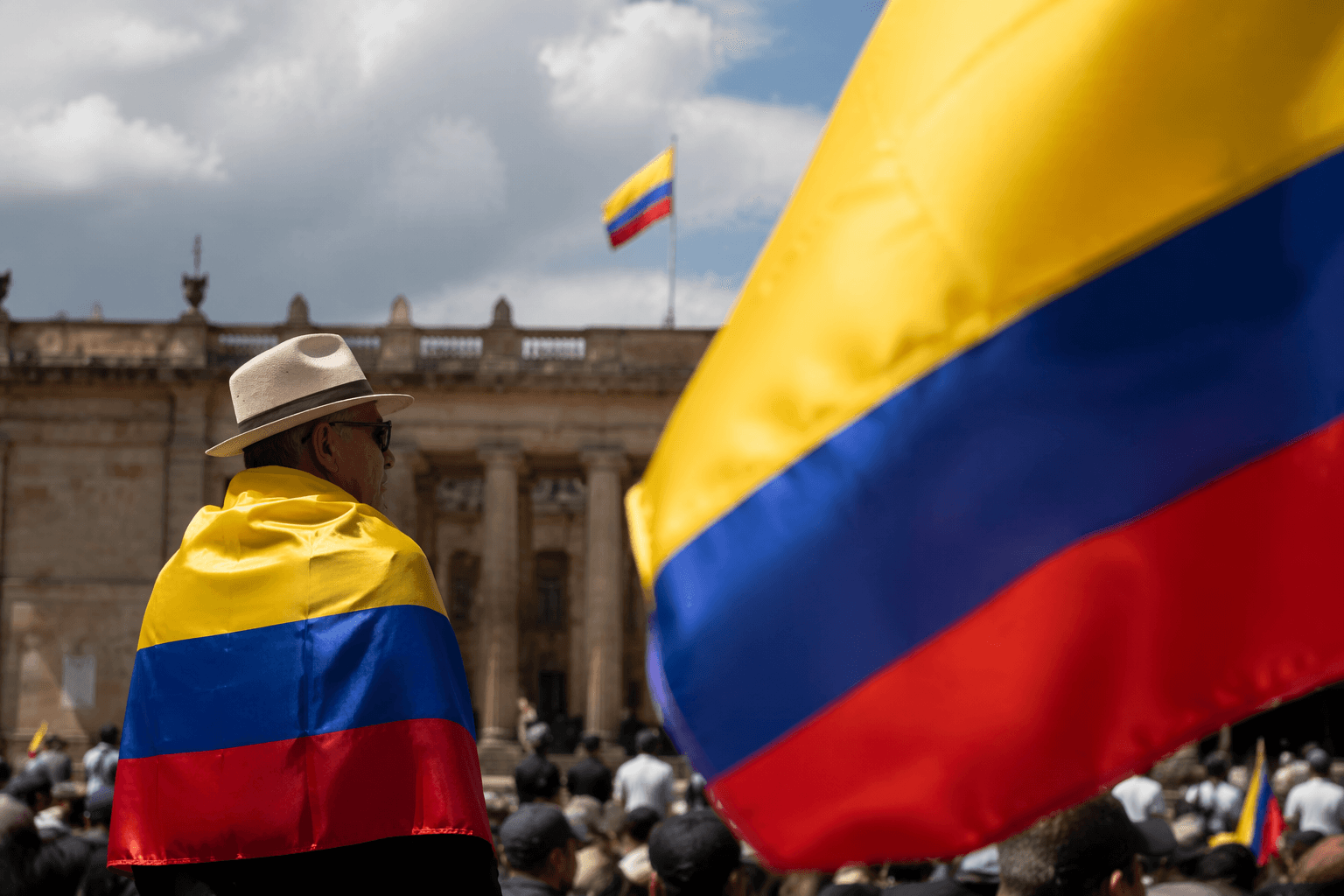
A near-dead heat between Iván Cepeda and Abelardo de la Espriella turned Colombia’s presidential vote into a referendum on Gustavo Petro’s leftist government, with Israel policy serving as one of the clearest lines of attack. Polling released days before the vote put Cepeda at 38.7 percent, De la Espriella at 37.3 percent and Paloma Valencia at 14.3 percent, leaving the country of about 41 million voters headed toward a likely runoff on June 21 if no one cleared a majority.
Petro, Colombia’s first leftist president, is constitutionally barred from seeking reelection, but his record dominated the campaign all the same. Four years after his watershed victory, the race has hardened into a choice between continuity and reversal. Petro severed diplomatic ties with Israel in 2024 after describing the war in Gaza as a genocide, then ordered an embassy opened in Ramallah. Cepeda has pledged to maintain that approach while deepening social reforms, making him the standard-bearer for Petro’s political project.
De la Espriella and Valencia have tried to turn the contest into a judgment on public security, crime and international alignment. Both have presented themselves as pro-Israel and argued for restoring ties with the Jewish state. De la Espriella has promised to end negotiations with illegal armed groups and take a hard line on crime and drug trafficking. Valencia has called for expanding the armed forces and police and launching an offensive against criminal gangs and guerrillas. In that sense, the fight over Israel is less about the Middle East than about whether voters want Colombia to remain on Petro’s course or pivot sharply away from the left.
The campaign has unfolded against a grim backdrop of violence. Two presidential campaign staffers were killed in Meta on May 16, and Colombia’s ombudsman warned that the killings could hinder political rights and democratic participation. At least three candidates reported death threats, underscoring how insecurity has again become central to the country’s politics just as voters prepare to choose a new president.

The legislative elections on March 8 left that next president with a complicated path to govern. Petro’s Historic Pact won the largest share of seats in both the Senate and House, but no bloc secured a majority. That fragmentation means the winner on May 31, and possibly the runoff victor in June, will need cross-party alliances to govern from the start. The next president is scheduled to take office on August 7, inheriting a polarized country where foreign policy, security and Petro’s legacy are all being tested at once.
This article was produced by Prism’s automated news system from verified source data, official records, and press releases, then run through automated quality and moderation checks before publishing. The system is built and supervised by the people who set the standards it runs under. Read our full AI policy.
Know something we missed? Have a correction or additional information?
Submit a Tip