China's SMIC Accused of Supplying Chipmaking Tools to Iran's Military
U.S. officials say SMIC sent chipmaking tools to Iran's military "roughly a year ago" and the transfers, which likely included technical training, have not stopped.

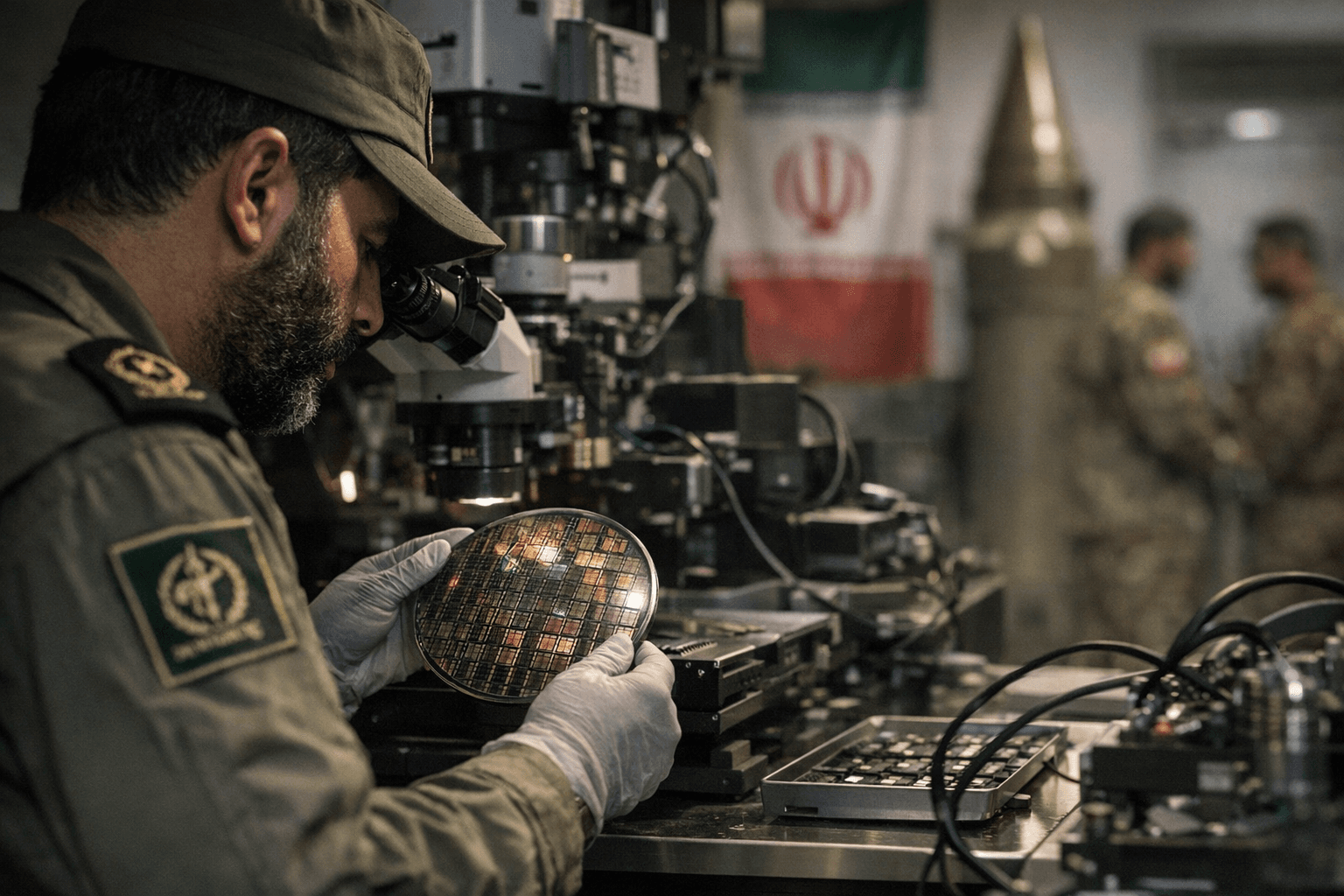
China's largest chipmaker quietly began sending chipmaking tools to Iran's military roughly a year ago, two senior Trump administration officials said Thursday, and the transfers show no sign of stopping.
The allegation raises questions about Beijing's stance in the month-old U.S.-Israeli conflict with Iran. SMIC, which has been heavily sanctioned by the U.S. government over alleged ties to the Chinese military, began sending the tools to Iran roughly a year ago, with one official stating "we have no reason to believe that any of this has stopped."
The official added that the collaboration "almost certainly included technical training on SMIC's semiconductor technology." The officials spoke on condition of anonymity to discuss previously undisclosed U.S. government information.
One of the officials said the tools were provided to Iran's "military industrial complex" and could be used for any electronics that require chips. The precise origin of the equipment remains unresolved: the officials did not specify whether the tools were of U.S. origin, which would likely make shipment to Iran a violation of U.S. sanctions.
It was not immediately clear what, if any, role the chipmaking tools have played in Iran's response to the war, which was launched by the U.S. and Israel on February 28.
SMIC was added to a trade blacklist in 2020 that restricts its access to U.S. exports, and the company has denied allegations that it has ties to the Chinese military-industrial complex. Washington has sought to curtail China's ability to make advanced semiconductors through sanctions on SMIC and other Chinese chipmakers, aiming to limit their access to advanced chipmaking equipment from top U.S. suppliers such as Lam Research, KLA and Applied Materials. The Biden administration tightened restrictions on SMIC in 2024 by cutting off its most advanced factory from more U.S. imports after it produced a sophisticated chip for Huawei's Mate 60 Pro phone.
China has not publicly taken a side in the Middle East conflict; Chinese Foreign Minister Wang Yi this week called on the parties to seize all opportunities to start peace talks as soon as possible. Reuters reported last month that Iran was close to a deal with China on the purchase of anti-ship cruise missiles, just as the United States deployed a vast naval force near the Iranian coast ahead of strikes on the Islamic Republic.
The SMIC disclosure lands against a backdrop of deepening bipartisan anxiety in Washington over Chinese-linked chipmaking firms operating inside U.S. supply chains. On March 4, a bipartisan group of U.S. lawmakers led by Democratic Senator Elizabeth Warren and Republican Tom Cotton raised national security concerns over Intel's testing of chipmaking tools made by ACM Research, a Fremont, California-based producer of chipmaking equipment with deep roots in China and two overseas units targeted by U.S. sanctions, whose customers include sanctioned Chinese companies such as YMTC, CXMT and SMIC.
In a letter to Intel CEO Lip-Bu Tan, the lawmakers warned: "By operating in Intel's facilities, ACM could gain exposure to cutting-edge chipmaking processes that may materially improve the quality and competitiveness of ACM and Chinese military companies." The letter was also signed by Democrats Elissa Slotkin and Andy Kim as well as Republicans Jim Banks and Pete Ricketts.
In December 2024, the Commerce Department had already blacklisted ACM Research Shanghai and ACM Research Korea for their role in the development or production of integrated circuits for military end use. Lawmakers noted that Intel, which fended off calls for its CEO's resignation from President Donald Trump in August over his alleged ties to China, faces unique responsibilities since the U.S. government now owns a stake in it.
Intel said in a statement that "ACM tools are not used in Intel's semiconductor production processes," adding that the company fully complies with U.S. laws and regulations and engages regularly with the U.S. government on security matters.
The SMIC allegations threaten to heighten tensions between Washington and Beijing as the U.S. wages war against Tehran and as it has sought to choke off China's advanced chip industry. Whether any of the tools transferred to Iran contain U.S.-origin components, a determination that could trigger formal sanctions violations, remains the central unanswered legal question facing investigators.
Know something we missed? Have a correction or additional information?
Submit a Tip