Chinese Student Charged After Photographing U.S. Military Aircraft, Arrested in New York
A 21-year-old Chinese student was arrested at JFK after allegedly photographing an RC-135 and an E-4B at Offutt Air Force Base during a road trip.
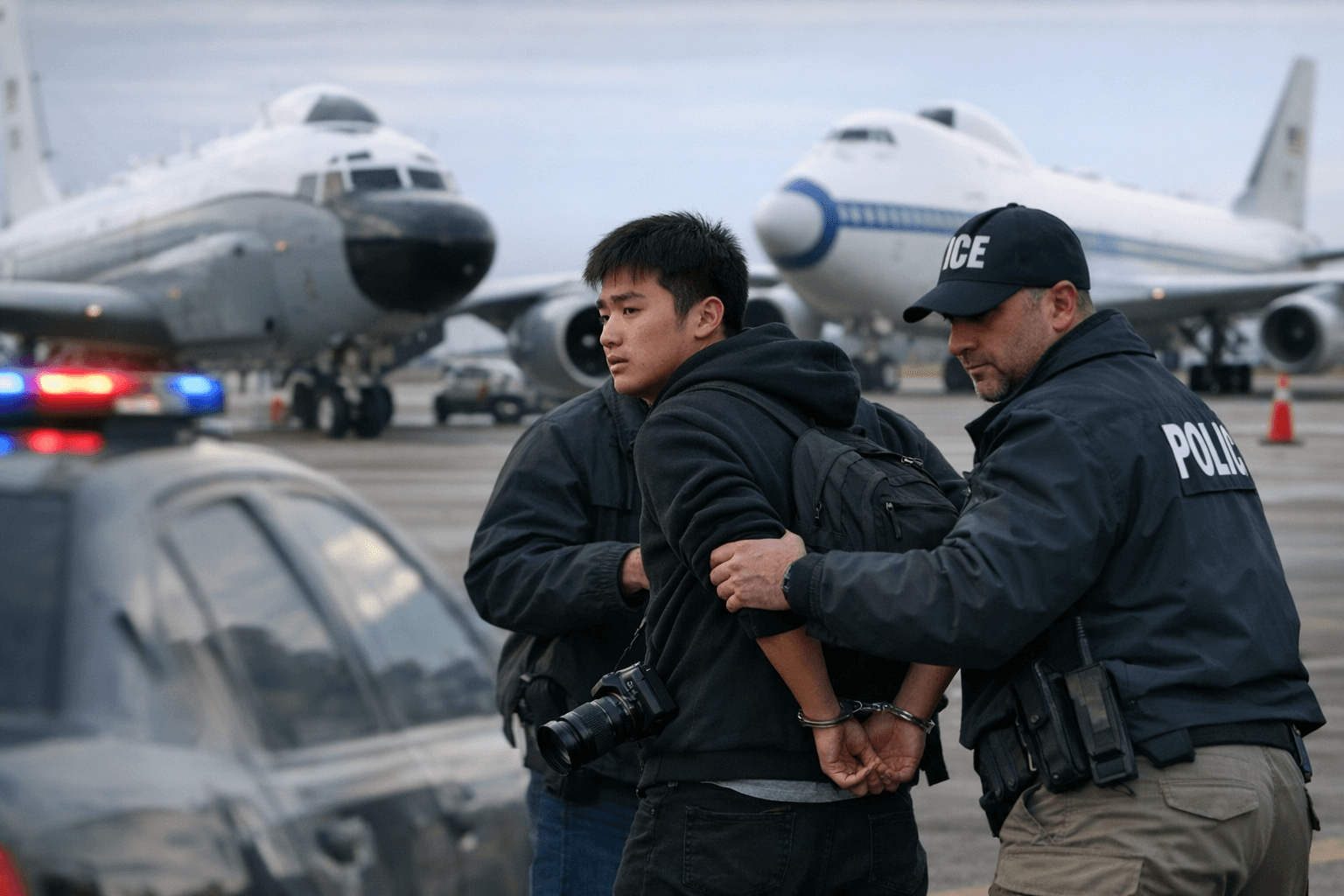
Federal prosecutors charged Tianrui Liang after he allegedly photographed U.S. military aircraft at Offutt Air Force Base in Nebraska and then tried to leave the country through New York. The 21-year-old was arrested on April 7 at JFK Airport while attempting to fly to Glasgow, Scotland, where he attends school.
The case centers on images investigators say Liang took during a multistate road trip through the Midwest, including a stop at the Nebraska base near Omaha and another location in South Dakota. Federal investigators said Liang admitted he got out of a car on a public road and took the photos, a detail that puts the conduct in plain view while still placing it inside a restricted national-security frame.
According to the FBI filing, Liang allegedly photographed an RC-135 reconnaissance aircraft and an E-4B, the Air Force’s airborne command-post aircraft, often called the Nightwatch or doomsday plane. Offutt is home to U.S. Strategic Command, and the E-4B is built to function as a survivable airborne command center for national leadership in emergencies, including the Secretary of Defense. That combination helps explain why investigators treated the images as more than roadside sightseeing.
Liang entered the United States through Canada and traveled by road through Seattle, Washington, Montana and other states before reaching the Midwest, according to the filing. He was later detained as he prepared to depart for Glasgow on a route that reportedly included Frankfurt, Germany. Additional reporting identified him as an aeronautical engineering student at the University of Glasgow.
The federal charge invokes 18 U.S.C. § 795, which covers photographing or sketching defense installations and equipment designated as sensitive for national defense. The statute gives prosecutors a legal path to draw a line between ordinary photography and imagery that federal authorities believe could expose the security perimeter around military sites and strategic aircraft. The case now moves into a process that is likely to examine what was photographed, where Liang stood when he took the images, and why those aircraft drew his attention.
This article was produced by Prism’s automated news system from verified source data, official records, and press releases, then run through automated quality and moderation checks before publishing. The system is built and supervised by the people who set the standards it runs under. Read our full AI policy.
Did this article answer your question?