Clashes in Pakistan-administered Kashmir kill 11 ahead of protest
Eleven people were killed and more than 70 injured in Pakistan-administered Kashmir as police battled protesters before a planned shutdown. The violence sharpened a fight over refugee seats, prices and power.

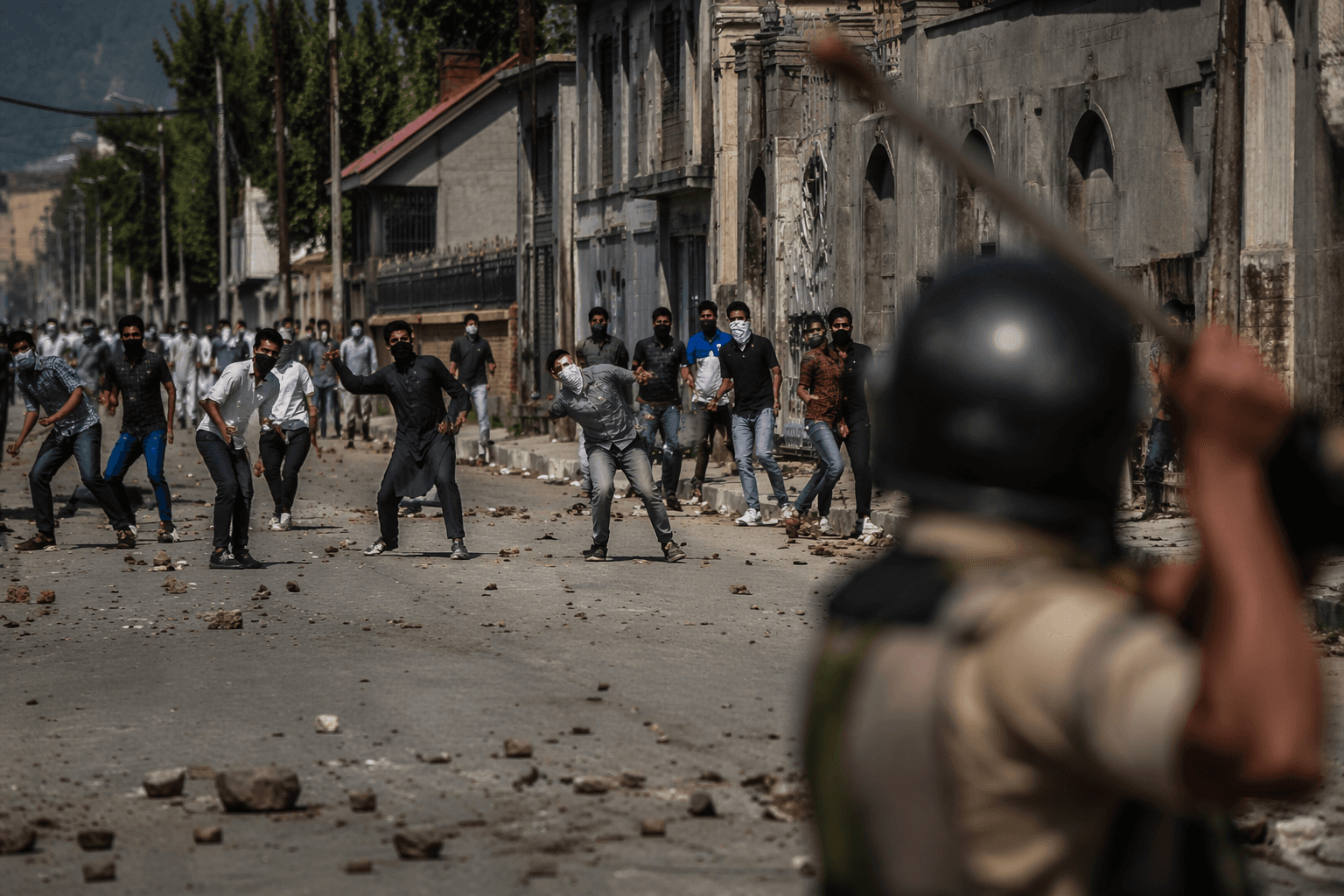
Eleven people were killed and more than 70 injured in Pakistan-administered Kashmir as police and paramilitary forces clashed with protesters before a planned June 9 shutdown. The violence erupted in Muzaffarabad around a protest called by the banned Joint Awami Action Committee, turning a dispute over elections and representation into a test of the region’s authority.
Police said the confrontation began after members of the group gathered outside a hospital morgue when one of their members was taken there following a shooting death they blamed on police fire. Commissioner Sardar Waheed Khan said four police officers and a passerby died after what he described as gunfire by “miscreants,” and said law-enforcement fire killed six protesters. Police chief Liaqat Malik said 23 security personnel and 50 protesters were among the injured, and that 30 people had been arrested.
The shutdown call has exposed a deeper political struggle in Azad Jammu and Kashmir, where the JAAC has built support by tapping anger over inflation, power bills and what many residents see as a distant and unresponsive government. Shaukat Nawaz Mir, a JAAC leader, accused the authorities of carrying out a “massacre” and said the group would stay united to enforce the June 9 lockdown. Regional officials responded with force and warned they would not negotiate with those spreading what Faisal Mumtaz Rathore called chaos “under the guise of politics.”
At the center of the unrest is a fight over 12 reserved seats for Kashmiri refugees living in Pakistan, a block of positions in the 53-member Legislative Assembly that includes six seats for refugees from the Jammu division and six for refugees from the Kashmir Valley. The JAAC wants those seats abolished, arguing the candidates do not live in Kashmir itself. Hours after the Election Commission of Azad Jammu and Kashmir set general elections for July 27, the Supreme Court of Azad Jammu and Kashmir ruled that the seats were constitutionally protected and could not be removed without a constitutional amendment.
The government formally banned the JAAC on June 6 under the Anti-Terrorism Act 2014, then followed with a crackdown that officials said led to dozens of arrests. Authorities also told tourists to leave before June 9 and said the coming elections would be supervised by the army, paramilitary and civil armed forces, underscoring how seriously they viewed the risk of wider unrest.
The latest bloodshed fits a pattern that has repeatedly shaken the region. In October 2025, days of anti-government protests left at least 10 people dead before a deal ended the unrest, and in May 2024, demonstrations over wheat and electricity subsidies also turned deadly. With elections set for July 27 and the refugee-seat dispute still unresolved in public anger, the clash in Muzaffarabad points to a broader challenge to legitimacy, not just another street confrontation.
This article was produced by Prism’s automated news system from verified source data, official records, and press releases, then run through automated quality and moderation checks before publishing. The system is built and supervised by the people who set the standards it runs under. Read our full AI policy.
Know something we missed? Have a correction or additional information?
Submit a Tip