Comprehensive Sourdough Starter Guide, Practical Tips for Home Bakers
A new comprehensive starter primer walks home bakers through the microbiology, step by step creation, feeding schedules, storage strategies, and troubleshooting for a healthy sourdough starter. The resource matters because it condenses practical tests and fixes into clear, actionable advice that helps bakers move from novice to oven ready with confidence.
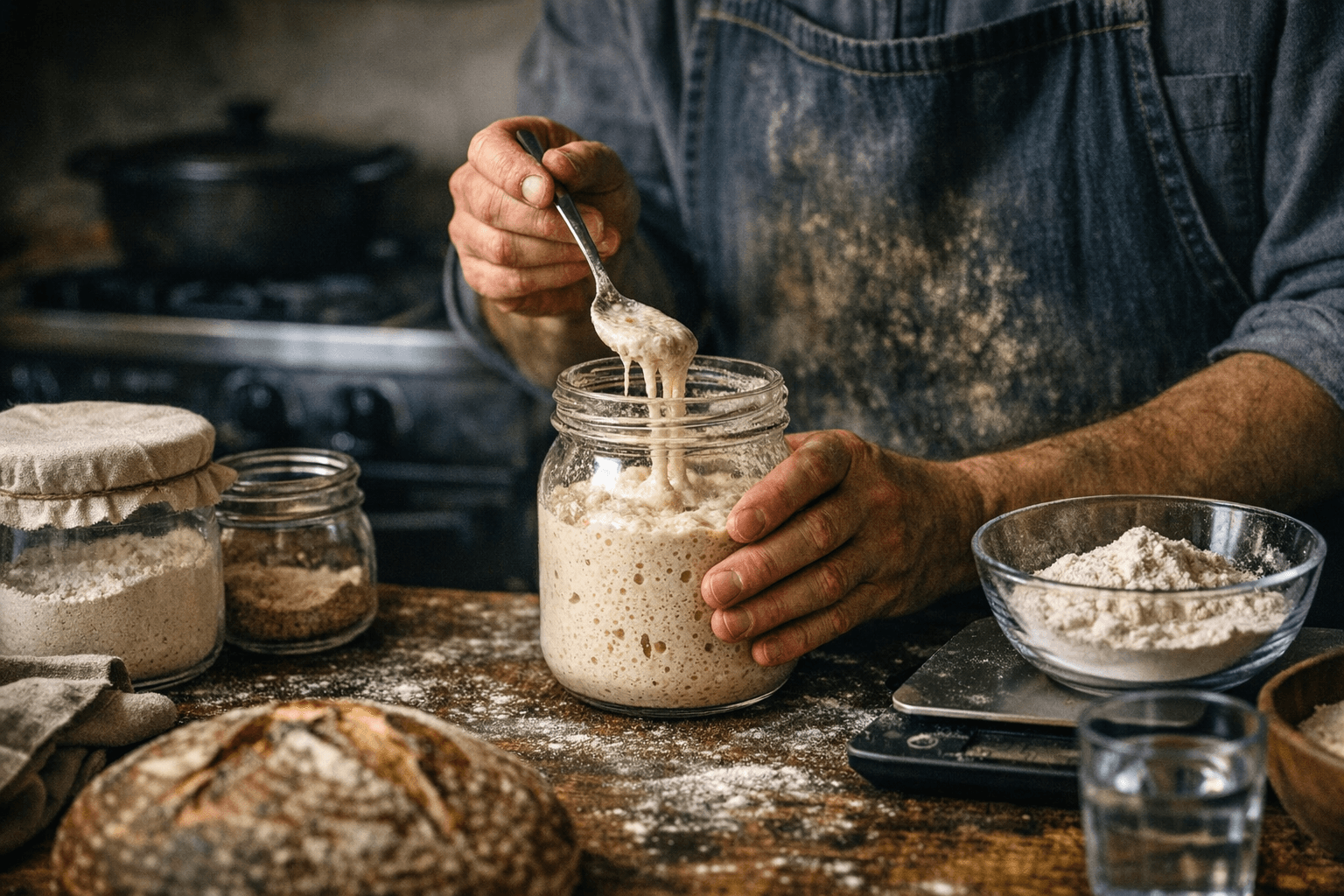
A comprehensive primer for building and caring for a sourdough starter lays out the essential facts and practices that every home baker needs. It begins with the microbiology basics, explaining that wild yeast and lactic acid bacteria living in flour are the active agents that leaven and flavor sourdough. That foundation frames why feeding, temperature, and flour choice affect activity and aroma.
The guide gives step by step instructions for creating a starter, starting with equal parts flour and water and watching for bubbles and rising as the primary signs of life. It explains common timelines for activity and how to judge readiness based on observable behavior rather than guesswork. Use the float test, look for consistent volume increase, and inspect bubble structure to determine when the starter is strong enough to bake with.
Practical feeding routines and the rationale for discarding during feedings are covered in plain terms. Discarding controls acidity and refreshes the starter s food supply, making regular feedings more effective. The guide lays out methods for maintaining a starter on the counter for daily use and for storing a starter in the refrigerator for less frequent baking. It also describes how to refresh a refrigerated starter before baking so it returns to full activity.
Troubleshooting receives thorough treatment. Learn how to recognize and handle hooch, how to respond to slow activity, and what to do if the starter develops off smells. The primer notes that using rye or whole grain flour can help kickstart activity, and that water with strong chlorine can inhibit fermentation, so choose water with minimal chlorine exposure.
The piece translates discard into value by suggesting quick bread style recipes and other uses that reduce waste while adding flavor. It also contains beginner recipes that show how to turn a healthy starter into a first loaf, making the leap from maintaining a culture to baking bread less intimidating.
This primer is relevant to any home baker who wants clear, stepwise guidance and practical fixes when things do not go as expected. Follow the tests for readiness, adopt a feeding routine that fits your baking rhythm, and adjust flour and water choices to encourage steady activity. With these basics in hand, producing consistent sourdough at home becomes a manageable and rewarding process.
Know something we missed? Have a correction or additional information?
Submit a Tip