Cost of living pressures drive record rise in UK modern slavery cases
Record referrals hit 23,411 in 2025, with UK nationals again the largest victim group, showing exploitation is deepening far beyond migration alone.
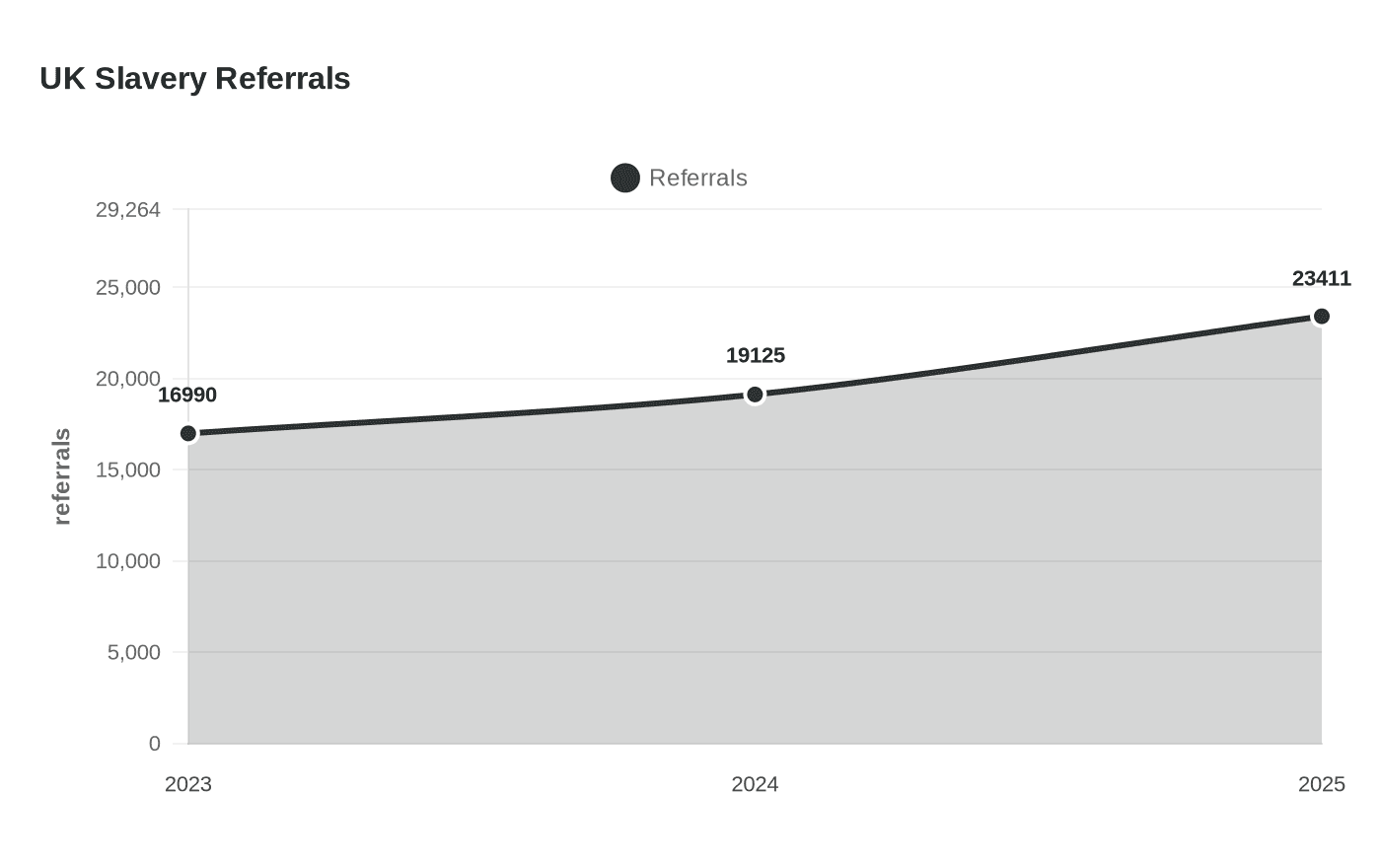
Britain’s modern slavery referrals climbed to a record 23,411 in 2025, with UK nationals again the largest nationality group, a sign that exploitation is cutting through the pressures of low pay, debt and insecure work at home as well as through migration routes.
The scale had already surged in 2024, when the Home Office received 19,125 potential victims through the National Referral Mechanism, the highest annual total since the system began in 2009 and 13% higher than the 16,990 referrals in 2023. UK nationals made up 4,441 of those cases, followed by Albanian nationals on 2,492 and Vietnamese nationals on 2,153. The same year, officials logged 5,598 adult Duty to Notify reports, then the highest annual total on record.
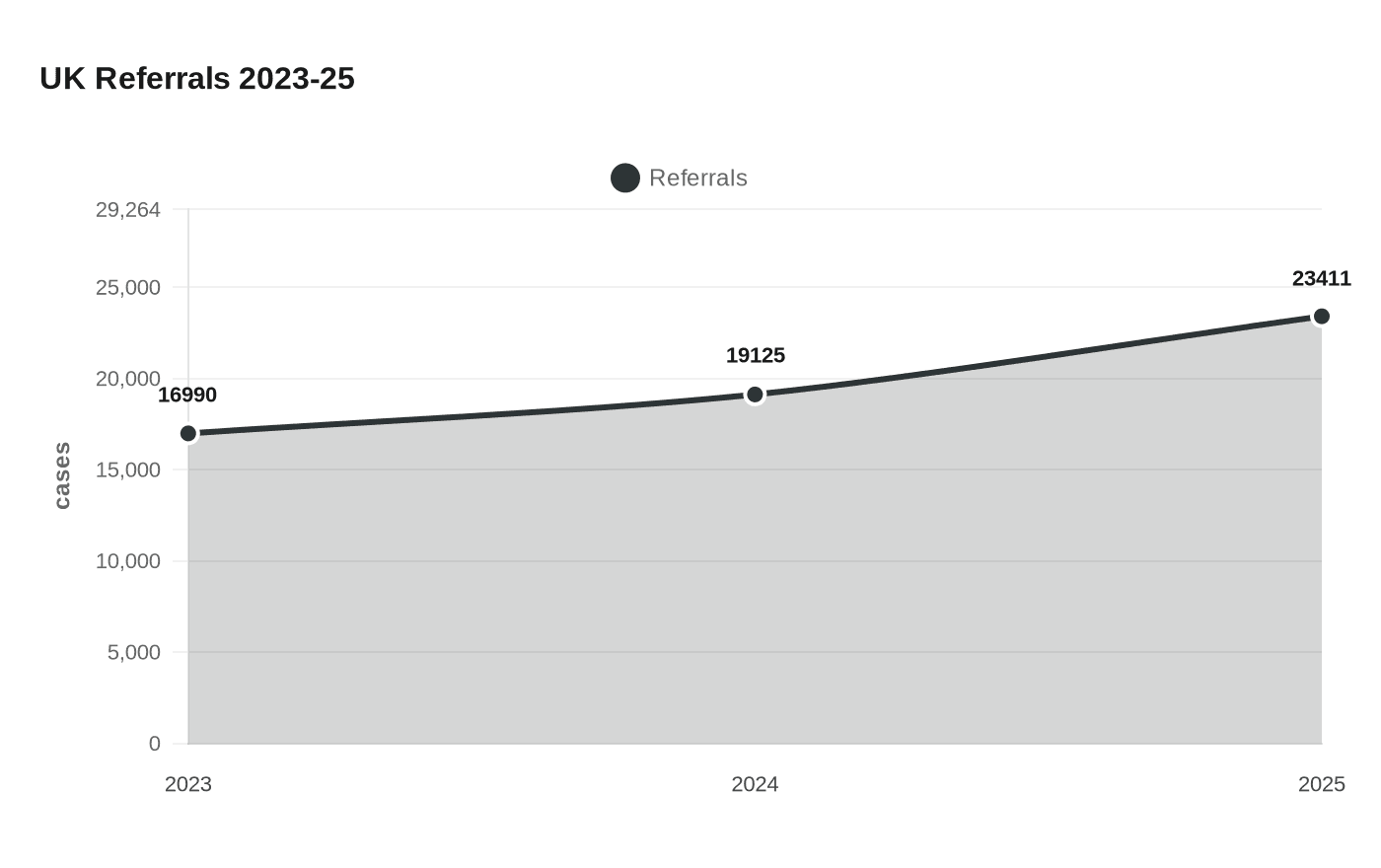
Those figures matter because modern slavery under the Modern Slavery Act 2015 covers trafficking, slavery, servitude and forced labour, and the latest data show British victims are not a marginal part of the picture. In 2025, after the referral total rose again, UK nationals remained the most commonly referred group, followed by Eritrean and Vietnamese nationals. The Home Office also said the number of conclusive grounds decisions reached a record in 2025, even as demand kept rising.
Campaigners say the problem now functions as an economic crime as much as a human rights abuse. Unseen estimates modern slavery’s socio-economic cost to the UK at up to £60bn a year, or about 2% of GDP, and puts the bill for police forces alone at £210m in 2024. Yet only £854,000 was recovered from modern slavery cases under the Proceeds of Crime Act that year, a fraction of the sums involved and a measure of how much illicit profit still slips through the net.
The system remains clogged. At the end of 2024, 17,168 cases were still awaiting a conclusive grounds decision, leaving many potential victims in limbo while the Single Competent Authority and the Immigration Enforcement Competent Authority worked through the backlog. The Home Office figures also show how first responder organisations, from police forces and local authorities to specified NGOs and government bodies, are the main gateway into the system, which makes under-reporting and delay central to the scale of the abuse.
A consortium report published in April 2026 described Britain as a “low risk, high reward” environment for traffickers and exploiters, arguing that weak enforcement, fragmented policing and ineffective business regulation have allowed the market for exploitation to stay profitable. Andrew Wallis, chief executive of Unseen, said the response lacks sustained political focus and accountability, warning that exploitation will remain lucrative until the structure that enables it is broken.
This article was produced by Prism’s automated news system from verified source data, official records, and press releases, then run through automated quality and moderation checks before publishing. The system is built and supervised by the people who set the standards it runs under. Read our full AI policy.
Did this article answer your question?


