Credentialing Dispute and Rights Concerns Left Duke-Michigan Barely Photographed by Wire Services
ESPN’s most-watched regular season men’s game in seven years - Duke vs. Michigan at Capital One Arena on Feb. 21, 2026 - ran in many outlets with no wire-service photos after contest rules from The Gazelle Group limited photographers’ rights.
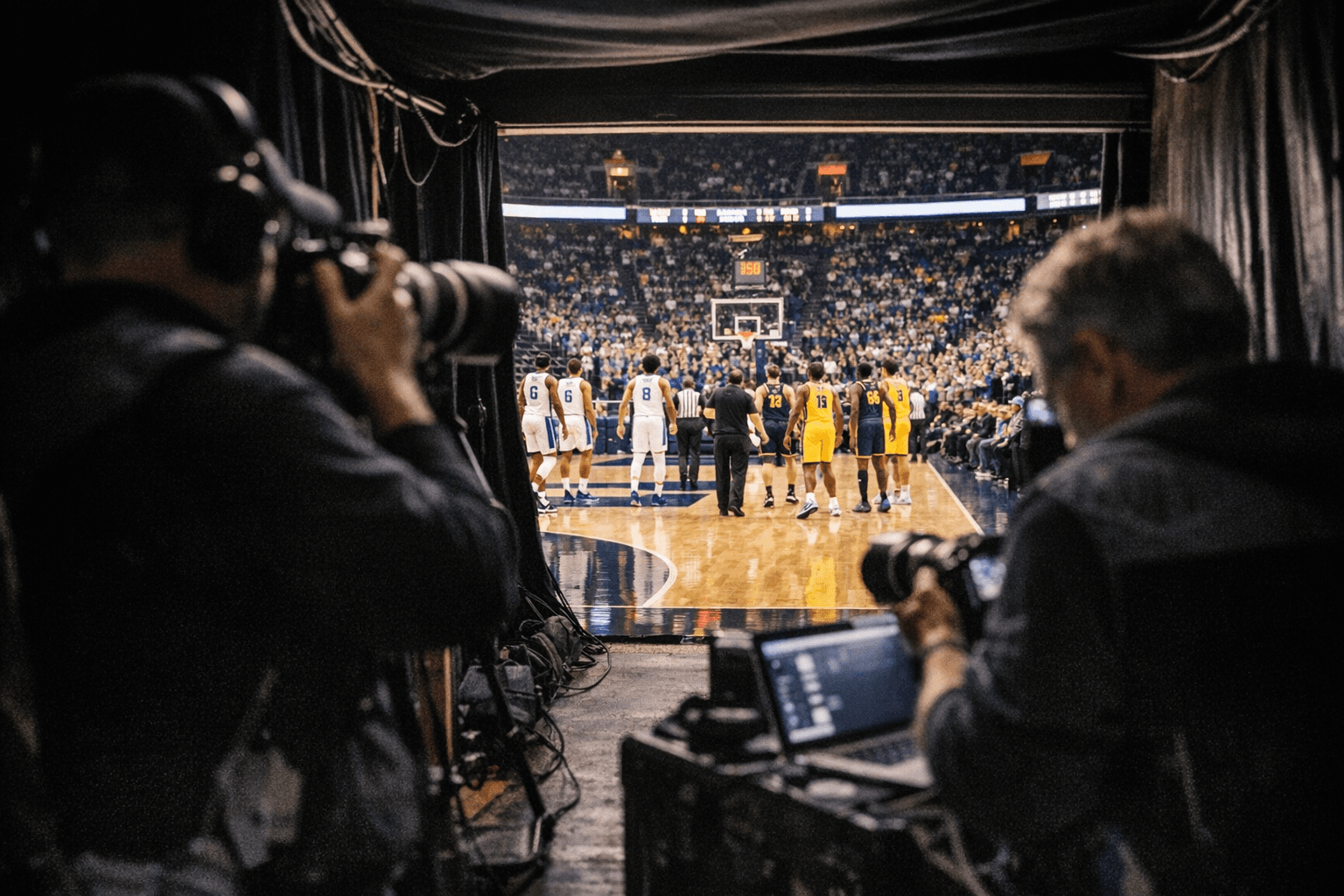
“It was a great game between two college basketball blue bloods. It was ESPN’s highest-rated regular season NCAA men’s basketball game in seven years, per Awful Announcing. But it was barely photographed by major wire services at all. Stories about the game almost invariably lack photos altogether.” That description captures the paradox at the Duel in the District on Feb. 21, 2026 at Capital One Arena in Washington, D.C. A marquee neutral-site matchup between Duke and Michigan drew huge TV numbers but left many news stories photo-free.
The cause traces to event management by The Gazelle Group. The promoter ran the neutral-site event and, over the season, has put on over a dozen neutral-site games involving programs such as UCLA, Villanova, Marquette, Tennessee, and Indiana. Photographers and photo services objected when Gazelle began offering credentials only on terms that demanded irrevocable, free use of images from credentialed shooters - a practice characterized as a pay-to-play arrangement that prompted pushback.
The National Press Photographers Association issued a warning in October about rights-grabbing credential agreements after Gazelle’s credential language surfaced. Photographers and wire services reacted, and the fallout carried into February. Needles were pulled: “Needless to say, all three wire services not having anyone at the most-watched regular season college basketball game in seven years was EXTREMELY odd,” a hard-to-explain absence that left traditional picture desks with little to license.
That absence did not always mean no images at all, but it did change who controls the visuals. Photo services normally contract local shooters so publications do not need staff photographers or to pay cross-country travel. When wire photographers stayed away, some outlets used handout images from school photographers credentialed through teams. A November Tennessee vs. South Carolina game showed this workaround in action, where reliance on school handouts “may keep a story alive, but it shifts editorial independence by replacing independent third-party documentation with imagery controlled by a participant in the event.”
Photographers described bruising logistics and high stakes that make rights protections consequential. One first-person account recalled a charter plane evacuation en route to a Big Ten tournament stop when the plane “never got off the ground and crashed off the runway at Willow Run airport in Ypsilanti, Michigan.” The photographer said camera gear was stowed overhead during takeoff, leaving only an iPhone at 1 percent battery to document evacuation and calls made before the phone died. The same shooter wrote about discipline on shoots - only “shoot 10 minutes” of a 30-minute film session, getting nods from coaches, and using “silent-mode” on a Nikon D5 - and that after a championship loss they “didn't shoot as much out of respect and knowing these photos wouldn't be used much, if at all.”
Multiple outlets that covered the Feb. 21 game ran the same bare image descriptions instead of independent action photography, a symptom of a larger rights fight: “irrevocable, free use of photos” clauses, an NPPA advisory in October about “rights-grabbing credentialing agreements,” and wire services standing down have combined to displace and, in some cases, degrade coverage. If the provenance and wording of Gazelle’s credential agreement remain unresolved and the identities of the wire services that pulled back are not clarified, the visual record for major neutral-site college games will keep shifting toward participant-controlled imagery and away from independent documentation.
Know something we missed? Have a correction or additional information?
Submit a Tip