Denmark pauses new grid deals as data center power demand surges
Denmark has frozen new grid deals as 60 gigawatts of requests swamp a system that peaks near 7 GW, putting AI data centers at the center of power politics.

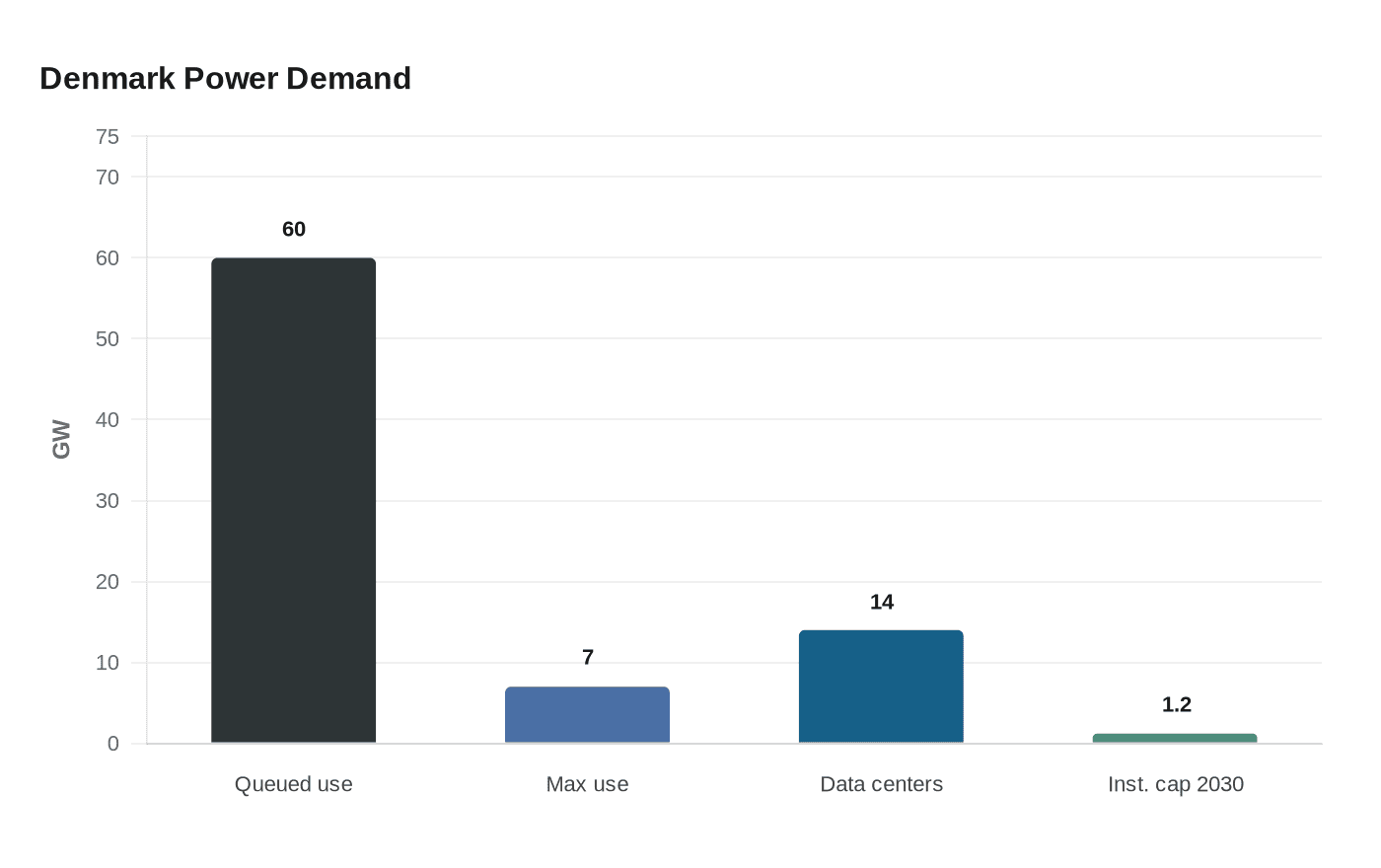
Energinet has put a temporary pause on new grid connection agreements after a surge of applications pushed Denmark’s transmission system close to full use. The operator says around 60 gigawatts of new consumption is now queued across the country’s transmission and distribution grids, a demand pile-up that dwarfs Denmark’s current maximum electricity consumption of 7 gigawatts and turns a technical bottleneck into a political fight over who power is really for.
Data centers sit near the center of that clash. Energinet says data centers account for nearly a quarter of the queued requests, or about 14 gigawatts, even though the Danish Data Center Industry’s 2026 market report estimates total installed data-center capacity in Denmark will reach only about 1.2 gigawatts by 2030. That gap between what is built and what is waiting has led industry voices to argue that the queue is being inflated by speculative projects, not just concrete expansions tied to artificial intelligence and cloud demand.
The pause lands as the Nordics’ long-standing pitch to global investors, cheap clean power, cool weather and reliable infrastructure, looks less automatic. Denmark is the first Nordic country to confront the strain head-on, and the response is forcing a broader rethink of industrial policy. Energinet has published a new prioritization model for grid access and says developers may need to take on some of its tasks to speed up connection decisions. The underlying question is no longer whether Denmark can attract energy-hungry digital infrastructure, but how much of the grid should be reserved for it when households, manufacturers and other users also depend on the same system.
The issue is spreading well beyond Denmark. Maine has come close to a data-center construction ban in the United States, while Virginia and Oklahoma are weighing moratoriums. In Europe, the Netherlands and Ireland have both used full moratoriums at different points before easing restrictions under conditions. The broader pattern shows that the AI buildout is colliding with physical limits, local tolerance and the politics of permitting at the same time.
Denmark has already tried to soften that conflict by making data centers useful to nearby communities. Microsoft’s project in Høje-Taastrup was designed to supply waste heat for up to 6,000 homes, a reminder that the industry has long relied on promises of spillover benefits to win consent. Yet the scale of today’s queued demand suggests those bargains are getting harder to strike. The International Energy Agency says data centres and data transmission networks already account for about 1% of energy-related greenhouse-gas emissions, and its Electricity 2026 outlook projects global power demand will rise at an average annual rate of 3.6% from 2026 through 2030, with data centers among the main drivers. In Denmark, the message is becoming hard to miss: the era of easy expansion is ending, and every new megawatt will have to justify itself.
This article was produced by Prism’s automated news system from verified source data, official records, and press releases, then run through automated quality and moderation checks before publishing. The system is built and supervised by the people who set the standards it runs under. Read our full AI policy.
Did this article answer your question?