DIY Couple and Homefolk Build Tiny House for One Year’s London Rent
A DIY couple and a youth-led group are using tiny houses to challenge London rent, with reported build costs ranging from an equivalent of one year’s rent to about £50,000 per unit.

A pair of very different tiny-house stories have landed a blunt message for city dwellers: smaller footprints can change the maths of housing, but the numbers need closer inspection. One account frames a project as a "visually striking tiny house project" that delivers a "full-house feel for the cost of one year's London rent," while another estimates purpose-built units at around £50,000 each—roughly three or four years' rent for a one-bedroom flat in London.
Homefolk, a youth-led social enterprise first set up in 2021, is at the centre of the higher-figure estimate and a broader tiny-home village plan. Adam Mitchell, a co-director at Homefolk who founded the project after a year working various jobs while completing his medical degree, describes the ambitions plainly: "This idea of building small, modular housing communities, the idea that the money can just stay collaborative and cooperative, and everyone has a bit of transparency within the housing units is what this project is about. The way of renting and buying houses doesn’t seem to be making any difference in fixing how difficult it’s becoming to buy a house. So we’re using this project to raise awareness about what could be achieved."
Big numbers aside, the practical design and material choices are already part of the pitch. Homefolk and its partners plan to use eco-friendly materials such as structured panels and compacted straw insulation to increase energy efficiency and reduce heating bills. The group has begun outreach to London local authorities to secure planning permissions for pilot sites and says "over 30 students" from the University of Sheffield, the University of Glasgow and Queen Mary University of London will begin work on designing tiny home villages. Students come from architectural, medical and legal disciplines and will be guided by award-winning Sheffield architect Sam Brown and Dr Anna Moore, a respiratory and clean air campaigner.
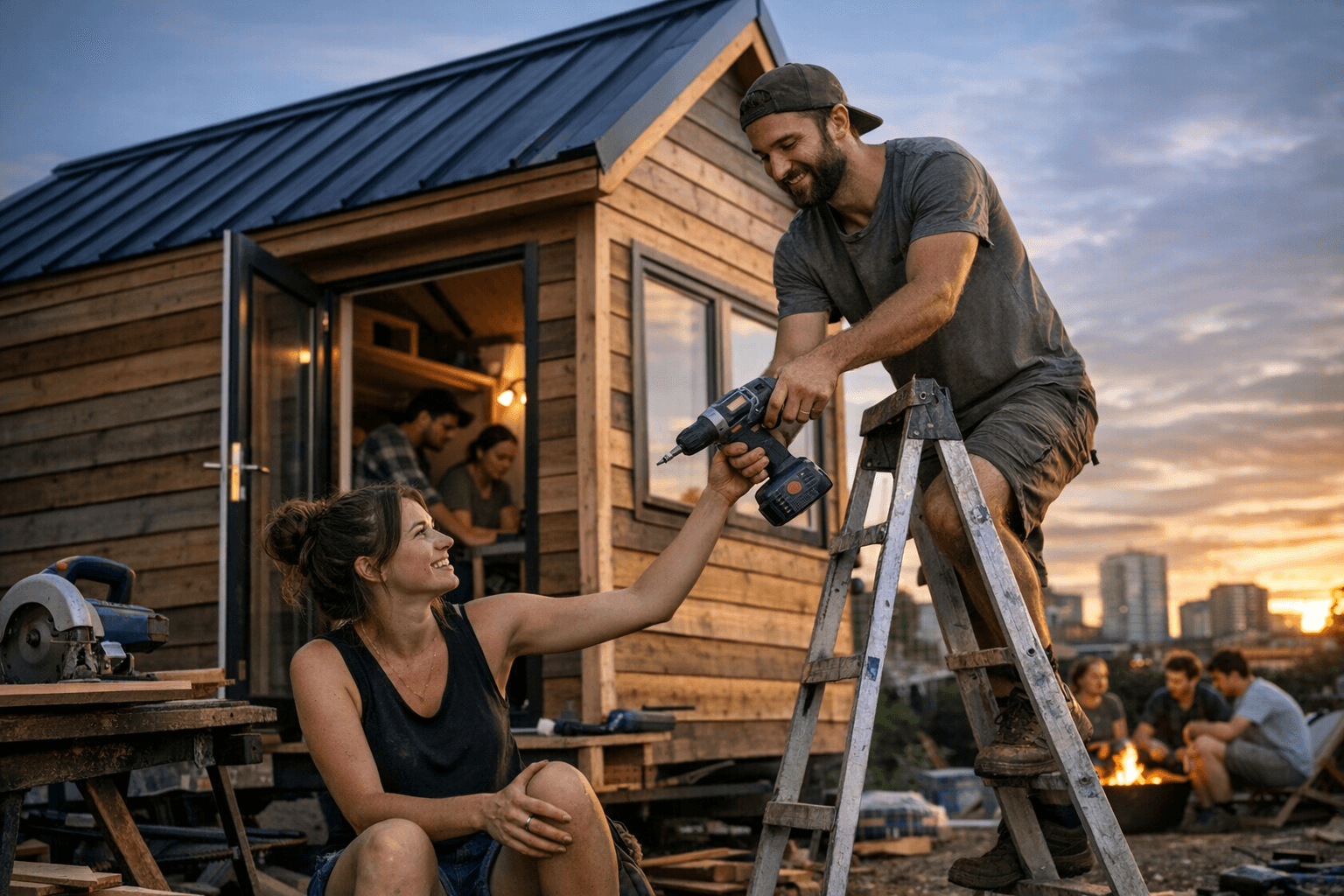
At the human scale, one DIY example has proved potent for publicity. A profile of Lizzie and Patrick presents them as "an inspiring young couple who built their very own, incredible tiny house for the equivalent cost of just one years rent in London city!" The feature calls their home "stunningly designed and easily accommodating the couples needs" and says the build has "provided both Lizzie and Patrick with a lot more than just a secure roof over their heads," giving the couple the ability to save money and focus on "the things that are truly important to them in life."
For readers weighing the tiny-house option, the story has immediate value and caveats. The build-cost range highlights that headlines about "one year's rent" can hinge on which rent baseline or costs are counted. Material choices like structured panels and compacted straw insulation point to lower operational bills, but technical specs and planning, site and land costs will determine real affordability. Homefolk’s outreach to councils and the student-led design work mean pilot sites and more detailed cost breakdowns are likely to follow.
What comes next is practical: watch for pilot planning applications, published build-cost breakdowns and measured energy performance from completed units. Those figures will decide whether tiny-home villages are a scalable route out of damp, unaffordable housing or a niche refuge for the determined DIY builder.
Know something we missed? Have a correction or additional information?
Submit a Tip